









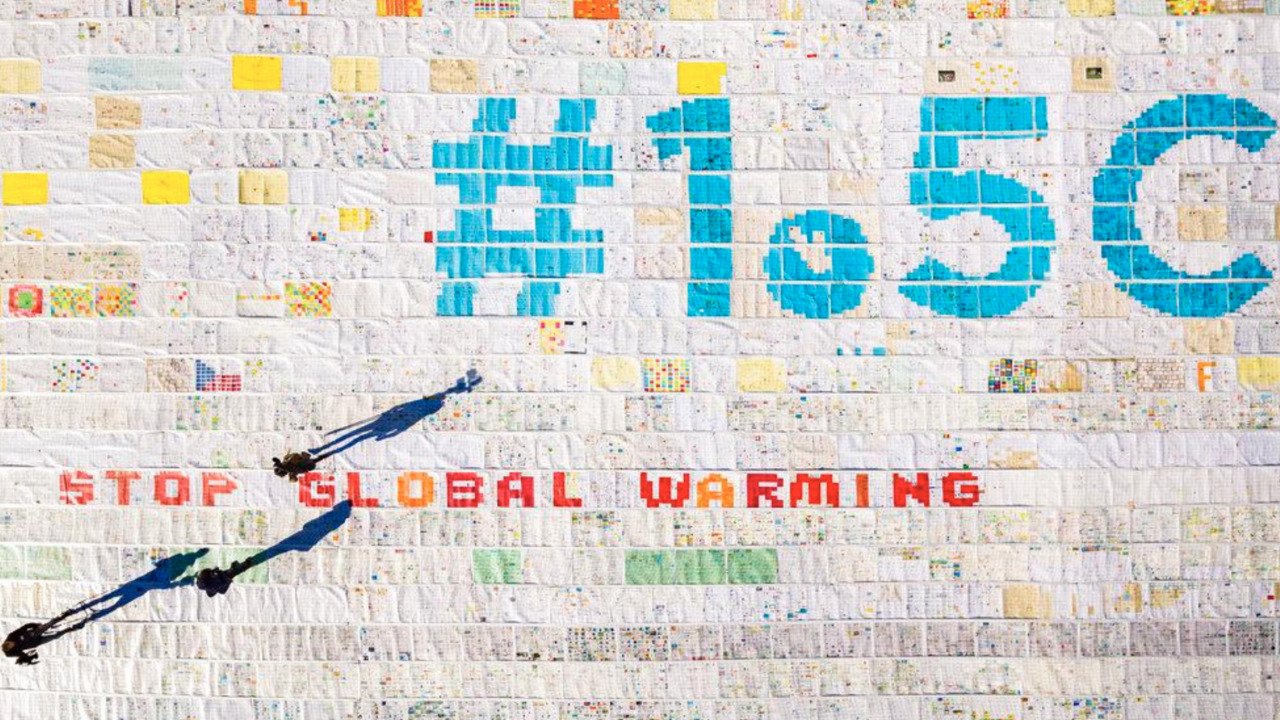
The goal of limiting global warming to 1.5C, a cornerstone of the 2015 Paris Agreement, is now effectively out of reach. According to the latest annual Emissions Gap Report from the United Nations Environment Programme (UNEP), decades of insufficient climate action have made an overshoot of this critical temperature threshold both “imminent and unavoidable.”
While 2024 marked the first individual year to average more than 1.5C above pre-industrial levels, the Paris Agreement’s target focuses on long-term, multi-decadal warming. Current data, however, indicates that the world is on a trajectory that will breach this limit, with global emissions stagnating at 58.4 gigatonnes of CO2 equivalent in 2025. While fossil fuel emissions and potent greenhouse gases like nitrous oxide continue to rise, the report notes that these increases were only partially masked by lower emissions from forest fires compared to the previous year.
The report, released ahead of the Cop31 summit in Antalya, Turkey, emphasizes that passing the 1.5C threshold is not a singular, cataclysmic event. Instead, it represents a deepening of existing environmental crises, including the accelerated melting of glaciers, thawing permafrost, mass coral bleaching, and more frequent, severe droughts and wildfires. These changes bring direct consequences for global food security, energy stability, and human health.
UN Secretary-General António Guterres urged that reaching an overshoot should not be mistaken for surrender. The current challenge, the report suggests, is to ensure the overshoot is as shallow and as brief as possible. In a best-case scenario—one requiring “political will and courage”—warming could be constrained to a peak of 1.7C or 1.8C by mid-century, with a 50 percent chance of returning to 1.5C by 2100. Achieving this, however, demands an aggressive reduction in greenhouse gas emissions of 18 percent by 2030, rising to 69 percent by 2040.
Current national climate plans remain drastically off track. Should governments fully implement their existing commitments, emissions would fall by only 11–15 percent by 2035, putting the planet on course for 2.6C of warming by the end of the century. Under current policies, that figure rises to 2.8C.
To alter this trajectory, the report calls for a rapid transition away from fossil fuels, specifically recommending a 55 percent reduction in coal use by 2035 and the effective global phase-out of coal-fired electricity by 2040. Furthermore, the report highlights the urgent need to address methane leaks, which could be reduced by 40 percent by 2040 using existing satellite-tracking technologies.
Even if these radical emissions cuts are realized, they will not be sufficient on their own. The report identifies a secondary, high-stakes requirement: the large-scale removal of CO2 already present in the atmosphere. The most optimistic pathway requires the removal and storage of approximately 320 gigatonnes of CO2 over the coming century. This would necessitate a combination of nature-based solutions, such as reforestation, and speculative technological methods to capture carbon directly from the air.
Experts warn that this reliance on carbon removal is a significant gamble. Scientific advisors pointed out that as the planet warms, nature’s capacity to absorb carbon is naturally weakening, while large-scale technological solutions remain “costly and risky.”
The report does offer a glimmer of progress, specifically in the clean energy sector. Solar power has expanded seven times faster than initial projections, and renewable energy capacity is on track to triple by 2030. Yet, this growth is being offset by a persistent global reliance on fossil fuels, which still account for over 80 percent of the world’s energy supply. As UNEP science advisor Anne Olhoff noted, while developing renewables is vital, the global community must shift its focus toward a genuine phase-out of fossil fuels—a transition that is currently falling far short of what is required to safeguard the climate.
Disclaimer: This content is auto-generated for informational purposes only.
Source: Read Original News