








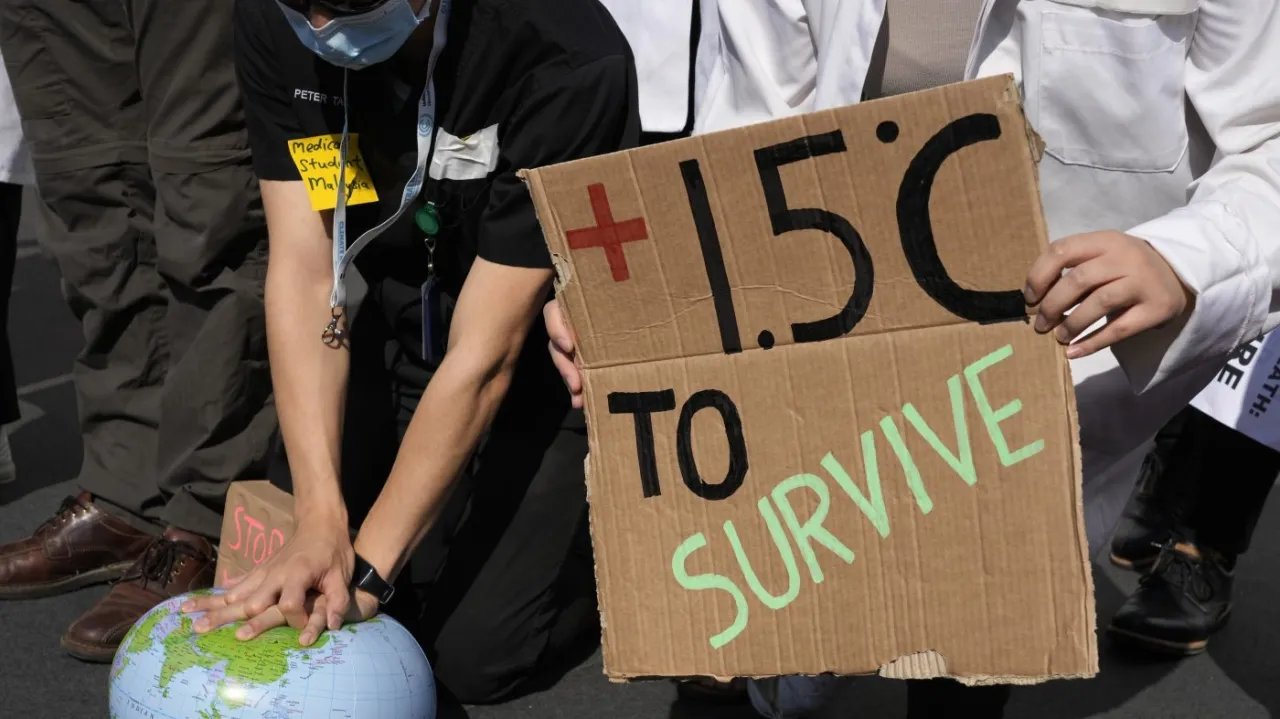
Global temperatures are on track to surpass the critical 1.5-degree Celsius threshold above pre-industrial levels, according to a sobering new climate assessment released by the United Nations on Wednesday. The report serves as a definitive scientific warning, emphasizing that while the goal established by the 2015 Paris Agreement is increasingly slipping out of reach, the window for preventing the most catastrophic effects of climate change remains precariously open—provided there is an immediate, global shift in policy.
The UN’s latest findings indicate that current climate trajectories are pushing the planet toward a temperature rise that will fundamentally alter ecosystems, exacerbate weather-related disasters, and threaten global food and water security. For years, the 1.5-degree benchmark has been cited by scientists as the threshold beyond which the risks of prolonged heatwaves, irreversible sea-level rise, and the collapse of essential biodiversity hotspots increase exponentially.
However, the report balances this grim forecast with a framework for mitigation. The authors stress that “urgent and steep cuts” to greenhouse gas emissions can still significantly alter the long-term outlook. By aggressively decarbonizing the global economy and accelerating the transition to renewable energy sources, nations can mitigate the severity of future warming, even if the 1.5-degree limit is temporarily breached.
“The science is unequivocal,” the report states, noting that the intensity and frequency of extreme weather events—ranging from intensified hurricane seasons to protracted, multi-year droughts—are directly linked to current emissions levels. The document urges policymakers to treat the findings not as a signal of defeat, but as a mandate for systemic economic restructuring.
Central to the report’s recommendations is the need for a rapid phase-out of fossil fuels, which remain the primary drivers of atmospheric carbon accumulation. The UN experts advocate for a multi-pronged approach: drastically increasing the deployment of solar, wind, and geothermal energy; implementing rigorous carbon pricing mechanisms; and investing heavily in natural carbon sinks, such as reforestation and the restoration of peatlands and mangroves.
Economically, the report challenges the long-standing narrative that climate action is an impediment to growth. Instead, it frames the transition to a net-zero economy as a catalyst for innovation and sustainable development. By shifting capital away from carbon-intensive industries and toward sustainable infrastructure, the report argues that countries can foster long-term resilience while reducing the massive fiscal burden of climate-related disaster recovery.
Despite the technical feasibility of these solutions, the report acknowledges significant political and geopolitical headwinds. Differences in responsibility between developed and developing nations, coupled with the slow pace of national commitments, have hindered the kind of coordinated global response required to reach net-zero goals. The UN calls for a strengthening of international cooperation, specifically citing the need for wealthier nations to fulfill climate finance pledges to support the transition in the Global South.
As the international community grapples with these findings, the report serves as a stark reminder that time is the most constrained resource in the climate fight. Every fraction of a degree of warming carries compounding risks for global health, infrastructure, and human migration patterns.
“We are at a juncture where the choices made in the next several years will define the environmental stability of the next century,” the report concludes. While the prospect of exceeding the 1.5-degree mark creates a new, more difficult reality, the UN underscores that the difference between 1.6 degrees and 2.0 degrees is not merely a numerical variation, but a profound difference in the habitability of the planet. The findings demand not just a change in strategy, but an acceleration of effort that matches the urgency of the data.
Disclaimer: This content is auto-generated for informational purposes only.
Source: Read Original News