






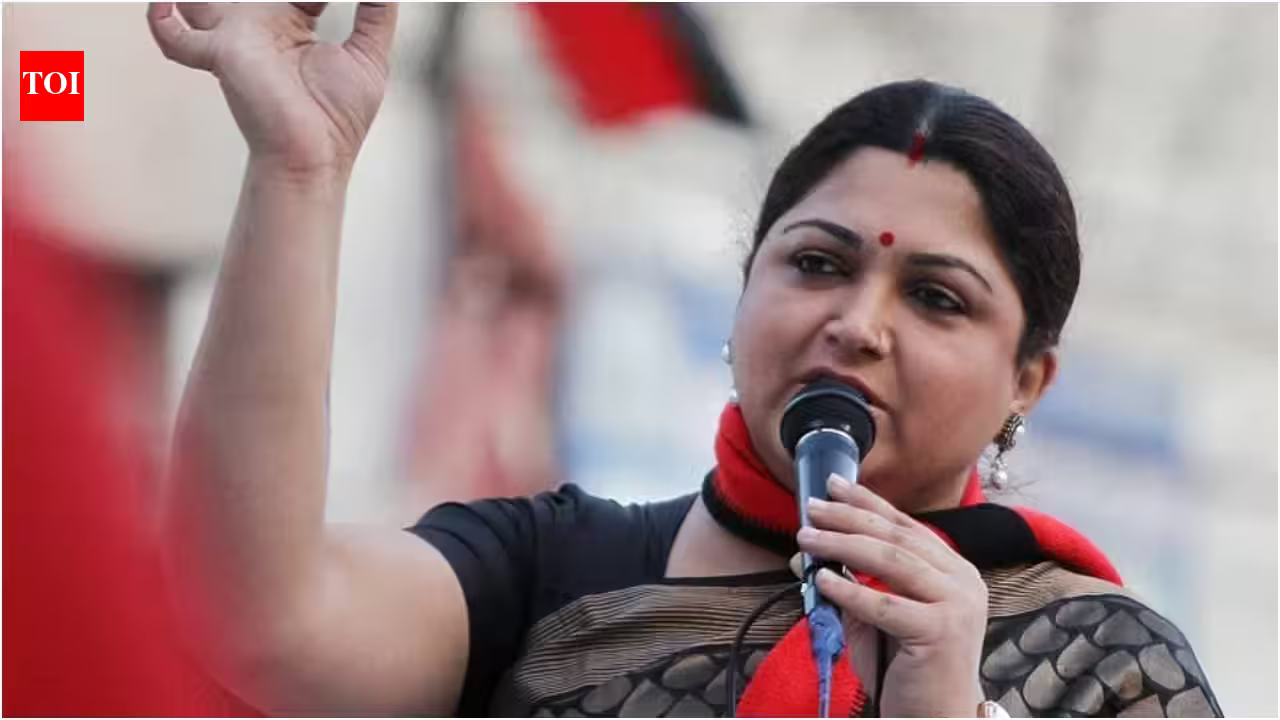
The digital age has brought the world to our fingertips, but for icons like Khushbu Sundar, it has also forged a treacherous landscape of unchecked vitriol. For decades, the actress and politician has commanded the spotlight with grace, talent, and an uncompromising voice. Yet, in recent years, the sanctity of that spotlight has been compromised by the dark underbelly of social media: the relentless, often anonymous, machine of cyberbullying. In a candid and blistering interview with JFW Digital, Khushbu finally drew a line in the sand, reclaiming her autonomy with a message that resonates far beyond the film industry.
The Myth of Public Ownership
The central tension in the lives of superstars is the blurred line between celebrity and commodity. There exists a pervasive, toxic sentiment among a faction of internet users that fame is a down payment on a person’s private life. Khushbu Sundar is having none of it. During her conversation with JFW, she dismantled the entitlement that emboldens digital trolls, offering a blunt correction to anyone who believes that a public career equates to public ownership.
“I am a public figure, not public property,” she declared, her tone echoing the defiance that has characterized both her screen presence and her political career. For Khushbu, the issue isn’t just about criticism; it’s about the dehumanization of those in the limelight. When the discourse shifts from professional critique to vitriolic attacks on her family—her children and her parents—the social contract is broken. She poses a simple, rhetorical question to those who hide behind keyboards: If they were forced to endure the same level of vile intrusion directed at their own loved ones, would they not recoil in horror? By pointing out the hypocrisy of the cyber-abuser, she exposes their cowardice.
A Legacy of Resilience
It is difficult to reconcile the fierce, unflappable Khushbu of today with the woman who has been hounded by detractors for years. Her stance isn’t just a reaction to a bad day on social media; it is a long-overdue reclamation of personal dignity. There is a palpable sense of pity in her voice when she discusses the perpetrators. She suggests that such vulgarity is a reflection of the aggressor’s own background and upbringing.
By refusing to shrink under the weight of these attacks, Khushbu is setting a precedent for a new generation of performers. In an era where “cancel culture” and “troll culture” often dictate the narrative, she is proving that a public figure does not have to be a punching bag. She has transformed her defense into an educational moment, forcing the public to confront the ethics of their online behavior. If you wouldn’t say it in a living room, she argues, you have no business saying it in the digital square.
When the Virtual World Fails: The Hacking Crisis
The vulnerability of public figures was never more apparent than in April of last year, when Khushbu faced a different kind of intrusion: the technical breach of her digital life. Her X (formerly Twitter) account, a primary conduit for her to communicate with her fan base and address the public, was compromised. The ordeal left her locked out, watching helplessly as her digital identity was held hostage by unknown actors.
The incident was a stark reminder of how fragile a celebrity’s security is in a world that thrives on disruption. Khushbu didn’t panic; she pivoted. Using her secondary platform on Instagram, she launched a public-facing campaign to reclaim her narrative. She didn’t just ask for help; she mobilized her followers to report the suspicious activity, turning her fans into a frontline defense force. It was a masterclass in crisis management, emphasizing that while trolls may be able to hack a password, they cannot hijack the reputation she has spent decades building.
The Cost of the Digital Stare
What does it mean to live under this constant digital stare? For someone like Khushbu, the abuse is rarely about the work—it is about the power dynamic. By attacking a woman who has been a formidable force in Tamil cinema and politics, these cyber-assailants are attempting to police her opinions and her lifestyle.
Her public pushback is a necessary correction. When she speaks out, she isn’t just defending herself; she is highlighting a systemic failure in how social media platforms govern abuse. She is calling out a culture that allows toxic behavior to fester under the guise of “freedom of speech.” In reality, there is no freedom in the kind of harassment that targets families, and Khushbu’s refusal to remain silent is a vital check on that unchecked power.
Moving Forward: From Controversy to Craft
Despite the noise, Khushbu’s professional star remains firmly on the rise. In the industry, she is known as a consummate professional—a veteran who brings grit to every role she undertakes. Her upcoming appearance in the highly anticipated Dragon, starring Jr NTR, serves as a testament to her enduring relevance. While the internet may focus on the drama, the film industry remains focused on her craft.
Her ability to bifurcate her personal life from her professional excellence is perhaps her greatest shield. As she steps back into the spotlight for Dragon, the conversation will inevitably shift from the ugliness of the internet to the brilliance of her performance. For the audiences who have followed her journey, this is the victory.
Ultimately, Khushbu Sundar’s recent statements are a reminder that behind the awards, the interviews, and the trailers, there is a person—a daughter, a mother, and a woman—who deserves the same basic respect as any other citizen. Whether on the screen or on the timeline, she continues to lead with strength, teaching us that while we cannot always control the cruelty of the world, we have the absolute right to define our own boundaries. She isn’t just standing up for herself; she is holding a mirror to a society that needs to learn how to behave.
Disclaimer: This content is auto-generated for informational purposes only.
Source: Read Original News