







NAGOYA — The Indian contingent at the 2026 Asian Para Games continues to deliver a masterclass in resilience and elite performance, as a wave of medal-winning efforts on Thursday cemented the nation’s status as a formidable force in the pool and on the track. Led by teenage sensation Ravi Budigina, the swimming squad hit a major milestone, pushing India’s total medal haul in the pool to nine, while the track and field stars underscored their regional dominance with a breathtaking podium sweep in the high jump.
Budigina’s Hat-Trick Highlights Swimming Surge
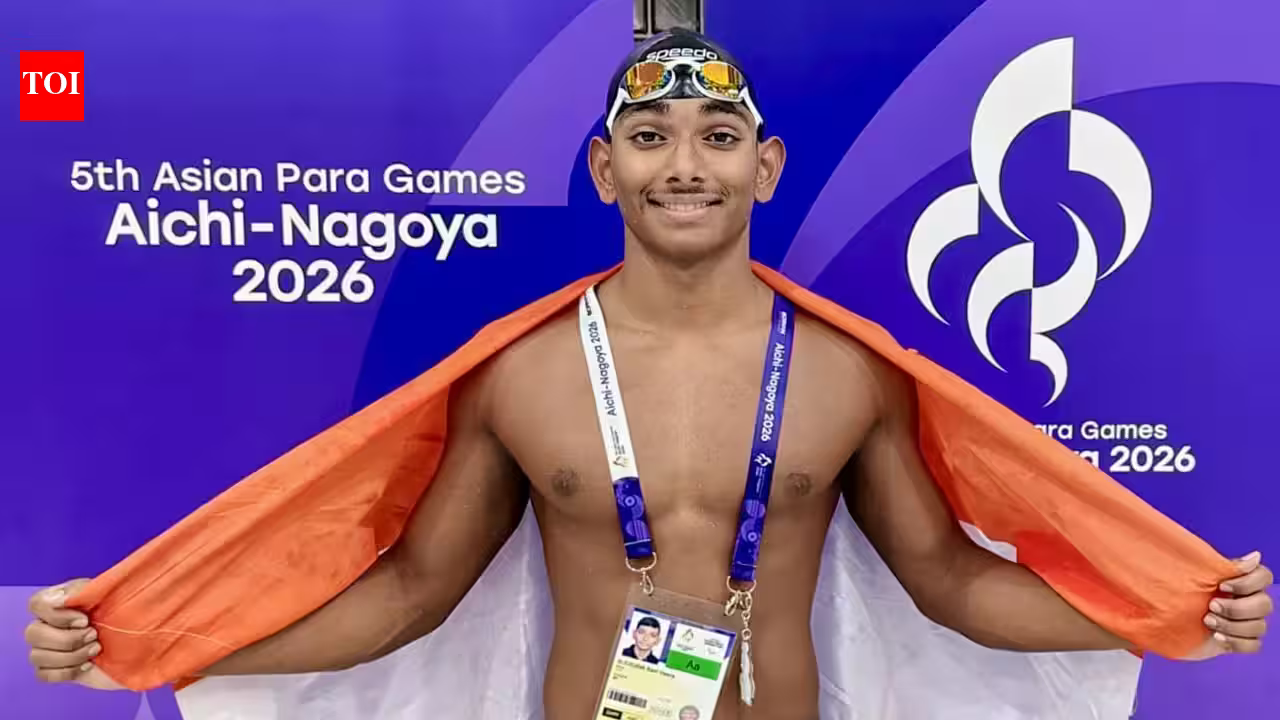
At the center of Thursday’s success was 18-year-old Ravi Budigina, whose breakout performance in Nagoya has captured the imagination of the sporting world. The visually impaired swimmer from Andhra Pradesh, competing in the S13 category, proved that his previous successes were no fluke, capturing the bronze medal in the men’s 50m freestyle.
Touching the wall in a blistering 25.89 seconds, Budigina secured his third podium finish of the Games. His latest bronze complements the two silver medals he had already clinched in the 100m backstroke and 100m freestyle events earlier in the week. His ability to maintain such high-velocity output across multiple distances and strokes marks him as one of the brightest prospects in international para-swimming.
Budigina’s achievement was part of a larger, collective effort by the Indian swimming team, which saw both Kapil Kumar and Swatik Patil add to the tally, underscoring the deep talent pool currently representing the country.
Podium Depth: Kapil and Patil Shine
The men’s 400m freestyle S10 event provided a thrilling spectacle, as 26-year-old Kapil Kumar demonstrated grit and tactical brilliance. Racing in a tight five-swimmer field, Kapil clocked a time of 4:38.44. While Japan’s Akito Minai dominated the race to set a new Games record of 4:27.44, Kapil managed to fend off a late charge from Iran’s Shahin Izadyar to secure the silver medal, leaving the Iranian to settle for bronze.
Not to be outdone, 24-year-old Swatik Patil added further luster to the medal count in the men’s 100m breaststroke SB9 event. In a highly competitive race, Patil finished in 1:13.77. The gold went to Iran’s Sina Zeyghaminejad with a time of 1:09.47, while the silver was claimed by Izadyar at 1:13.23. The performance solidified India’s reputation in the SB9 classification—a category for athletes with minimal physical impairments—where technical precision is often the difference between a gold medal and missing the podium entirely.
High Jump Dominance: A Repeat Performance
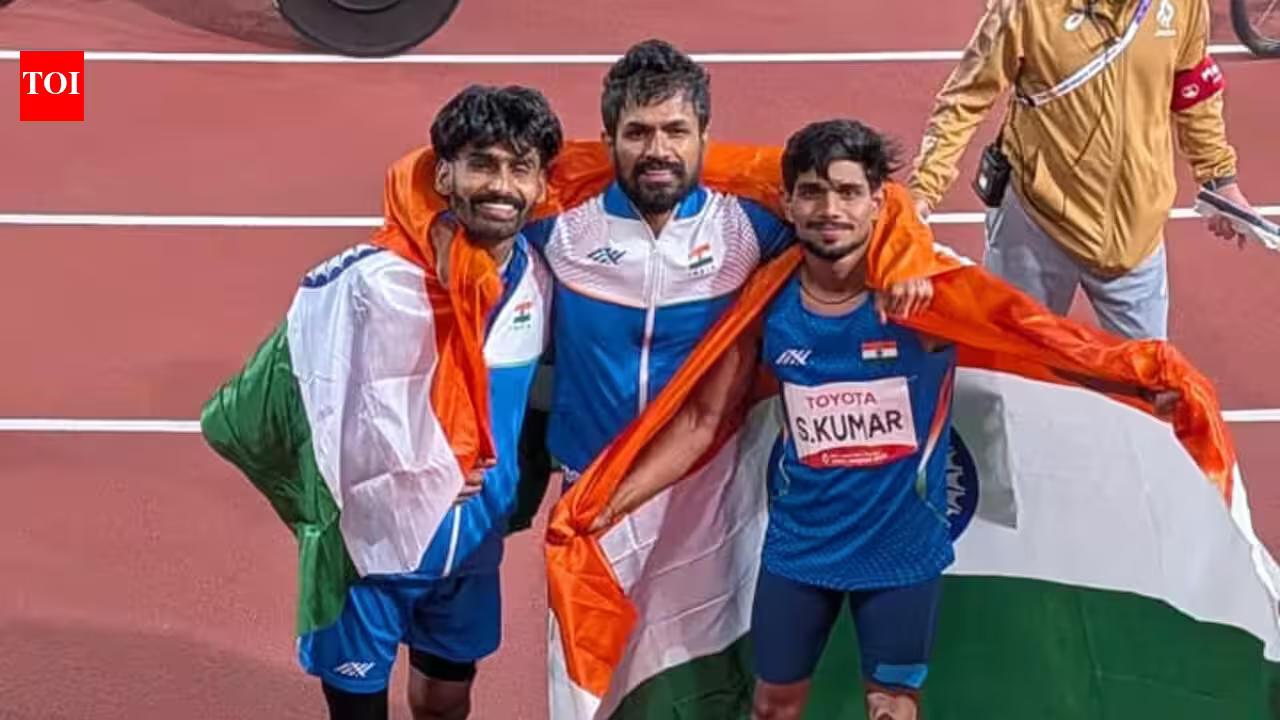
Away from the pool, the athletics arena in Nagoya witnessed a spectacular display of vertical prowess that echoed the glory of previous years. India delivered a clinical sweep of all three medals in the men’s high jump T63 final, a feat that mirrored the nation’s historic podium lockout at the 2022 Asian Para Games.
Shailesh Kumar took center stage, soaring to a gold-medal-winning height of 1.89m. In doing so, he shattered the longstanding Asian Para Games record of 1.80m, which had been held by Sharad Kumar since the 2014 Incheon Games. The battle for the top spot remained intense until the bar reached 1.84m, at which point Shailesh pulled away from his compatriots, successfully clearing both 1.87m and 1.89m to etch his name into the record books.
Securing the silver was the experienced campaigner and former Paralympic bronze medallist Varun Bhati, who put together a season’s best performance of 1.84m. Rahul Saroha rounded out the historic sweep, taking the bronze with a jump of 1.81m. The repeat sweep in the T63 classification—a testament to India’s investment in para-athletics infrastructure and coaching—served as a powerful reminder of the nation’s commitment to fostering world-class disabled athletes.
Understanding the Classifications
The complexity of the results is rooted in the meticulous Paralympic classification system, which ensures fair competition by grouping athletes based on the degree of activity limitation resulting from their impairments. The “S” prefix signifies freestyle, backstroke, and butterfly events, while “SB” denotes breaststroke. The numeric designations are equally vital: S13 represents vision impairment, specifically for those with the least vision loss, whereas S10 and SB9 reflect specific physical impairments ranging from minor weakness to limb differences.
As the Asian Para Games 2026 progress, the Indian team’s performance in Nagoya suggests that they are not merely participating, but setting new benchmarks. With a robust tally in swimming and continued dominance in field athletics, the Indian contingent heads into the final days of the competition with significant momentum, signaling a golden era for the nation’s para-sport movement.
Disclaimer: This content is auto-generated for informational purposes only.
Source: Read Original News