









The Mechanics of Rising Crude Oil and Macroeconomic Volatility
The global energy landscape is currently undergoing a period of intense turbulence, primarily driven by geopolitical instability in the Persian Gulf. As the Indian crude oil basket climbs to a 14-year high of $120 per barrel, the implications for the domestic economy are profound. The Indian crude basket, a weighted average of Brent and Oman/Dubai sour grades, serves as the primary benchmark for the nation’s energy import costs. When this basket trends upward, it creates an immediate ripple effect across the nation’s macroeconomic indicators.
The recent surge is rooted in fears regarding the escalation of hostilities between the United States and Iran. Given that a significant volume of global energy supply transits through the Persian Gulf, any threat of conflict or blockade immediately commands a risk premium in the commodities market. For a country like India, which imports over 80 percent of its crude oil requirements, this is not merely a trading statistic; it is a fundamental challenge to fiscal health. Higher import costs lead to an expanded current account deficit (CAD), placing systemic pressure on the national currency and restricting the government’s ability to manage public finances effectively.
Currency Depreciation and the Import-Led Inflation Trap
The recent reversal of the Indian Rupee’s upward trajectory underscores the direct link between oil pricing and currency valuation. After enjoying an eight-session winning streak, the rupee’s decline by 36 paise to hover near the 95 per dollar mark highlights the fragility of emerging market currencies during periods of commodity spikes. Because India must pay for its oil in US dollars, a rise in oil prices automatically triggers an increased demand for the dollar by domestic refiners, thereby weakening the rupee.
This depreciation creates a vicious cycle known as import-led inflation. As the rupee loses value, every additional unit of fuel or raw material imported becomes more expensive in local currency terms. This cost is eventually passed on to the consumer and the industrial sector, leading to higher transportation costs, inflated manufacturing overheads, and a general cooling of household discretionary spending. The Reserve Bank of India (RBI) often faces a difficult dilemma in such environments: raising interest rates to support the currency can stifle domestic economic growth, while maintaining lower rates to support growth risks exacerbating inflation.
Dalal Street’s Reaction to Geopolitical Risk
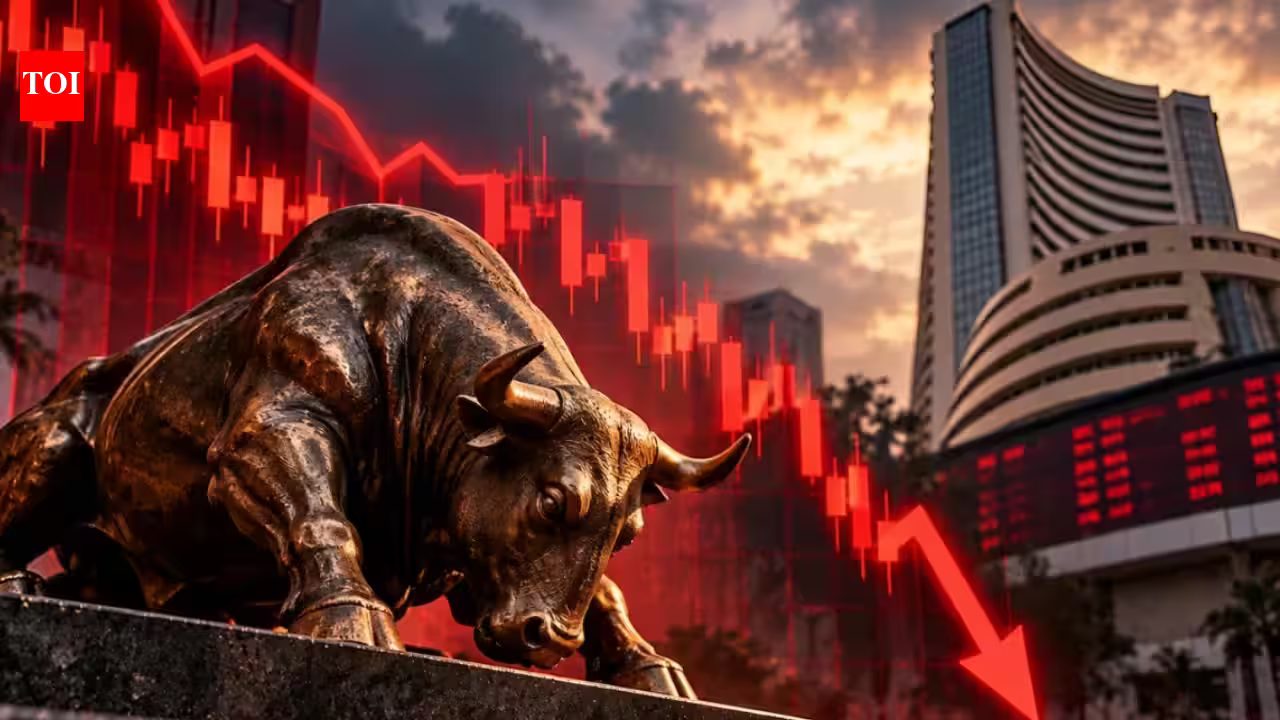
Equity markets are often the first to reflect the discomfort of systemic shocks. The recent 460-point drop in the Sensex and the 124-point decline in the Nifty reflect a broader trend of risk-aversion. When energy costs spike, corporate profitability margins are immediately compressed. Sectors heavily reliant on energy—such as aviation, logistics, paint manufacturing, and fast-moving consumer goods (FMCG)—experience a direct hit to their bottom lines.
The decline was not isolated to India; it was part of a larger, global sell-off. Major Asian indices, including the Kospi, Hang Seng, and Nikkei, all witnessed sharp corrections, signaling that global institutional investors are reassessing their exposure to emerging markets. For the Indian investor, this is exacerbated by the behavior of Foreign Portfolio Investors (FPIs). On the day the market fell, FPIs emerged as net sellers to the tune of Rs 3,459 crore. While domestic institutional investors often attempt to absorb this selling pressure, the sheer volume of foreign outflow, totaling a reduction of Rs 3.3 lakh crore in market capitalization for the session, underscores the sensitivity of local markets to global sentiment shifts.
The Divergence Between Foreign and Domestic Institutional Behavior
A notable aspect of the current market volatility is the shifting dynamic between FPIs and Domestic Institutional Investors (DIIs). While DIIs remain key buyers, providing essential liquidity and confidence to the market, they are often unable to fully neutralize the impact of significant FPI withdrawals. Foreign investors prioritize their global portfolios, and when risk manifests in the form of rising oil prices and a weakening rupee, they often pivot toward safe-haven assets, such as the US dollar or US Treasury bonds.
This outflow is symptomatic of a broader strategy where global capital prioritizes stability over growth when external shocks occur. For the Indian markets, this divergence highlights the need for continued growth in domestic retail participation. If local savings continue to flow into mutual funds and systematic investment plans (SIPs), the domestic market gains the structural depth required to withstand erratic behavior from foreign capital. However, until such a threshold is reached, India remains vulnerable to the withdrawal symptoms of global liquidity.
Strategic Outlook for the Indian Economy
As the nation navigates this high-oil-price environment, the path forward requires a multifaceted approach. From a corporate perspective, companies are likely to focus on cost-optimization and supply chain diversification to hedge against energy volatility. From a policy perspective, the government will continue to balance the need to curb inflation with the imperative to support economic growth.
The current situation is a sharp reminder of India’s structural reliance on energy imports. While the government has made progress in promoting renewable energy and exploring alternate fuel sources, the transition is a long-term endeavor. In the interim, the domestic economy must remain resilient in the face of these external pressures. Investors, meanwhile, must anticipate continued volatility. The linkage between energy prices, currency strength, and corporate earnings remains intact, and any further escalation in the West Asian conflict will likely keep these variables in a state of flux. While the Indian economy has demonstrated robustness in recent years, it is clearly not immune to the gravitational pull of global energy shocks, necessitating a prudent and disciplined approach to market participation in the coming quarters.
Disclaimer: This content is auto-generated for informational purposes only.
Source: Read Original News