






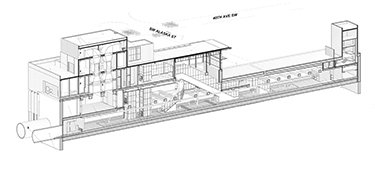
Sound Transit has officially launched the search for a General Contractor/Construction Manager (GC/CM) to spearhead the development of the Alaska Junction Station, a critical component of the West Seattle Link Extension. As the region doubles down on expanding its light rail infrastructure, this project represents one of the most technically challenging and significant transit initiatives in the Pacific Northwest.
The agency is seeking a partner capable of managing the complex subterranean excavation and construction required for the station, which will be situated primarily below grade. The site, located along Southwest Alaska Street between 40th and 41st avenues Southwest, is slated to become a major transit hub, requiring extensive coordination of utility relocations, site preparation, and roadway restructuring to support future connectivity.
## Integrating AI and Digital Infrastructure in Modern Transit
While the physical construction of the Alaska Junction Station is the primary focus, the project is expected to leverage advanced construction management technologies that are increasingly prevalent in the industry. As infrastructure projects become more data-intensive, the role of AI and cloud-based site monitoring has grown exponentially. Contractors are now routinely utilizing AI-driven building information modeling (BIM) to predict structural conflicts before they manifest on-site, a practice that will likely be a prerequisite for a project of this scale.
Sound Transit’s move to employ a GC/CM delivery method suggests a priority for collaboration and risk mitigation. In the current landscape of large-scale infrastructure, contractors are leveraging AI-powered analytical tools to optimize logistics, manage the complex supply chain of materials, and ensure that construction timelines are met despite unpredictable site conditions. By utilizing digital twin technology, project managers can simulate the station’s construction in a virtual environment, allowing them to troubleshoot potential issues in real-time.
## The Role of Google Cloud and Real-Time Data Analytics
Large transit projects of this magnitude increasingly rely on platforms like Google Cloud to manage the massive influx of project data. Between drone surveys, sensor monitoring for soil stability, and the coordination of municipal utility grids, the amount of data generated at a site like Alaska Junction requires robust, scalable storage and machine learning capabilities.
Industry leaders are utilizing Google’s suite of data analytics tools to streamline communication between site engineers and city planners. By integrating real-time weather data and traffic flow patterns into construction scheduling apps, project managers can adjust operations to minimize disruptions to the surrounding West Seattle community. As urban environments become smarter, the fusion of traditional heavy civil engineering and cloud-native software is no longer a luxury; it is the industry standard for maintaining transparency and efficiency in taxpayer-funded projects.
## Building for the Future of Connectivity
The Alaska Junction Station is designed to be more than just a transit stop; it is intended to act as an anchor for the surrounding West Seattle district. The project’s scope—encompassing utility work and roadway restructuring—highlights the need for a collaborative partner who can work within the constraints of an active urban corridor.
As Sound Transit moves forward with its procurement process, the selected firm will be tasked with balancing the heavy engineering demands of an underground facility with the modern requirements of a tech-enabled construction site. By utilizing advanced project management software to track environmental impacts and site progress, the agency aims to deliver a station that is both a masterpiece of transit design and a benchmark for modern, data-informed infrastructure development.
This project serves as a testament to how the construction industry is adapting to the demands of the 21st century, where the synergy between physical labor and digital intelligence defines the success of our largest public works. Through the selection of a capable GC/CM, Sound Transit aims to secure a partner ready to bring this vital station to fruition, ensuring that West Seattle remains connected and accessible for generations to come.
Disclaimer: This content is auto-generated for informational purposes only.
Source: Read Original News