







How El Niño and La Niña Rewrite India’s Winter Pollution Map
For years, the narrative surrounding India’s winter air pollution has focused almost exclusively on local emission sources such as vehicular exhaust, industrial output, and agricultural stubble burning. However, a groundbreaking study published in the Atmospheric Pollution Research journal suggests that our winter air quality is also being dictated by planetary-scale climate phenomena. The research, titled “Air quality in flux: The baffling ENSO transition in India,” reveals how the transition between La Niña and El Niño conditions can drastically alter the dispersal of pollutants across the subcontinent.
A Tale of Two Winters
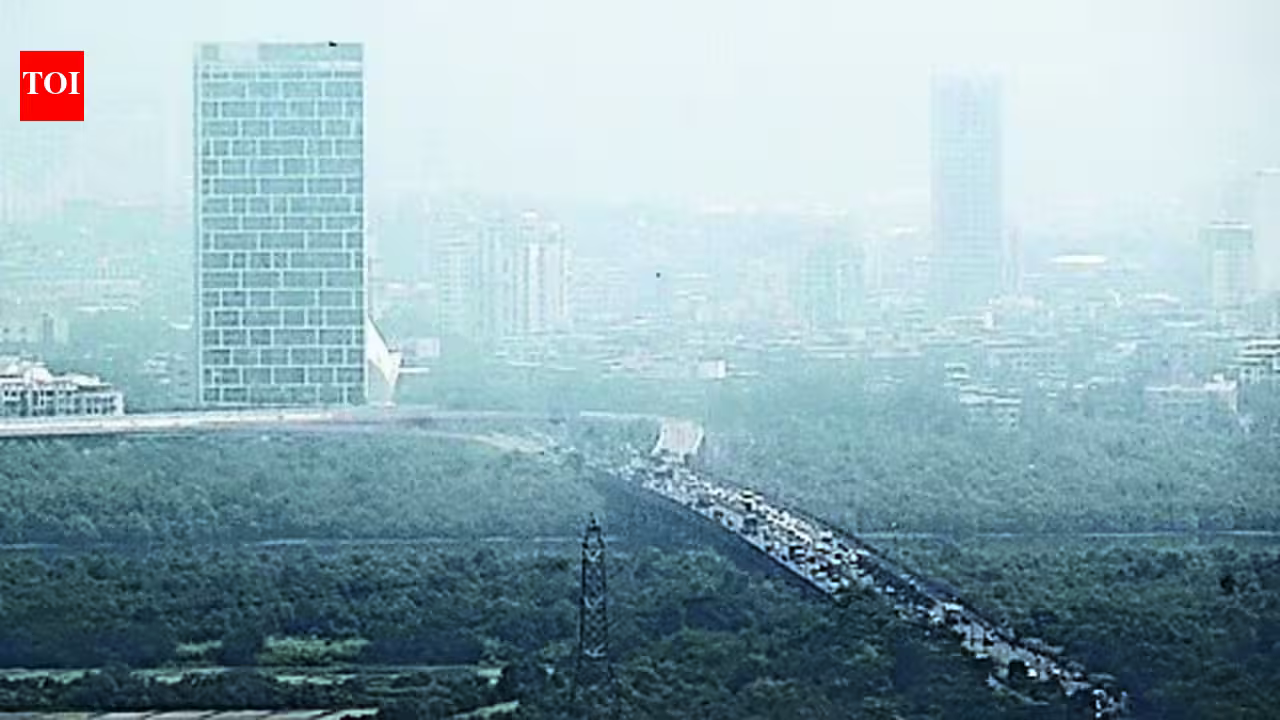
The study highlights a sharp reversal in pollution patterns between the winters of 2022-23 and 2023-24. The former, characterized by La Niña conditions, saw a remarkably clean winter for North India, with PM2.5 levels dropping by up to 30% against the three-year average. Conversely, peninsular India experienced a surge in pollutants, with cities like Mumbai witnessing a 45% spike in average PM2.5 levels.
The script flipped entirely the following year. As El Niño took hold during the 2023-24 winter, the North experienced a choking rise in air pollution, while air quality across the peninsula improved significantly.
The Mechanics of Atmospheric Transport
According to atmospheric scientist and co-author Gufran Beig, these shifts occur because climate cycles alter the “highways” along which pollutants travel. During the La Niña phase, stronger wind patterns effectively swept pollutants away from the Northern plains and redirected them southward. This atmospheric shift essentially acted as a ventilation system for Delhi and surrounding areas while dumping the accumulation onto southern cities.
In contrast, the El Niño winter ushered in stagnant weather conditions. Weaker winds over Northern India failed to disperse emissions, trapping PM2.5 locally. Cities such as Jaipur saw a 50% increase in pollution compared to their 2019-22 average, while Delhi recorded a 10% hike. The study notes that even when local emissions remain constant, the “stagnation” of the atmosphere during an El Niño year can trap pollutants, creating a health crisis regardless of the volume of smoke produced.
Beyond Local Emissions
The researchers caution that while this correlation is significant, it does not suggest that every El Niño year will inevitably lead to extreme smog in Delhi. The atmospheric dynamics are complex, and the two years studied were described by researchers as “unusual and unique.”
Furthermore, the impact of weather variables like rainfall and surface pressure also shifted between the two years. While rain helped cleanse the air during the 2022-23 winter, the 2023-24 period saw surface pressure become a dominant factor, with pollution levels occasionally spiking even after rainfall.
A Larger Canvas
The most vital takeaway for policymakers is that emission-control strategies cannot ignore the broader climate context. The study demonstrates that year-to-year PM2.5 variations—ranging from a 40% decline to a 70% increase—can occur entirely independent of local policy changes.
For regions like Delhi-NCR, this means that even significant efforts to curb local pollution may be partially offset or amplified by large-scale atmospheric circulation. As India grapples with its annual winter crisis, the study serves as a reminder that the quality of the air we breathe is increasingly determined on a global canvas, far beyond city limits.
Disclaimer: This content is auto-generated for informational purposes only.
Source: Read Original News