






Growing Alarm as Millions Face Deletion from India’s Voter Lists
The integrity of India’s electoral process has come under intense scrutiny following the publication of the latest draft voter list for the Special Intensive Revision (SIR). Across the nation, citizens are reporting the sudden, unexplained disappearance of their names from the electoral rolls, sparking widespread protests and allegations of systemic disenfranchisement.
Sameen Ud Din, a 44-year-old businessman from Old Delhi’s Nizamuddin area, is one of many left reeling after discovering he is no longer registered. Having participated in the 2025 elections, he was stunned to find his credentials missing without prior notification from the Election Commission of India (ECI).
“It is deeply ironic to be erased from the list without notice,” Din said. “Now, they expect me to submit Form 6—a request for new registration—which essentially asks me to make a false declaration that I was never a voter, a process that carries its own legal risks.”
Disproportionate Impact on Minorities
The scale of the issue is significant. Approximately 133 million names have been flagged for potential removal from the country’s rolls. Critics and researchers argue that these deletions are not random but are disproportionately targeting Muslims and Dalits.
Data investigations, including reports from The Wire, indicate that in West Bengal, nearly 70 percent of the 2.75 million names marked for removal were Muslim, despite the community representing only a quarter of the state’s electorate. In certain districts, this figure soared to 90 percent. Political analysts suggest this pattern fits a broader strategy of social polarization.
Ajay Gudavarthy, an associate professor at Jawaharlal Nehru University, views the trend as a calculated political maneuver. “An overwhelming majority of these deleted votes belong to Muslims,” he noted. “The goal is not just the removal of voters but the tactical social consolidation of other caste groups against marginalized communities.”
The Rise of Protest Movements
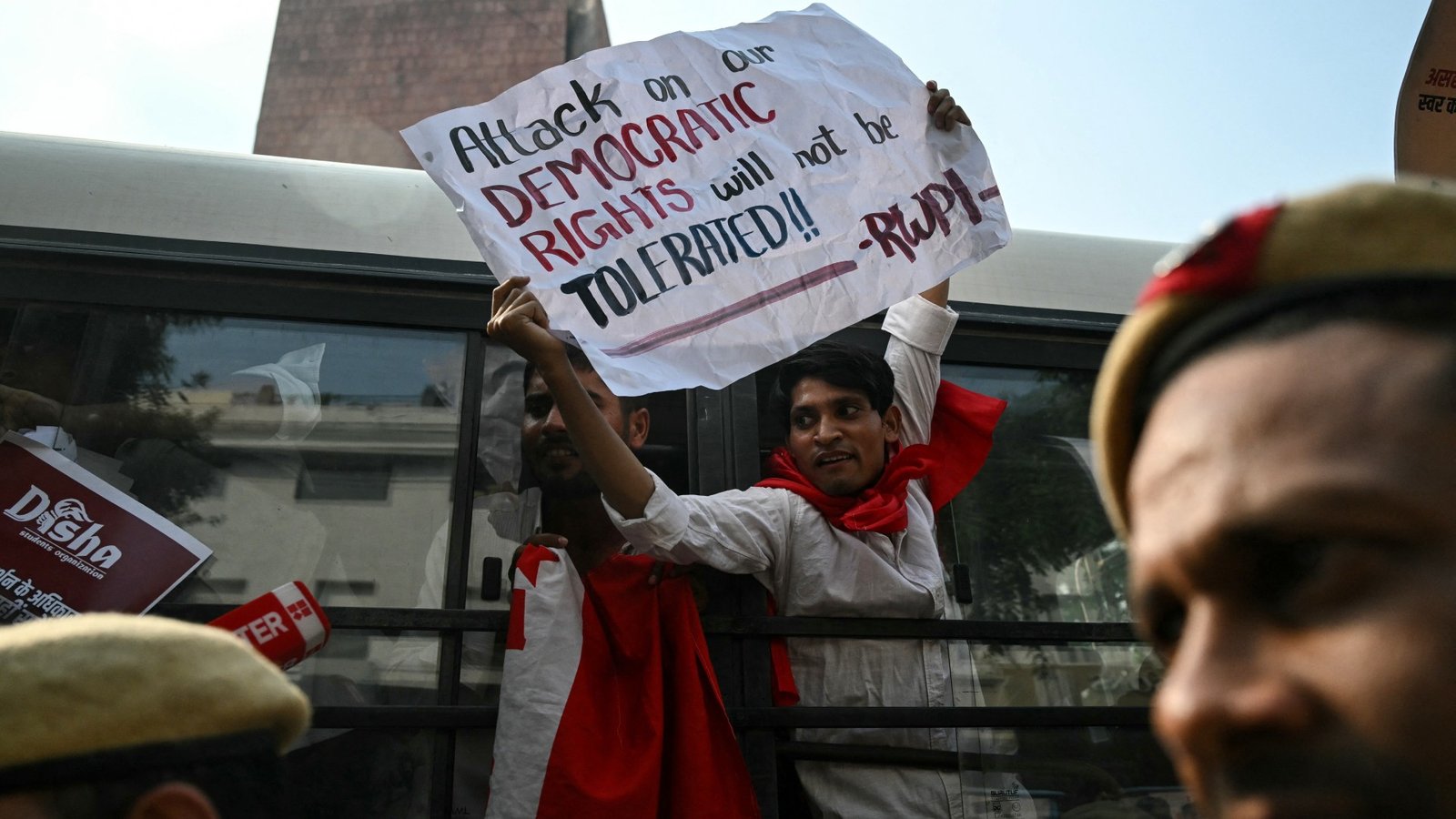
In response to these developments, the “Cockroach Janta Party” (CJP)—a protest movement that emerged from student and civil society frustrations—has taken to the streets. Under slogans like “Lehra Do Tiranga” (Wave the Tricolour), demonstrators have rallied in New Delhi demanding the resignation of Chief Election Commissioner Gyanesh Kumar and a full rollback of the SIR exercise.
The protests have been met with a heavy-handed response from law enforcement. Despite a ban on large gatherings in parts of the capital, thousands have attempted to organize, leading to mass detentions, including that of prominent student leaders. Critics have labeled these crackdowns a hallmark of executive overreach.
Institutional Concerns
The controversy extends into the heart of the Election Commission itself. Reports indicate that internal friction has peaked, with Election Commissioners Sukhbir Singh Sandhu and Vivek Joshi reportedly raising formal objections multiple times regarding the lack of transparency in voter list modifications and database management. While the ECI has publicly maintained that all decisions are unanimous, the internal dissent has only deepened public distrust.
For many, the fear is that the electoral rolls are being weaponized. In places like Odisha, residents report the filing of dubious “Form 7” applications—used to request the deletion of others’ names—fueled by xenophobic narratives. While some local officials have successfully restored names, the burden remains on the citizen to fight for their fundamental right to vote.
As India looks toward future electoral cycles, the debate over the SIR remains a flashpoint for the country’s democratic health, raising urgent questions about whether institutional autonomy can survive the current political climate.
Disclaimer: This content is auto-generated for informational purposes only.
Source: Read Original News