







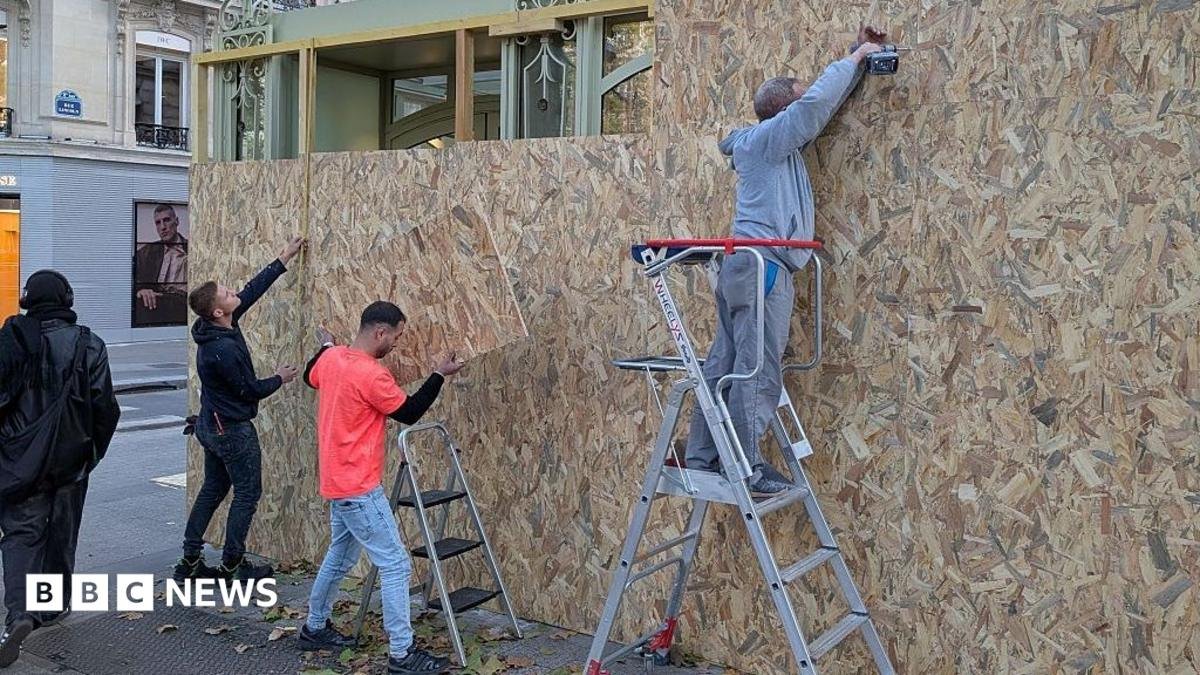
France is bracing for a tense weekend as the country enters a state of high alert ahead of a new wave of nationwide protests this Saturday. The demonstrations follow a week of unprecedented civil unrest that shocked the nation and left the government scrambling to restore order.
Authorities have imposed sweeping restrictions on movement in major urban centers, yet organizers—a coalition of students, trade unions, and anti-government groups—expect hundreds of thousands to take to the streets. The massive mobilization comes exactly one week after the outbreak of riots on October 17, which saw significant destruction and triggered widespread criticism of the government’s intelligence failures.
In a bid to prevent a repeat of last week’s scenes, the Interior Ministry has announced the deployment of 70,000 police officers. Interior Minister Laurent Nuñez took a firm tone on Friday, warning that security forces would be “uncompromising” toward those intent on causing chaos.
“We will not let anything go unchallenged,” Nuñez stated during a press briefing. “We will be uncompromising with the vandals, with the looters, and all those who commit acts of violence.” The Minister also pointed to a growing concern within security services regarding social media activity, noting that radical elements from the far left have been actively organizing calls for violence that operate outside the scope of the sanctioned protest marches.
The crackdown has already begun in the courtroom, with hundreds of individuals having been sentenced to prison time for acts of arson, looting, and vandalism following a series of expedited fast-track trials.
At the heart of the unrest is deep-seated public disillusionment. Citizens are reeling from intense cost-of-living pressures, exacerbated by official warnings that future administrations will likely be forced to implement severe spending cuts to stabilize the economy. While the demonstrations originated as a student-led movement demanding better infrastructure and an end to chronic staff shortages in high schools, the frustration has morphed into a broader anti-government outcry.
President Emmanuel Macron attempted to quell the rising tide on Friday by meeting with student representatives. While the student leaders acknowledged that the President had offered specific commitments regarding school reforms—with government advisors suggesting that a plan to improve educational conditions would be unveiled on Monday—the student movement remains defiant. Representatives told reporters following the meeting that, despite the promises, students should “continue to mobilize.”
With the country on a knife-edge, the government is caught in a delicate balancing act: attempting to address genuine grievances regarding education and economic instability, while maintaining a heavy security presence to deter the violent fringes that have threatened to hijack the national narrative. As the sun rises on Saturday, the streets of Paris and other major cities will once again become the stage for a critical test of the President’s authority.
Disclaimer: This content is auto-generated for informational purposes only.
Source: Read Original News