









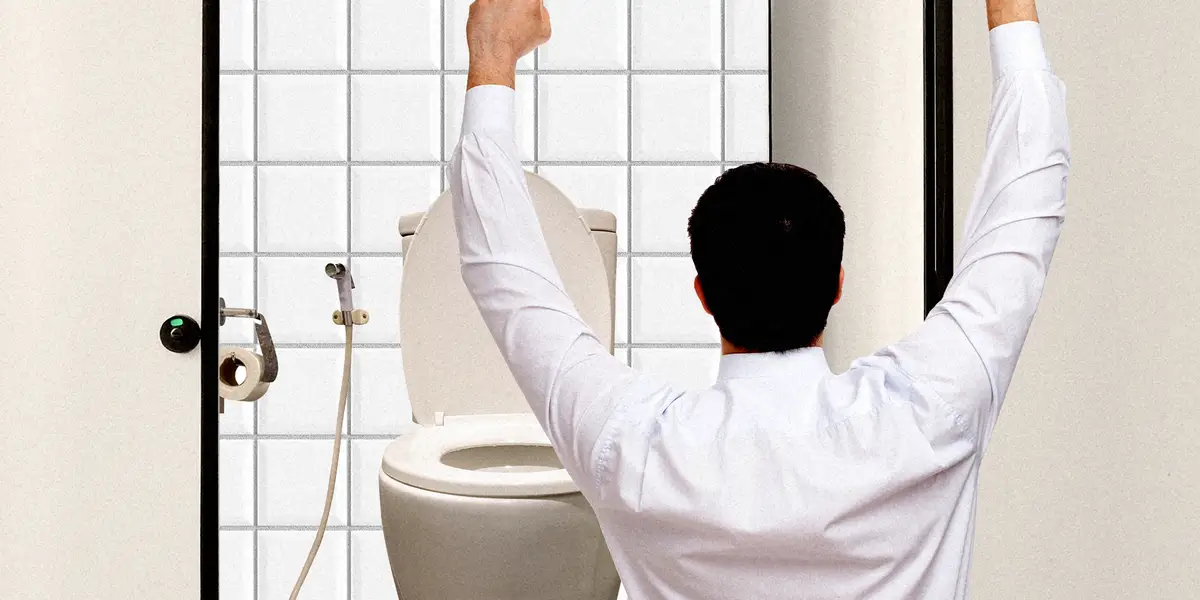
For years, the gold standard of Silicon Valley workplace perks was defined by an excess of creature comforts: gourmet catered lunches, artisanal beer taps, and nap pods designed to keep developers coding around the clock. But as the modern workforce reevaluates its office requirements, a new, more practical luxury is taking center stage: the bidet.
From engineering interns to logistics specialists, employees are increasingly viewing the presence of bidet-equipped toilets as a key indicator of corporate culture. For many, this isn’t just about hygiene—it’s a symbol of whether a company truly prioritizes the day-to-day comfort of its people.
The New Frontier of Office Perks
Seungmin Hong, a University of Waterloo student and founder of the startup Simantic, found himself weighing job offers from major tech players and smaller robotics firms. During a pivotal interview at Simbe Robotics in San Francisco, a visit to the restroom proved to be the deciding factor. Finding a high-quality bidet waiting for him signaled a level of employee care that resonated more than empty promises of “work-life balance.”
This shift comes as the bidet—once considered a European or Asian specialty—moves firmly into the mainstream. Manufacturers like Toto report massive growth, with global sales of their Washlet line exceeding 70 million units. As more Americans adopt the habit at home, the lack of such facilities at work is becoming a point of friction, leading some to advocate for office-wide upgrades.
Navigating the Corporate Request
Requesting a bathroom upgrade is rarely a standard agenda item for a town hall meeting. To bridge this communication gap, data scientist Jonathan Brown launched buttstuff.work, a platform designed to let employees register their interest in office bidets without the awkwardness of a direct face-to-face pitch to management.
The campaign has seen some success. At Swifthouse, a logistics firm near Philadelphia, fulfillment specialist Cynthia Howard successfully persuaded her CEO, Dave Harriger, to install a $60 unit in the shared office restroom. While Harriger admitted he was not personally a fan of the initial “cold-water surprise,” he noted that the investment was a small price to pay for team morale.
Beyond the Novelty: A Competitive Edge
Recruiters and management consultants are starting to take notice of the trend. As companies struggle to enforce return-to-office mandates, the state of office infrastructure is increasingly being scrutinized as a recruiting and retention tool. Robert Hatta, an executive recruiter in Columbus, Ohio, suggests that if companies want to lure talent back to the cubicle, they need to focus on fundamental human dignity.
For many, the state of the restroom is the ultimate litmus test for a company’s values. If an office provides high-end amenities like air purifiers or ergonomic chairs, advocates argue that a bidet is the next logical step in creating a modern, respectful work environment.
As the tech industry continues to evolve, the “office experience” is becoming less about flashy gimmicks and more about thoughtful, daily-use improvements. For innovators like Hong, whose current startup is in the early stages of scaling, the plan is simple: once they secure their first dedicated office space, the bidet is at the top of the procurement list. It serves as a reminder that in the hyper-competitive world of tech, sometimes the most important innovation isn’t software—it’s the basic amenities that make a workspace feel like home.
Disclaimer: This content is auto-generated for informational purposes only.
Source: Read Original News