







As Canada prepares to participate in the COP17 United Nations biodiversity conference in Armenia this week, the federal government finds itself caught in an increasingly polarized debate over its environmental legacy. While Ottawa arrives on the international stage with a portfolio of ambitious conservation pledges, domestic critics argue that the government’s concurrent legislative agenda undermines its global messaging.
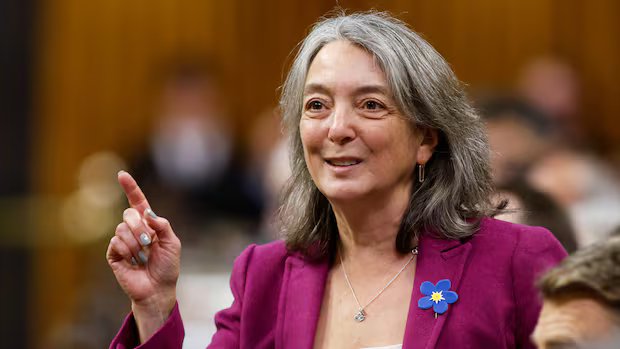
Environment and Climate Change Minister Julie Dabrusin is set to lead the Canadian delegation, emphasizing the country’s unique global position. “Canada is the second-largest country in the world. We have the longest coastline in the world. So whatever we do has a real global impact,” Dabrusin said ahead of her departure. She noted that international forums provide a critical platform for Canada to exert leadership and push for global commitments to emission reductions and habitat protection.
The government’s conservation record has seen significant recent activity. In October, Minister Dabrusin announced the protection of a vast tract of forest and peatlands near Kapuskasing, Ontario, spanning an area 1.3 times the size of Toronto. Looking ahead to 2025, the federal government has committed to backing an Indigenous-led conservation project in the Northwest Territories—”Our Land for the Future”—which aims to protect 380,000 square kilometres of land and water, an area comparable in size to Japan.
Despite these achievements, the government faces a surge of criticism regarding legislative maneuvers at home. Central to the controversy is the Building Canada Strong Act, or Bill C-39. This omnibus legislation proposes amendments to several federal environmental laws, a move the government describes as a way to streamline project assessments. However, environmental advocacy groups view the bill as a direct threat to the very ecosystems the government claims to be saving.
“I think the big headline specifically for Canada is policy incoherence,” said Salomé Sané, a nature and biodiversity campaigner for Greenpeace Canada. “We have the same federal government pushing for a very destructive bill under C-39 that will allow development projects to be built by bypassing, amongst other things, environmental regulations.”
Sané questioned the government’s dual approach, asking, “Are we protecting nature or are we destroying nature? Because going to COP to talk about nature protection and not defending nature at home will not allow us to deliver nature recovery.”
In response to these allegations of “incoherence,” Minister Dabrusin maintained that the government has remained responsive to public feedback, noting that it had already abandoned several controversial amendments following significant pushback. She insisted that the legislation is focused on procedural efficiency rather than the dilution of environmental safeguards. “There’s nothing in the policies we’re putting forward that reduces our environmental standards,” Dabrusin stated.
The stakes in Armenia are high, as the international community attempts to accelerate progress toward the Kunming-Montreal Global Biodiversity Framework, a landmark 2022 agreement that set a target to conserve 30 per cent of the world’s lands and waters by 2030.
Current global trends, however, remain discouraging. During his remarks in Yerevan last week, UN Secretary-General António Guterres cautioned that the world is currently falling short of its promises. He warned that even if existing national commitments are fully met, current trajectories would only result in the protection of 26 per cent of terrestrial ecosystems and 12 per cent of marine ecosystems by the 2030 deadline. As Canada takes the stage at COP17, the pressure will be on the government to prove that its legislative actions at home can align with its stated goals on the global stage.
Disclaimer: This content is auto-generated for informational purposes only.
Source: Read Original News