







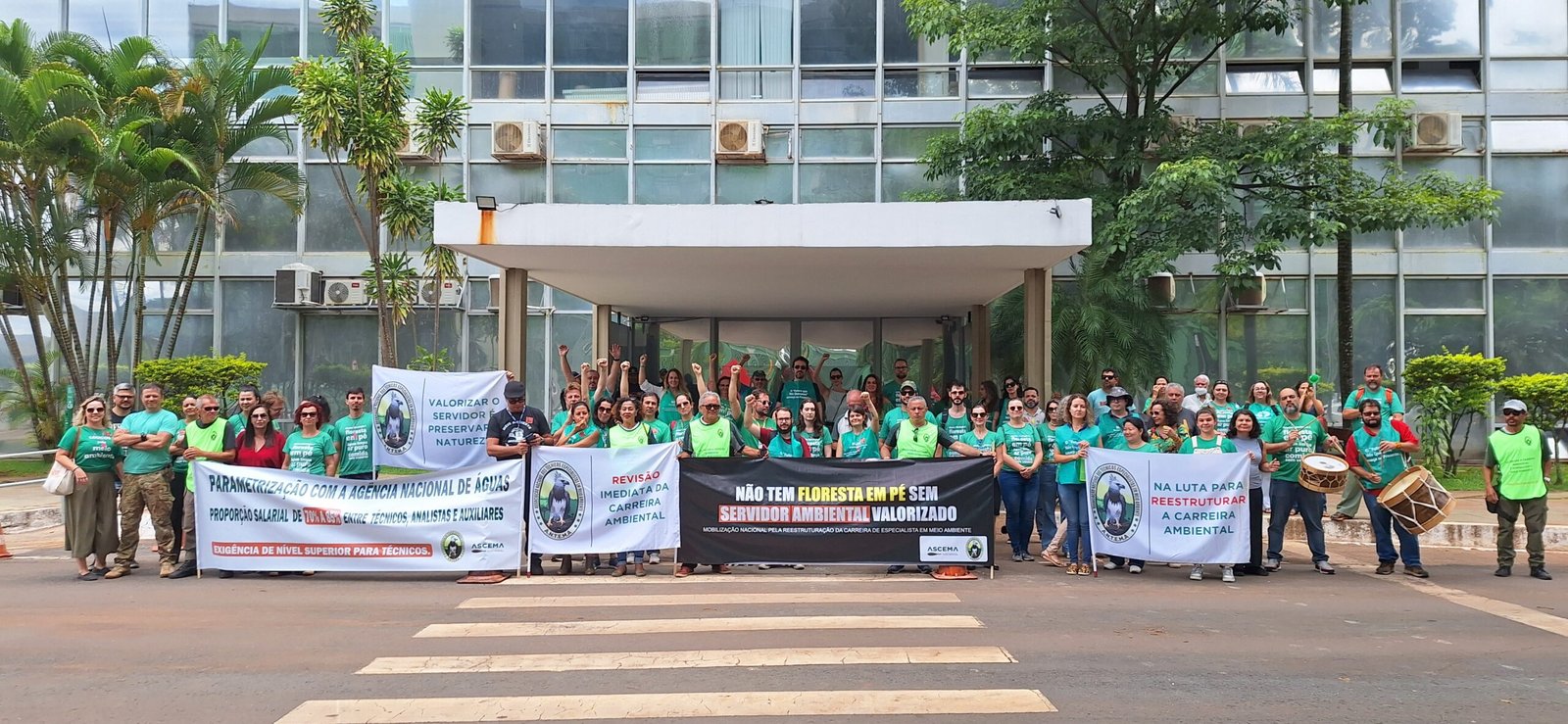
As Brazil approaches the October 25 presidential runoff, federal civil servants in the environmental and Indigenous affairs sectors are bracing for what many describe as a “déjà vu” of the institutional hostility they endured during the administration of Jair Bolsonaro. With Senator Flávio Bolsonaro polling as a strong contender, officials fear a return to the systematic dismantling of regulatory agencies and a campaign of intimidation against those tasked with protecting the nation’s natural resources.
The anxiety is rooted in the candidate’s campaign rhetoric, where he has pledged to eliminate “environmental hurdles” to allow rural landowners to operate with fewer restrictions. For those working within agencies like IBAMA (the Brazilian Institute of the Environment and Renewable Natural Resources) and FUNAI (the National Indigenous People Foundation), this platform signals a return to a high-risk working environment.
“We literally have a target in the middle of our forehead,” said Tânia Maria de Souza, president of the federal environmental civil servants’ association, Ascema.
Under the previous Bolsonaro administration, the environmental sector served as a primary target for aggressive deregulation. Between 2019 and 2022, staff members faced the forced relocation of departments to “punishment rooms,” the revocation of access to internal management systems, and widespread censorship of scientific findings. During this period, complaints of harassment and violence filed with the Federal District Labor Prosecutor’s Office nearly tripled.
The strategy, famously described by former Environment Minister Ricardo Salles as an opportunity to “let the cattle herd run through,” aimed to bypass legislative oversight to gut environmental protections. Today, activists fear a more refined version of this approach. Gabriela Lotta, a professor of public administration at the Getulio Vargas Foundation, warns that if Flávio Bolsonaro takes office, the institutional assault could be more severe than in 2019. She notes that the candidate’s team has learned the nuances of the government apparatus, potentially allowing them to bypass traditional checks and balances more effectively.
The consequences of such policies have historically been devastating. During the 2019-2022 term, the lack of demarcation for Indigenous territories, combined with a weakened enforcement capacity, led to record-breaking deforestation and a sharp increase in violence against Indigenous peoples and public servants. Alexandre Bahia Gontijo, a former director of Ascema, recalled the tension of conducting field work during that period, where a government-issued badge was often the only thing protecting staff from threats by illegal loggers and miners.
In response to the current electoral stakes, environmental officials and Indigenous groups have launched a mobilization campaign to support incumbent President Luiz Inácio Lula da Silva. Following Lula’s 2023 inauguration, many agencies held symbolic “cleansing” rituals to remove the “bad energies” of the previous administration. Now, as the runoff nears, these same groups are issuing open letters and hosting public broadcasts, pleading with the Brazilian electorate to consider the future of the Amazon and its protectors before casting their votes.
While the current administration has sought to reverse the rollbacks of the Bolsonaro era, the fragility of these institutions remains a point of concern. For civil servants like Souza, the fear is not just about policy changes, but about the survival of the rule of law within the environmental sector. “The tendency is toward deregulation, a general laissez-faire,” she said. “Flávio Bolsonaro says he will end illegal deforestation. Of course, he will make all deforestation legal.”
As the Oct. 25 election approaches, the standoff highlights the deep divide in Brazil regarding the role of state agencies in balancing agricultural development with the preservation of the nation’s ecological and human rights heritage. For the staff on the front lines, the outcome of the runoff will determine whether they return to an era of institutional persecution or continue the work of restoration.
Disclaimer: This content is auto-generated for informational purposes only.
Source: Read Original News