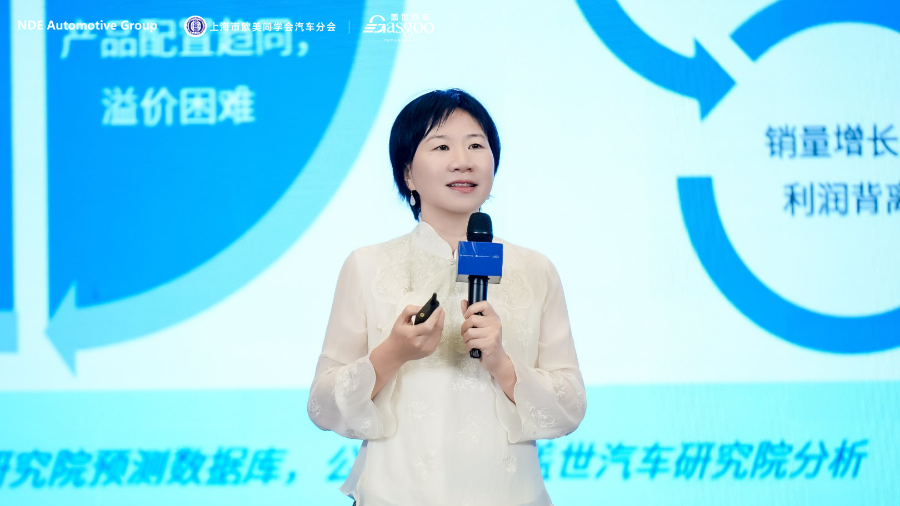









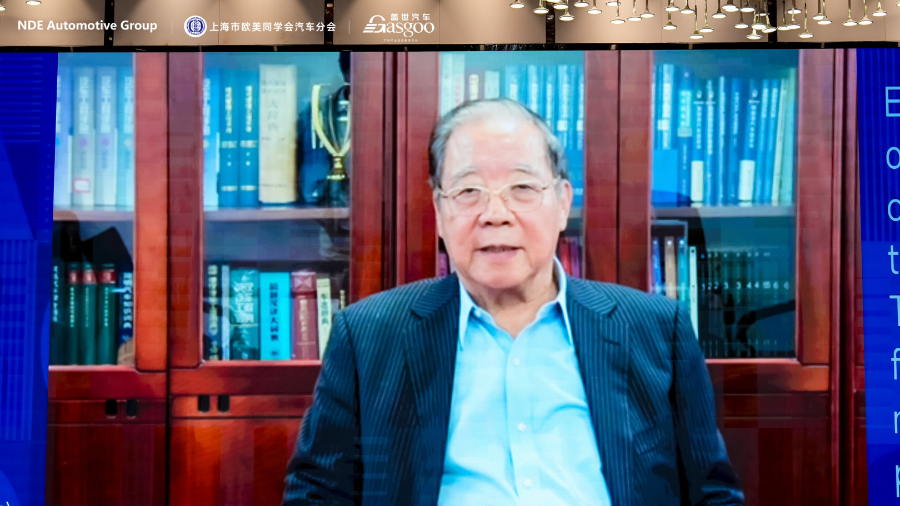
The Chinese automotive industry stands at a critical juncture, balancing its status as a global leader in new energy and smart-connected vehicles against the internal pressures of chaotic competition and structural inefficiencies. Addressing these challenges on October 23 at the 14th Automobile & Environment Innovation Forum and the 8th Gasgoo Awards in Munich, Fu Yuwu, honorary chairman of the Society of Automotive Engineers of China (SAE-China), outlined a roadmap for the industry’s next phase of evolution: a transition from rapid expansion to high-quality, rule-based growth.
Fu argued that the industry’s future success depends on a dual mandate: solving the “hard” technical bottlenecks that hinder innovation while simultaneously cultivating “soft” power. For the automotive sector, this shift signifies a move away from the development-oriented models of the past toward a construction-driven, inclusive framework. Central to this transformation is the fostering of an ecosystem—akin to providing the “sunshine, rain, and soil”—that encourages original breakthroughs and protects the talent essential for sustainable growth.
A primary concern raised by Fu is the state of the domestic market, which he described as suffering from cutthroat internal rivalry and disorderly competition. Despite China possessing the world’s most comprehensive supply chain and a dominant position in the electric vehicle (EV) sector, the industry’s international image is being compromised by inefficient practices and chaotic market behavior. Fu noted that the industry is not suffering from a deficiency of policies or laws; rather, the core issue lies in a lack of consistent, rigorous enforcement. To secure long-term stability and credibility, he urged the sector to transition toward rule-based management, emphasizing that a robust, rule-of-law mindset is essential to safeguard the broader innovation ecosystem.
Beyond internal governance, the industry must urgently pivot toward rigorous Environmental, Social, and Governance (ESG) standards. As Chinese automakers increasingly look toward global expansion, adhering to international ESG benchmarks is no longer optional but a competitive necessity. Fu warned that failing to bridge the gap in ESG compliance—aligning industrial output with environmental harmony and corporate social responsibility—could lead to significant roadblocks in international markets. He cautioned that this alignment cannot be achieved through top-down administrative fiat alone. Instead, it requires a substantive boost in soft power and a fundamental respect for talent, particularly during economic downturns, as human capital remains the industry’s most critical asset.
The strategy proposed by Fu also advocates for deep integration across the entire value chain. By fostering collaboration between academia, research institutions, and commercial entities, the industry can create a more resilient network that bridges the gap between R&D, production, supply, and service. This collaborative spirit is intended to move the sector toward win-win outcomes, replacing the current zero-sum approach that has characterized recent market friction.
Looking to the immediate future, Fu expressed confidence in China’s technological trajectory. He predicted that within the next few years, the country will secure major breakthroughs in foundational technologies, including critical basic software. As governance models evolve and the industry embraces inclusive, legalized reform, the sector is positioned to transition from a period of turbulent growth to one of sophisticated, globalized maturity. Ultimately, the industry’s ability to balance technological prowess with responsible, transparent management will determine whether China can maintain its lead in the global automotive landscape.
Disclaimer: This content is auto-generated for informational purposes only.
Source: Read Original News