









CHRISTCHURCH — The high-octane spectacle of the opening T20I between India and New Zealand served as a potent reminder of why the shortest format remains cricket’s most volatile frontier. While India emerged victorious in a scintillating chase to secure a 1-0 lead in the five-match series, the internal narrative shifting toward Saturday’s second encounter is far more cautionary. After successfully hunting down a daunting target of 226, the Men in Blue find themselves in the precarious position of a team that won the game but lost the tactical battle on the bowling front.
As the caravan moves to Christchurch, the air is thick with anticipation and, for the Indian management, a fair share of tactical anxiety. If the first match was a batting masterclass, the second promises to be a defensive litmus test. With the Hagley Oval pitch expected to offer yet another batter-friendly surface, India’s bowling unit faces the daunting task of tightening the screws against an aggressive New Zealand lineup that proved they are more than capable of dismantling even the most experienced attacks.
The bowling conundrum: A lingering vulnerability
The primary concern for India following the series opener remains the lack of depth and efficacy in the fifth and sixth bowling slots. In the absence of primary all-rounder Hardik Pandya—a player whose versatility traditionally balances the side—the current rotation has looked brittle. The experiment of utilizing part-time or secondary options failed to contain the Black Caps, leaving the main strike bowlers to carry an unsustainable load.
Nitish Kumar Reddy, entrusted with crucial overs, found the going difficult, leaking 40 runs across his four-over spell without yielding a breakthrough. While Naman Dhir proved his worth with a spectacular performance at the crease, he remained underutilized with the ball, leaving captain Shreyas Iyer with limited maneuvering room. For India to clinch the second T20I, they must find a way to integrate their bowling resources more effectively, or risk being blown away by the top-order aggression that characterized the New Zealand innings in the opener.
The Bhuvi factor and the veteran’s comeback
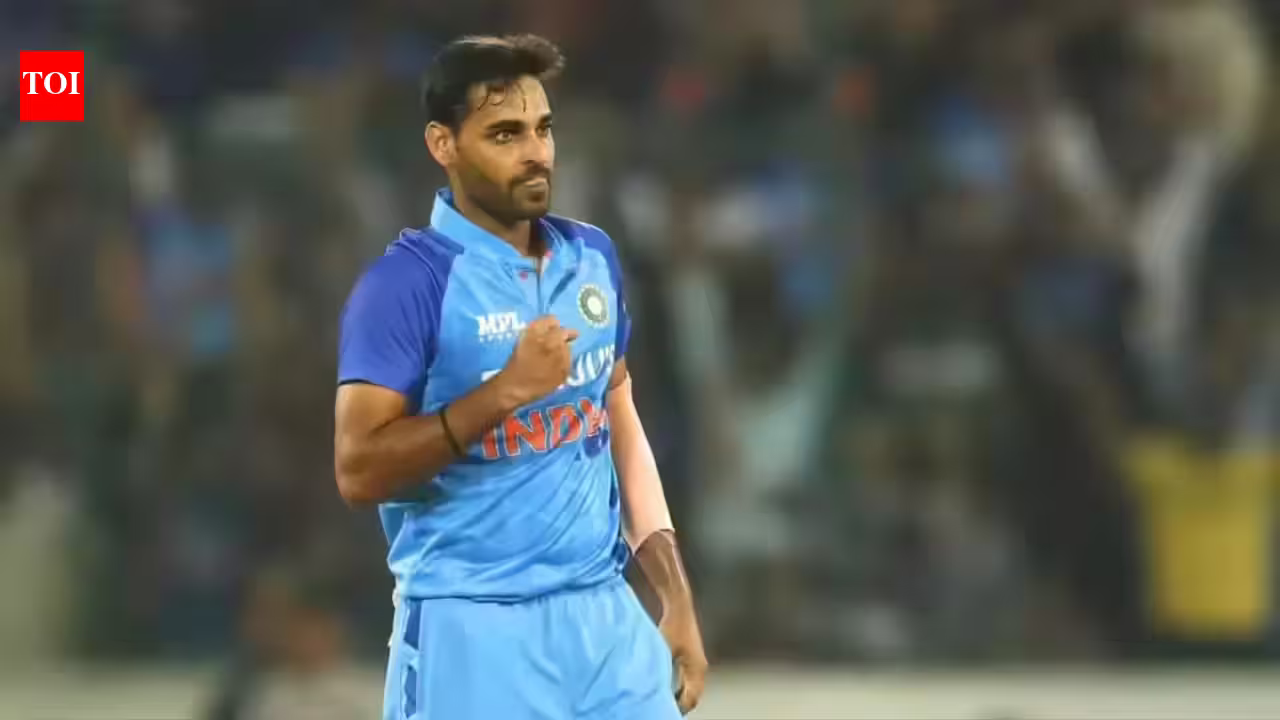
Perhaps the most discussed element of the first match was the return of veteran seamer Bhuvneshwar Kumar. Making his comeback to the international fold after a hiatus of nearly four years, the experienced pacer faced an uphill battle. The rust was visible as he conceded 49 runs in his four-over allocation. Compounding the issue were uncharacteristic lapses in discipline, including two no-balls and two wides that gifted the hosts free hits and additional runs during the powerplay.
The New Zealand opening duo of Finn Allen and Tim Seifert were ruthless, targeting both Bhuvneshwar and Arshdeep Singh from the onset. By forcing the Indian quicks to deviate from their lengths, the Kiwis successfully nullified the swing that the Indian veteran is historically known for. Heading into Christchurch, the coaching staff will likely emphasize poise and line accuracy over raw aggression, knowing full well that another night of wayward deliveries could easily flip the series trajectory.
Tactical adjustments for the Hagley Oval
With the series now moving to the second leg, both sides are expected to keep their cards close to their vests regarding final playing elevens. For India, the depth of their squad—featuring the likes of Sanju Samson, Abhishek Sharma, and the dynamic spin duo of Varun Chakaravarthy and Kuldeep Yadav—gives them options to pivot. However, the balance between strengthening the bowling attack and maintaining the batting firepower that bailed them out in the opener remains a delicate tightrope walk.
New Zealand, led by the astute Mitchell Santner, will be looking to capitalize on the psychological edge they gained during their dominant batting display. With hitters of the caliber of Glenn Phillips, Daryl Mitchell, and the ever-reliable Devon Conway in the ranks, the hosts possess the firepower to replicate their 226-run performance. Their bowling unit, bolstered by the pace of Lockie Ferguson and the seasoned Kyle Jamieson, will be aiming to hit the deck hard and exploit any surface variations in Christchurch.
Looking ahead: The Christchurch showdown
The atmosphere at Hagley Oval will be electric as India attempts to double their lead and New Zealand looks to restore parity. For the visitors, the formula is clear: the batters have established they can chase anything, but the bowlers must provide the cushion of control.
If the first match taught us anything, it is that in modern T20 cricket, a 226-run chase is a luxury, not a sustainable strategy. India will need to find the discipline that escaped them in the series opener, ensuring that their bowlers operate with the same intent as their batting lineup. As the series progresses, the side that manages to solve its bowling deficiencies—either through better execution or tactical tweaks—will likely be the one to lift the trophy at the end of this hard-fought campaign.
Squads for the 2nd T20I:
India: Shreyas Iyer (c), Abhishek Sharma, Sanju Samson (wk), Vaibhav Sooryavanshi, Tilak Varma (vc), Axar Patel, Shivam Dube, Nitish Kumar Reddy, Naman Dhir, Prince Yadav, Mayank Yadav, Arshdeep Singh, Bhuvneshwar Kumar, Varun Chakaravarthy, Kuldeep Yadav, Kumar Kushagra (wk).
New Zealand: Mitchell Santner (c), Finn Allen, Michael Bracewell, Mark Chapman, Devon Conway, Jacob Duffy, Lockie Ferguson, Zak Foulkes, Matt Henry, Bevon Jacobs, Kyle Jamieson, Adam Milne, Daryl Mitchell, Glenn Phillips, Tim Seifert, Nathan Smith.
Disclaimer: This content is auto-generated for informational purposes only.
Source: Read Original News