







CHRISTCHURCH — In a sport often defined by the patience of a test match, Abhishek Sharma is rewriting the manual on explosive aggression. On a crisp Saturday in Christchurch, the young Indian opener ascended to a stratosphere no batter in the history of T20 Internationals has ever reached, officially becoming the first player to smash 100 sixes within the high-stakes pressure of the powerplay.
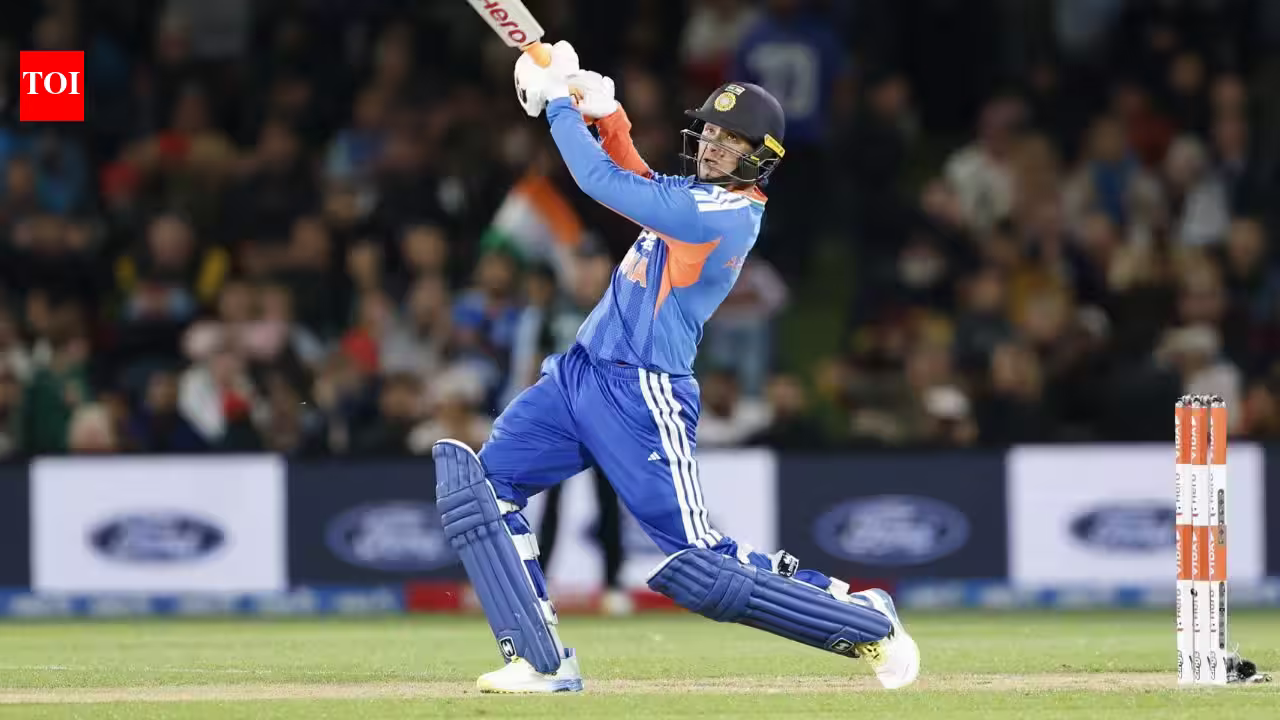
The landmark moment arrived in the third over of India’s chase against New Zealand. Facing Kiwi pacer Matt Henry, Sharma didn’t hesitate; he cleared his front leg and launched a thunderous strike over extra cover. The ball soared into the Christchurch night, marking his 100th career six in the first six overs—a statistic that underlines his singular approach to the game: hit early, hit hard, and keep the scoreboard moving before the field spreads.
A New Benchmark for Power Hitting
Sharma’s rise has been nothing short of meteoric. Since making his T20I debut in 2024, the southpaw has effectively rendered previous powerplay records obsolete. By surpassing the legendary Rohit Sharma—who held the mantle with 98 powerplay sixes—during the series opener on Thursday, the youngster signaled a changing of the guard.
The numbers are as staggering as the shots themselves. While Rohit Sharma recorded his 98 powerplay maximums at a frequency of one every 17.05 balls, Abhishek Sharma’s efficiency is in a different league entirely, striking a six every 7.77 balls. This rate of scoring, combined with his existing status as the record-holder for the fastest T20I century by a batter from a full-member nation, confirms that India has unearthed a generational talent capable of dismantling even the most disciplined bowling attacks in the world.
The elite list of powerplay specialists currently looks like this:
- *100 – Abhishek Sharma (7.77 balls per six)**
- 98 – Rohit Sharma (17.05 balls per six)
- 97 – Martin Guptill (16.58 balls per six)
- 94 – Paul Stirling (21.03 balls per six)
- 87 – Quinton de Kock (15.80 balls per six)
Resilience in the Face of Adversity
Despite the historic milestone, Saturday’s match served as a stark reminder that even the most aggressive players are susceptible to the pressure of a shifting pitch. Sharma’s innings eventually concluded in the ninth over, caught by Mitchell Santner after a brisk 27 off 21 balls. With Sharma back in the pavilion and the top order struggling, India found themselves in a precarious position at 112/6 in the 15th over, staring down the barrel of a potential series-leveling defeat.
The target of 180, set largely by a gritty 70 from Glenn Phillips and a half-century from Bevon Jacobs, looked increasingly daunting as Mitchell Santner produced a masterclass in spin bowling. Santner’s figures of 4/21 threatened to stifle the Indian lineup, weaving a web that dismantled the middle order and put New Zealand in the driver’s seat.
The Varma-Reddy Rescue Act
With the required run rate climbing and the visitors wobbling, Tilak Varma delivered a performance that will be remembered for its cool-headed maturity. Varma, who finished unbeaten on 51 off just 26 deliveries, single-handedly turned the tide. His assault on the Kiwi bowlers—punctuated by six boundaries and a crucial six—dragged India back into the contest.
Partnering with Nitish Kumar Reddy, who played a vital supporting role with an unbeaten 26, the duo navigated the final overs with composure. It was Reddy who ultimately struck the winning runs, sealing a four-wicket victory and handing India a commanding 2-0 lead in the five-match series.
While the night will be remembered for the collective resilience of the Indian lower-middle order, it was Abhishek Sharma’s historic entrance that set the tone. In an era where the T20 game is evolving at a breakneck speed, Sharma has carved out a niche that is as statistically significant as it is aesthetically pleasing. For the New Zealand bowlers, the challenge for the remaining three games is clear: find a way to contain the man who views the powerplay not as a period of tactical buildup, but as an opportunity for carnage.
Disclaimer: This content is auto-generated for informational purposes only.
Source: Read Original News