








Financial Resilience and Scaling: Analyzing the Q2 Performance
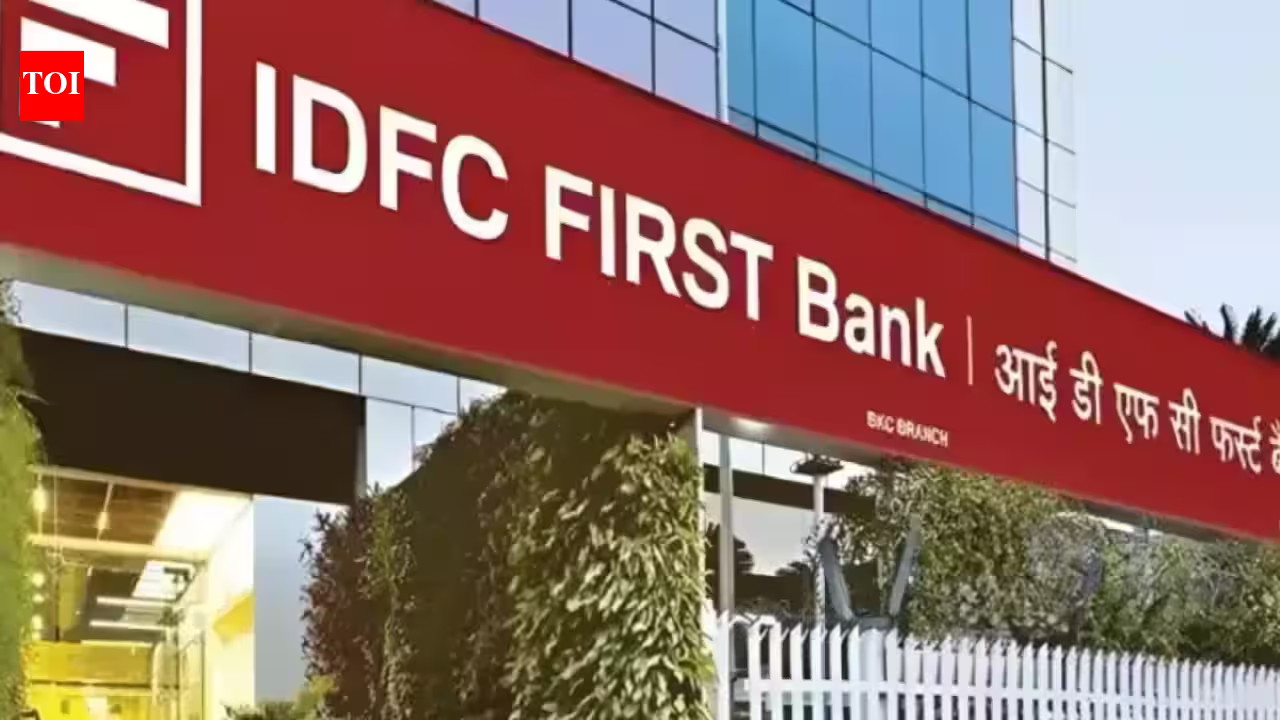
The Indian banking sector continues to demonstrate remarkable agility in the face of evolving macroeconomic conditions. The recent financial disclosure from IDFC First Bank for the second quarter of the 2027 fiscal year serves as a case study in effective balance sheet management and operational efficiency. With a 196.5 percent surge in profit after tax—reaching Rs 1,045 crore—the institution has underscored its ability to transition from an aggressive growth phase into a more mature, earnings-centric model.
A key driver of this performance is the robust expansion of core operating profit, which climbed 38.5 percent to Rs 2,527 crore. In the context of the Indian retail banking landscape, where competition for deposits is fierce and margins are frequently compressed by regulatory requirements, this level of core profitability indicates a successful diversification of revenue streams. The 21 percent growth in net interest income (NII) reflects a disciplined approach to asset-liability management, ensuring that interest rate fluctuations do not disproportionately erode the bottom line.
Strategic Resource Allocation through FCNR(B) Deposits
One of the most notable aspects of IDFC First Bank’s recent strategy is its innovative mobilization of Foreign Currency Non-Resident Bank (FCNR(B)) deposits. By securing Rs 34,390 crore in such deposits, the bank has effectively utilized its digital infrastructure to tap into global liquidity pools without the overhead costs associated with international physical branches or subsidiaries.
From a treasury perspective, this move is highly strategic. The management highlighted that these deposits, typically structured with three-to-five-year tenures, provide long-term structural liquidity. Perhaps more importantly, the fully loaded cost of these funds—factoring in priority sector lending benefits—is approximately 1 percent lower than domestic fixed deposits. This creates a sustainable cost advantage that supports the bank’s net interest margin (NIM) trajectory in a high-interest-rate environment. While the surge in FCNR(B) deposits contributed to a slight dip in the CASA (Current Account Savings Account) ratio to 48.4 percent, the trade-off in terms of liquidity stability and cost-efficiency appears to be a calculated and beneficial decision.
Asset Quality and Risk Management Benchmarks
In the Indian financial system, asset quality remains the most critical barometer for investor confidence. IDFC First Bank’s data indicates a significant improvement in risk metrics, with gross non-performing assets (GNPA) dropping to 1.32 percent, down from 1.86 percent a year prior. Similarly, net NPA levels have tightened to 0.40 percent. These figures suggest that the bank’s credit underwriting standards have matured alongside its loan book.
The reduction in credit costs to 1.01 percent of average assets is particularly telling. It demonstrates that the bank is not merely growing its loan assets—which increased by over 30 percent to Rs 3,46,913 crore—but is doing so while simultaneously lowering its risk profile. By balancing rapid asset expansion with rigorous credit discipline, the bank is avoiding the common pitfalls of cyclical volatility that have historically hampered other private sector lenders. This disciplined credit growth is essential for maintaining a healthy return on assets (RoA), which stood at 0.93 percent for the quarter.
Operational Efficiency and Expense Management
The transition toward long-term profitability requires not only top-line revenue growth but also a rigorous focus on cost-to-income ratios. For two consecutive quarters, IDFC First Bank has maintained an operating expense growth rate that is more than 500 basis points lower than its income growth rate. This “operating leverage” is the holy grail of banking efficiency.
The improvement of the core cost-to-income ratio to 70.16 percent indicates that the digital-first approach to customer acquisition and service is finally yielding scale benefits. In a country like India, where physical infrastructure costs can be substantial, leveraging digital platforms allows banks to reach mass-market customers at a fraction of the traditional cost. As the bank scales further, the marginal cost of acquiring and managing each new loan or deposit should continue to decline, providing a cushion against potential sector-wide headwinds, such as the proposed regulatory changes regarding insurance commissions.
Market Outlook and Future Sustainability
Looking ahead to fiscal year 2028, the banking sector faces a landscape of evolving regulatory oversight. The Insurance Regulatory and Development Authority of India (IRDAI) has issued consultation papers regarding insurance commission structures, which could impact the fee-based income of many lenders. However, IDFC First Bank’s leadership has proactively indicated that the combined benefits of its low-cost FCNR(B) funding, ongoing internal cost savings, and product optimization are sufficient to offset these potential regulatory impacts.
This forward-looking guidance provides clarity to stakeholders. In the Indian market, where banking is increasingly tied to digital-first service models and diversified revenue streams, IDFC First Bank is positioning itself to be more than just a lender. By institutionalizing cost-efficiency and maintaining high credit standards, the bank is building an infrastructure capable of navigating both periods of economic expansion and monetary tightening.
Ultimately, the bank’s performance in Q2 FY27 is a testament to the maturation of its business model. By prioritizing the structural stability of its balance sheet through foreign deposits and demonstrating disciplined operational leverage, it is setting a high bar for mid-to-large-tier private banks. The challenge for the coming quarters will be to maintain this growth trajectory while navigating the complexities of the Indian credit cycle and ensuring that the digital-led deposit strategy remains as effective as it has been during this reporting period. With a clear focus on core operating profit and asset quality, the bank remains well-positioned to capitalize on the credit growth potential within the Indian economy.
Disclaimer: This content is auto-generated for informational purposes only.
Source: Read Original News