







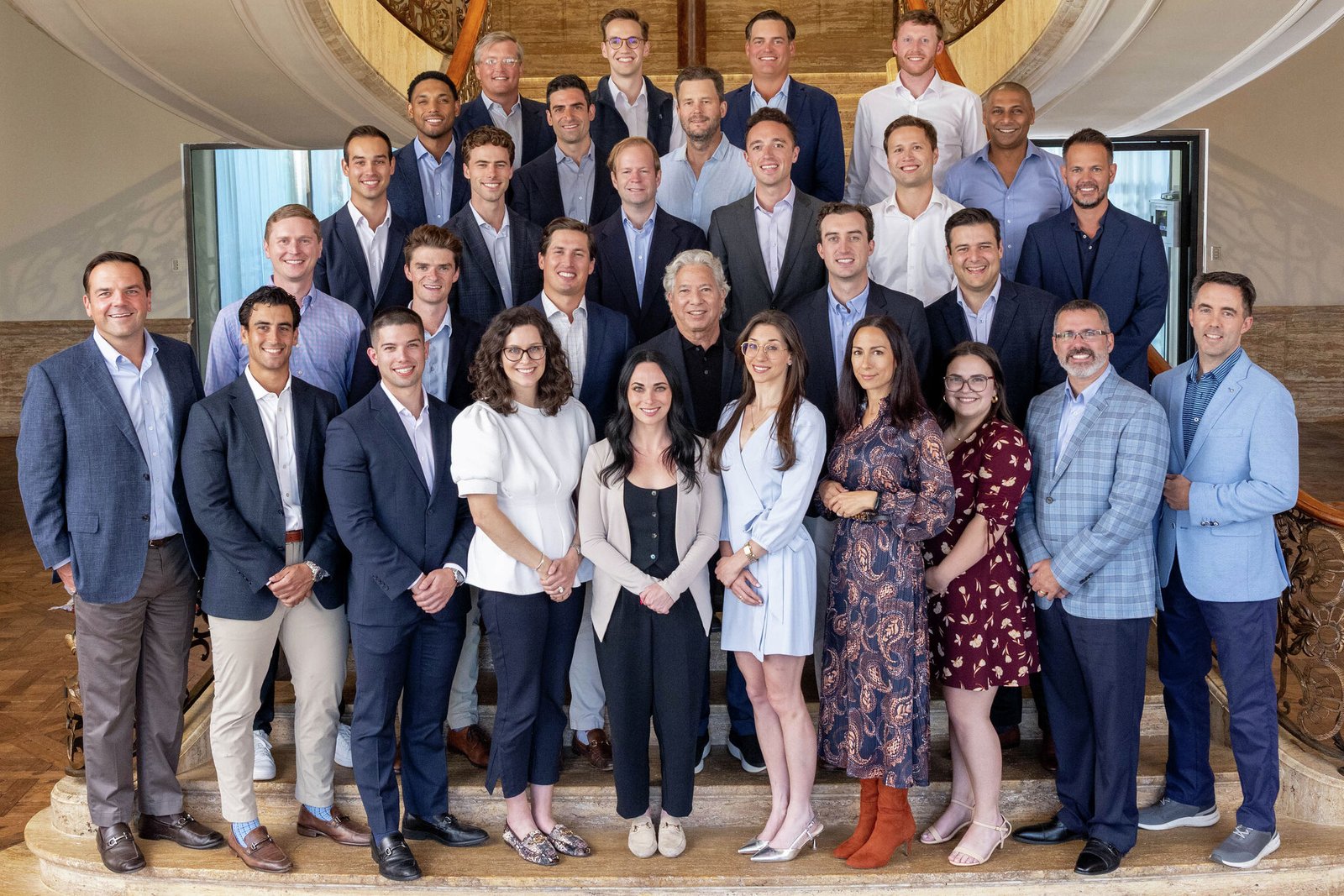
Princeton Equity Group, a firm co-headquartered in Dallas and New Jersey, has successfully closed its third private equity fund, securing $1.3 billion in just two months. This significant capital influx, which was oversubscribed, underscores the firm’s specialized focus on the franchising industry—a sector that co-founders Doug Kennealey and Jim Waskovich believe offers a unique, AI-resistant investment opportunity in a volatile economic landscape.
## A Specialized Approach to Franchising
While many private equity firms operate as generalists, Kennealey and Waskovich carved out a niche by narrowing their scope exclusively to franchisors. Since founding the firm in 2019, they have cultivated a portfolio of over 30 companies, including well-known brands like European Wax Center, Barry’s, and Massage Envy.
The firm’s investment philosophy centers on four core “lenses”: strong unit economics, recession resilience, low “fad risk,” and, most recently, AI resilience. According to Kennealey, the franchise model is inherently built for long-term durability. By focusing on businesses that rely on human-centric services—such as child development centers or specialized maintenance—the firm positions its assets as less vulnerable to the rapid displacement caused by automation and artificial intelligence.
## Leveraging Technology for Growth
A key differentiator for Princeton Equity Group is its integration of proprietary technology, specifically its “FusionPoint AI” software. This tool is designed to identify high-growth potential businesses and connect with founders before they hit the broader market radar.
In an era where technology firms often face pressure to pivot toward AI, Princeton Equity’s strategy is a reminder that AI’s role in finance is not just about replacing human labor, but about improving the precision of deal-making. By using data-driven insights to evaluate potential investments, the firm ensures its capital is deployed into companies that possess tangible, real-world utility that remains relevant even as digital landscapes shift. The firm’s ability to successfully raise $1.3 billion—partially from a growing base of international investors unfamiliar with the U.S. franchise model—highlights how sophisticated data analysis and clear strategy can attract global capital even during challenging times for the broader private equity market.
## Dallas as a Growing Financial Hub
The success of the firm also mirrors the rising prominence of Dallas as a premier financial center. Kennealey, who relocated to Texas over a decade ago, notes that the local landscape has undergone a seismic shift. Once a market dominated by smaller family offices, Dallas is now a major hub for institutional firms, aided by the arrival of giants like Goldman Sachs and Morgan Stanley.
This growth has transformed the region into a destination for top-tier talent. As private equity firms look to differentiate themselves in a crowded marketplace, the combination of a high-growth urban center like Dallas and a disciplined, industry-specific investment strategy appears to be a winning formula. For Princeton Equity Group, the path forward remains consistent: continuing to source proprietary deals and backing companies that provide essential, human-touch services that stand the test of time, proving that even in a world obsessed with the next digital breakthrough, the classic franchise model remains a powerful engine for economic stability and growth.
Disclaimer: This content is auto-generated for informational purposes only.
Source: Read Original News