






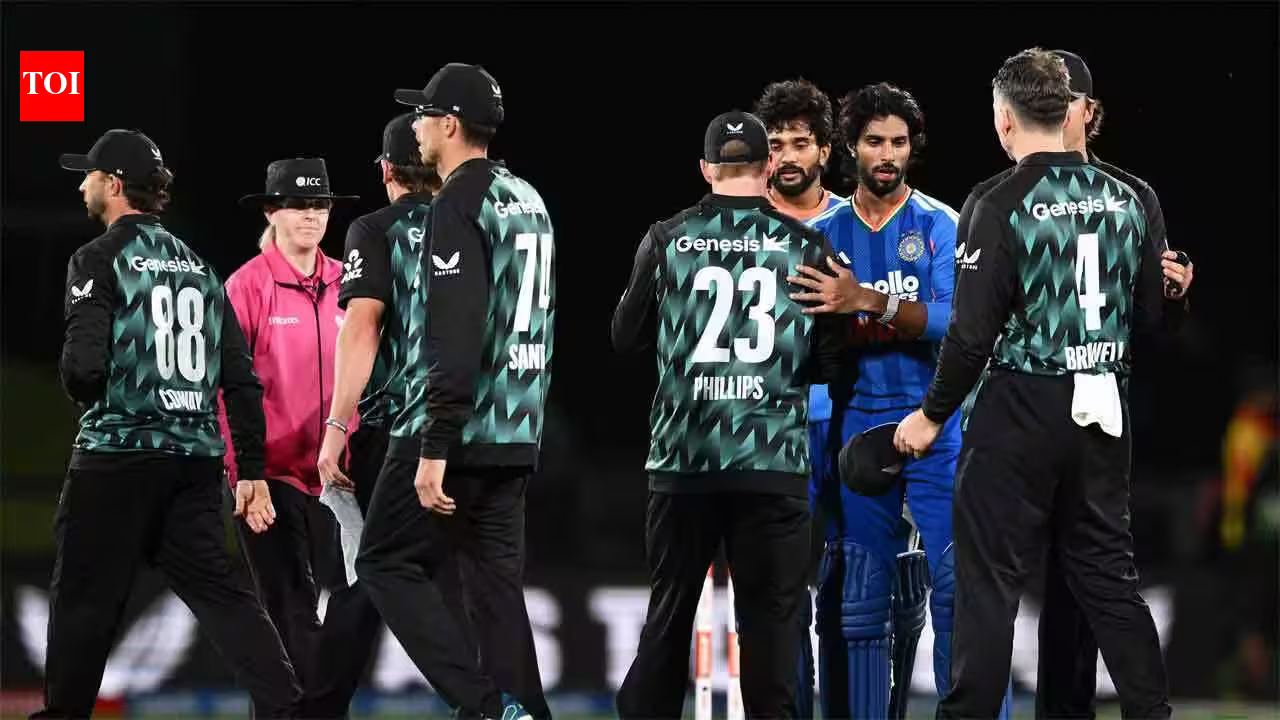
CRICKET’S GRUELING international calendar has forced New Zealand to adopt a pragmatic approach to team selection, with the Black Caps confirming a series of strategic squad rotations for the remainder of their T20 International series against India. As the intensity of the tour builds, the New Zealand management team has prioritized long-term player fitness, opting to shuffle their pace-bowling stocks to navigate the demands of a relentless schedule.
The decision comes following a high-octane start to the series, characterized by razor-thin margins and intense battles between bat and ball. With eyes set firmly on the upcoming ODI fixtures and the broader international season, the New Zealand selectors have opted for a “horses for courses” strategy, integrating fresh faces while granting necessary respite to their premier quicks.
Ferguson and Henry lead the rotation strategy
The most notable shifts involve the pace duo of Lockie Ferguson and Matt Henry, both of whom will be absent from the upcoming third T20I. For Ferguson, the break is brief; the express pacer is set to travel to Auckland this Sunday to rejoin the national setup in time for the final two T20Is at Eden Park and Seddon Park. His re-entry into the squad is viewed as a vital boost for the series climax, ensuring he remains primed for the speed-friendly conditions expected in the later stages.
Matt Henry, conversely, will pivot his focus toward the longer white-ball format. Following his exclusion from the third T20I, Henry will remain in Christchurch to begin specific preparations for the impending ODI series, with an official rendezvous scheduled in Auckland on November 2.
Adding to the complexity of the squad management is the strategic movement of Kyle Jamieson. The towering seamer will participate in the third T20I at Henry Stadium but will thereafter divert to Wellington. Instead of continuing with the T20 group, Jamieson will feature for Canterbury in the second round of the Ford Trophy at the Cello Basin Reserve on October 31. This move provides him with valuable competitive red-ball and 50-over match practice before he reunites with the national ODI squad, highlighting the Black Caps’ emphasis on keeping their multi-format assets sharp through domestic exposure.
Tickner and Clarkson injected into the mix
To compensate for the outgoing veterans, the New Zealand coaching staff has signaled a vote of confidence in the country’s burgeoning talent pool. Blair Tickner is set to link up with the squad in Wellington for the final three matches of the series, providing a high-intensity bowling option capable of hitting the deck hard.
Furthermore, Josh Clarkson will bolster the ranks as he joins the squad in Auckland for the final two T20Is. The inclusion of these players not only serves as a precautionary measure against injury but also offers the management team an opportunity to evaluate fringe talent against world-class Indian opposition. Meanwhile, Matt Fisher will provide immediate cover for the third T20I in Wellington before returning to the New Zealand A program at Lincoln University on Wednesday, ensuring the pipeline of talent remains active and match-ready.
Coach Walter backs squad depth
New Zealand head coach Rob Walter has been vocal about the necessity of these changes, emphasizing that the team’s ability to remain competitive hinges on smart physical management. Facing a packed itinerary, Walter believes that the depth of the current squad is one of the team’s greatest assets.
“It’s been a competitive start to the T20 series with two close games and plenty more cricket to come,” Walter observed. “We’re very fortunate with the depth in the squad to be able to call upon different players to help manage our pacers’ workloads, and to try and ensure they’re best placed to perform for the team for all the cricket coming up.”
The strategy is clear: rather than pushing a core group of bowlers to the point of exhaustion, New Zealand is betting on the collective strength of their roster to carry them through the India series. This forward-thinking approach is designed to ensure that when the high-stakes ODI matches arrive, the team will be firing on all cylinders, boasting a stable of bowlers who are both physically fresh and mentally prepared.
As the series moves toward its conclusion, the focus will shift to how well these new inclusions integrate into the side. While the rotation policy might disrupt the rhythm of a winning XI, for the Black Caps, it is a calculated risk—a necessary maneuver in the modern game where endurance is just as critical as technical proficiency. With the T20I series hanging in the balance, fans and pundits alike will be watching closely to see if this infusion of fresh energy can provide the tactical edge needed to overcome the Indian juggernaut.
Disclaimer: This content is auto-generated for informational purposes only.
Source: Read Original News