







Silicon Valley’s Ro Khanna Rises as Key Figure in Push for Epstein Files Transparency
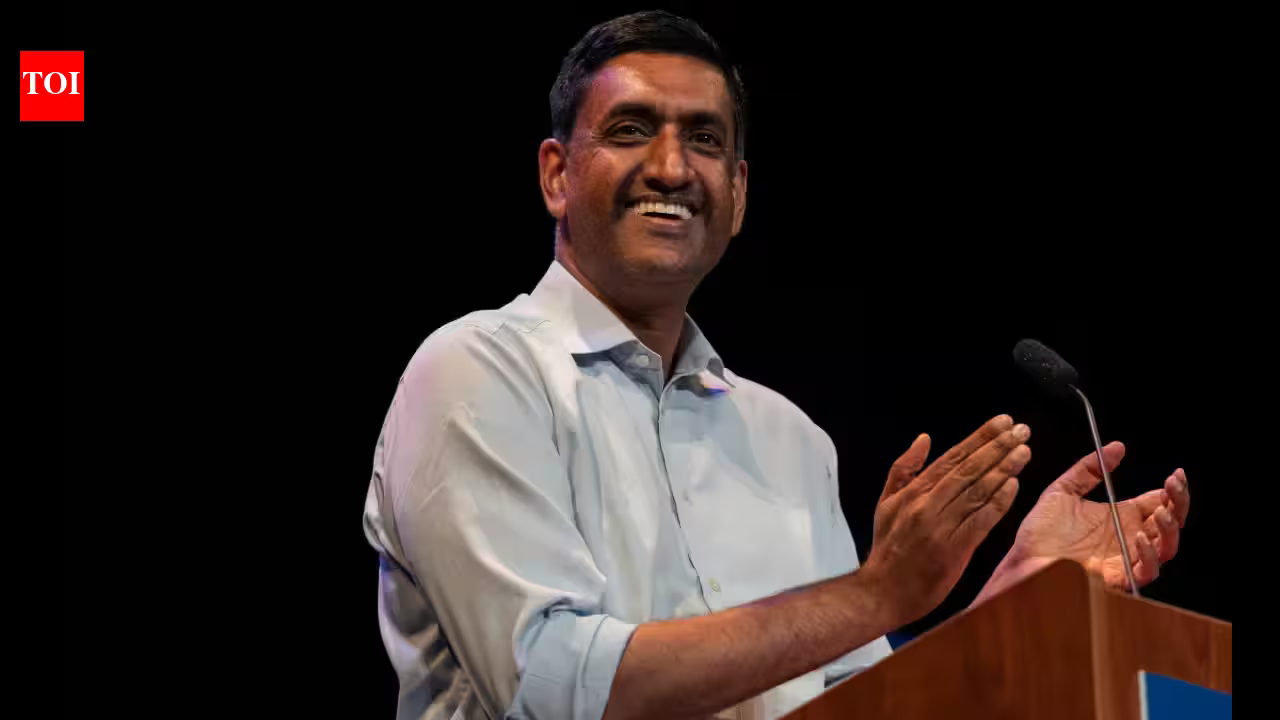
US Congressman Ro Khanna, a five-term Democratic representative from California’s 17th Congressional District, is carving out a unique political identity that bridges the high-tech corridors of Silicon Valley with the most contentious issues of national accountability. Currently, the Indian American lawmaker is spearheading a bipartisan charge for the full disclosure of documents related to the late convicted sex offender Jeffrey Epstein, a cause he argues is resonating deeply with disillusioned voters across the country.
A Bipartisan Campaign for Accountability
Khanna’s involvement in the Epstein case is not a solo effort; he has teamed up with Republican Congressman Thomas Massie to co-sponsor the Epstein Files Transparency Act. By turning this into a cross-party mission, Khanna has managed to elevate the issue beyond traditional partisan bickering.
During his recent campaign appearances in battleground regions, including Michigan, Iowa, and New Hampshire, Khanna has utilized the Epstein files as a lens to address systemic grievances. He posits that the handling of these sensitive records is inextricably linked to voter frustration regarding a “rigged economy” and entrenched government corruption. According to Khanna, internal polling suggests that the quest for transparency on this front is a decisive factor for a specific segment of the electorate—particularly those who feel a sense of betrayal by the political establishment and are open to shifting their allegiances.
Roots of Resilience: From Philadelphia to the Capitol
The drive for justice and public service has long been a part of Khanna’s personal narrative. Born in Philadelphia in 1976 to a middle-class immigrant family, his commitment to democratic ideals is deeply rooted in his family history. His grandfather, Amarnath Vidyalanker, was a freedom fighter who played an active role in Mahatma Gandhi’s movement against British colonial rule, enduring four years of imprisonment for his defiance.
This legacy of civil rights activism serves as a cornerstone for Khanna, who frequently draws parallels between the Indian independence movement and the American fight for equality. Raised by a chemical engineer father and a mother who supported children with special needs, Khanna grew up in an environment that prioritized hard work and community support. These formative experiences in diverse neighborhoods shaped his belief that the American dream should be accessible to all.
A Trajectory of Public Service
Khanna’s path to Congress was marked by early challenges and intellectual rigor. After moving to Silicon Valley with few professional ties, he navigated a career through technology law and economics instruction at Stanford University. His political journey began with an anti-Iraq War campaign at age 27, and while he faced initial electoral setbacks, his persistence eventually led him to the US Department of Commerce under the Obama administration.
His eventual victory in Silicon Valley, endorsed by former President Jimmy Carter, cemented his status as a fresh voice in American politics. As a former co-chair of Bernie Sanders’ 2020 presidential campaign and a key member of the Progressive Caucus, Khanna has balanced his local interests in technology innovation with national advocacy for systemic reform.
Impact on the Midterm Landscape
As the US midterm elections approach—contests that will decide the balance of power in the House and Senate—Khanna’s proactive stance has placed him at the center of the political conversation. By traveling to states where he was once an unexpected guest, he is attempting to mobilize voters through a platform of transparency and institutional reform. As he continues to pressure authorities to release the remaining files, his strategy remains clear: hold power to account to win the trust of an increasingly skeptical American public.
Disclaimer: This content is auto-generated for informational purposes only.
Source: Read Original News