








CAPE TOWN — The air inside the College of Magic in Cape Town is thick with the scent of wonder and the sound of nervous excitement. On a cloudy Saturday morning, the old Victorian mansion is transformed into a bustling hub of activity as dozens of young students, clad in crisp shirts, ties, and top hats, dash between classrooms.
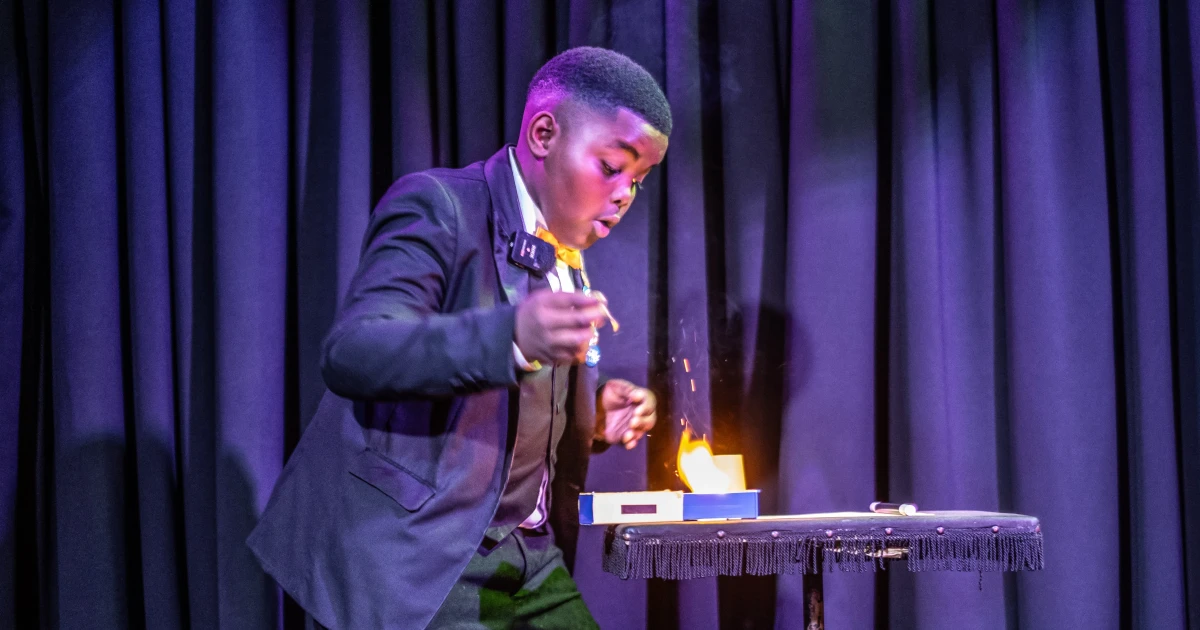
Among them is 11-year-old Lubelo Mthenjana. Dressed in a sharp black three-piece suit and a dapper yellow bow tie, he stands alone on a dark stage, steeling himself before his cue. When his name is called, he steps into the spotlight, arms wide and a bright, confident smile fixed on his face.
“Hello everyone! My name is Lubelo Mthenjana, and I will be performing for you … some magic!”
The audience, a mix of parents and children, watches spellbound as Lubelo makes paper clips vanish into a plastic cup, only to reappear inside a matchbox. His grand finale—conjuring sweets out of thin air and tossing them into the cheering crowd—brings the room to its feet. As he takes his final bow, his mother watches from the wings, her face glowing with pride.
This is the College of Magic, a unique institution often described as the “Hogwarts of Cape Town.” It is Africa’s only school for young stage magicians and illusionists. Every Saturday, roughly 190 students, aged 10 to 18, hone their craft, studying everything from puppetry and mime to stage magic, mentalism, and even escapology.
Founded in 1980 by David Gore, the school’s origins were an act of quiet defiance. During the height of the apartheid era, when racial segregation dictated nearly every aspect of South African life, the College of Magic was multiracial from day one.
“When we started out, our organization was illegal,” Gore recalls. “This was an opportunity for young people from all backgrounds to come together around a common interest in magic, to learn about each other and understand each other.”
Decades later, the school remains a vital social equalizer in a city still grappling with economic and racial divisions. While the six-year course requires a fee, 80% of the students attend on scholarships funded by private donors. Here, the classroom is the great equalizer; students who arrive in luxury cars study side-by-side with those who travel an hour by shared taxi, all sharing the same wands, stages, and goals.
For many students, the school provides a necessary escape from the realities of their neighborhoods, where unemployment and violent crime are persistent threats. Lubelo, who travels from the Khayelitsha township, sees magic as a way to spread joy.
“Many people are afraid of magic. But at the College of Magic, we don’t do dark magic,” Lubelo says. “We just do the kind that makes somebody smile.”
Today, the performance culminates in a junior competition. When the judges—all former students or teachers—announce the results, the room erupts. Lubelo takes first place in his age group, striding onto the stage to accept the honor before running into his mother’s arms. For these students, as founder David Gore puts it, “nothing is impossible.”
Disclaimer: This content is auto-generated for informational purposes only.
Source: Read Original News