








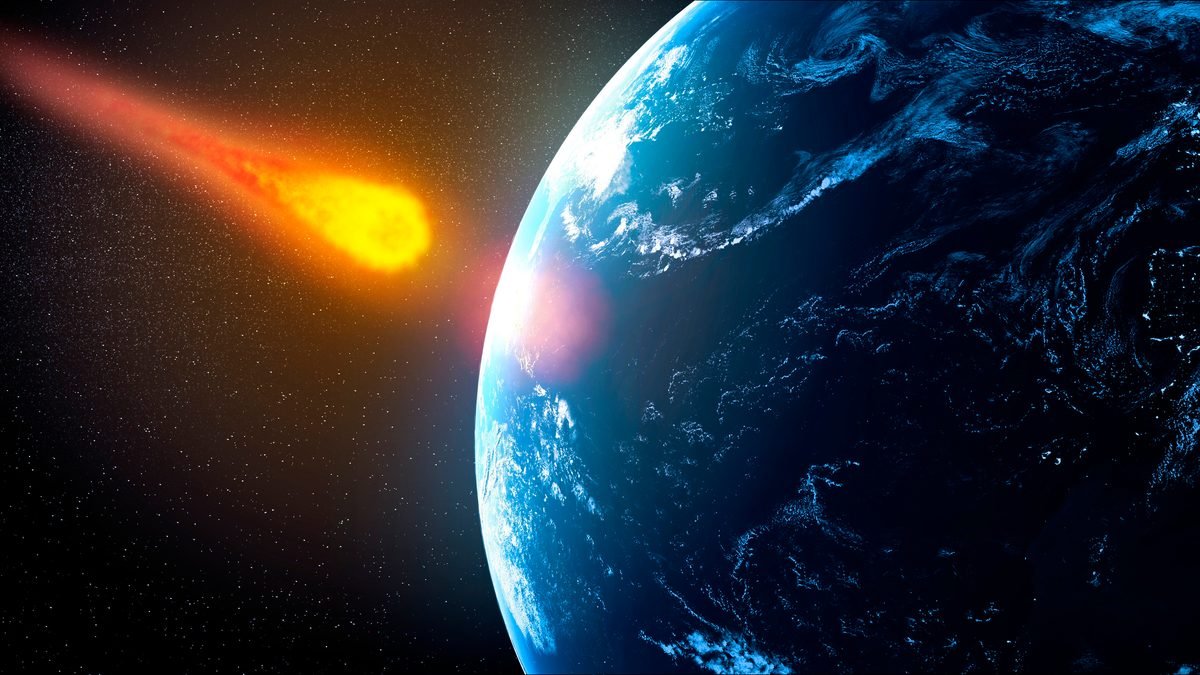
Thirty-five million years ago, the landscape of the eastern United States was unrecognizable. Where the bustling shores of the Chesapeake Bay now sit, the region was an open woodland savannah—a prehistoric habitat roamed by early horses like Mesohippus, cat-like nimravids, and the formidable “bear-dogs.” This relative tranquility was shattered when a five-kilometer-wide asteroid slammed into the continental shelf, carving out an 85-kilometer-wide crater 1.3 kilometers deep.
The Chesapeake Bay impact stands as one of the most significant geological events in North American history. During the Late Eocene, sea levels were significantly higher than today, placing the coastline roughly 100 kilometers inland. When the asteroid struck the carbonate-covered shelf, the result was cataclysmic. Creatures within the immediate vicinity faced an apocalypse similar to that experienced by the dinosaurs millions of years prior. Those that survived the initial vaporization were met with massive, hundred-meter-tall tsunamis—evidence of which has been identified as far away as the Sandhills of North Carolina—and widespread wildfires that swept across the coast.
This event was not an isolated incident. Researchers point to a cluster of impacts occurring during the Late Eocene, including the Popigai crater in Siberia and the Toms Canyon impact in New Jersey. These events suggest a period of orbital instability, perhaps triggered by a disturbance in the asteroid belt that rained debris down upon Earth. While no single impact caused a global mass extinction, some scientists hypothesize that this barrage contributed to a long-term pulse of global warming, eventually leading into the Eocene-Oligocene extinction event two million years later.
Though the skies have long since cleared, the geological scars of the Chesapeake impact remain deeply embedded in the region’s foundation. The crater was backfilled with a 1.3-kilometer-thick layer of “breccia”—a dense, chaotic mixture of crustal fragments blasted out by the impact. This rubble, which once held the consistency of wet concrete, is now the primary cause of regional land subsidence.
Modern seismic studies have identified a network of faults cutting through the sedimentary layers above this breccia. As these layers settle unevenly, the resulting ground instability poses an ongoing seismic risk to the region. Furthermore, the impact fundamentally altered the local hydrology. The crater created a massive, deep-seated reservoir filled with briny water nearly 1.5 times saltier than the ocean. Because this salty “fossil” water sits beneath the freshwater aquifers that local communities rely on, the United States Geological Survey (USGS) continues to urge extreme caution in deep-drilling projects to prevent the contamination of vital drinking water supplies.
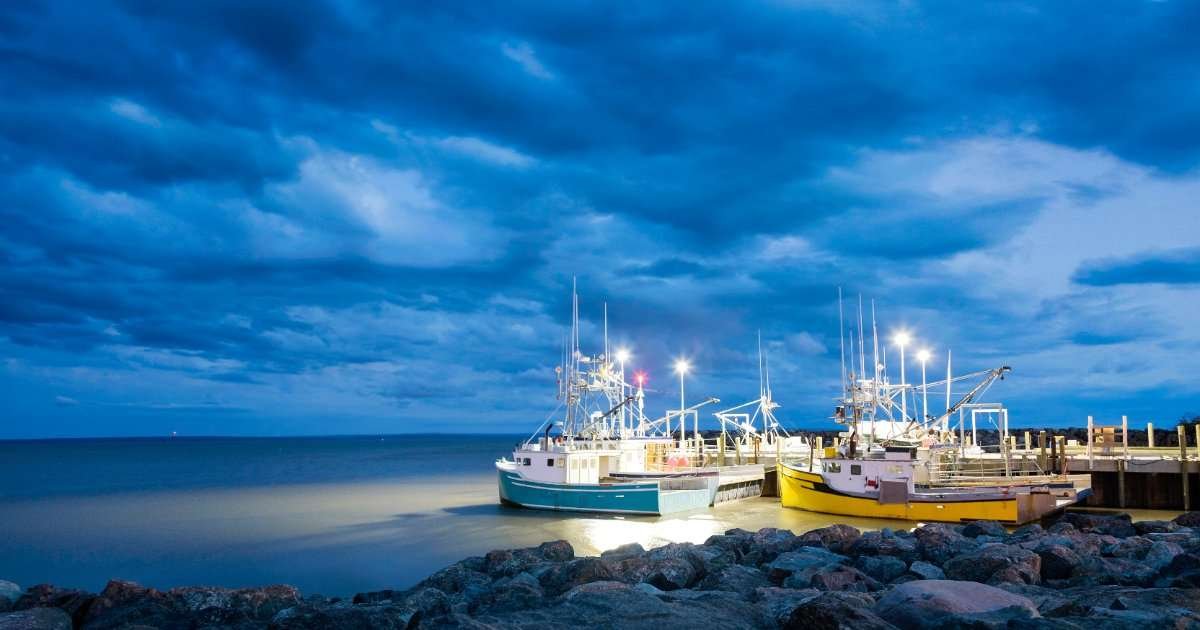
Despite this violent origin, the Chesapeake Bay has evolved into one of the most productive and diverse ecosystems on the planet. Today, it serves as a critical watershed for roughly 18 million people and acts as a life-sustaining estuary for over 300 species of fish. It is the primary spawning ground for approximately 90% of the Atlantic coast’s striped bass population and supports a thriving industry of oysters, clams, and blue crabs.
The bay’s current ecological success is a testament to the resilience of life in the wake of geologic trauma. The skies above the estuary are now patrolled by ospreys, bald eagles, and peregrine falcons, while its waters host everything from bottlenose dolphins to occasional wandering whales. Managed today by the Chesapeake Bay Program, this unique environment persists as a vibrant, living reminder of a planet that has been shaped as much by the chaos of the cosmos as by the steady march of biology.
Disclaimer: This content is auto-generated for informational purposes only.
Source: Read Original News