





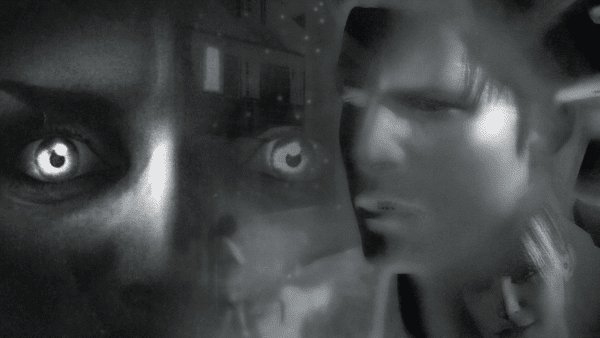
The Evolution of Silent Hill: Modernizing a Horror Icon
The gaming industry is currently witnessing a significant resurgence of the psychological horror genre, led largely by Konami’s strategic revival of the Silent Hill franchise. Following the widespread recognition and commercial success of the Silent Hill 2 remake, the developer Bloober Team has turned its attention to the foundational entry of the series. The original 1999 Silent Hill set the standard for survival horror, utilizing technical limitations like dense fog and restricted visibility to build persistent tension. A modern remake seeks to translate these classic design philosophies into a contemporary technical framework, utilizing high-fidelity assets, advanced lighting engines, and refined mechanical interactions.
Current industry intelligence suggests that the project, internally referenced as “Project G,” has been in active development since 2022. While early speculation favored a 2027 release date, updated internal reports indicate that the production cycle is accelerating. The project is now effectively targeting a launch in the coming year, positioning it as a cornerstone of Konami’s broader plan to re-establish the series as a consistent annual presence in the gaming market.
Production Pipelines and Studio Strategy
Bloober Team operates under a rigorous production schedule that balances internal intellectual property development with high-profile collaborations. Within this ecosystem, the Silent Hill remake is being developed under the codename “Project Noise.” This designation covers the casting and performance capture phases, which are essential for realizing the narrative depth required for a remake of this magnitude.
Konami’s strategy, as articulated by series producer Motoi Okamoto, focuses on maintaining a steady cadence of releases to ensure the franchise remains at the forefront of the genre. This roadmap includes upcoming titles such as Silent Hill f and Silent Hill: Townfall, which are intended to anchor a “second and third wave” of content. By staggering these releases, the publisher aims to maintain sustained interest without overwhelming the market. For Bloober Team, this requires a disciplined approach, as they simultaneously manage the Lazarus DLC for their other titles and coordinate with external partners to meet ambitious project milestones.
Advancing Performance Capture Technologies
A critical component of modernizing a 25-year-old game involves significant investment in motion and performance capture. Recent casting developments reveal that the production has secured two key performers: Gabrielle Fritz and Jade Matthew. Both actresses are based in the United Kingdom and bring extensive experience in AAA-tier game development to the project.
Gabrielle Fritz is noted for her work in high-stakes environments, having contributed to titles such as Battlefield 2042 and the high-intensity narrative space of Wolfenstein II: The New Colossus. Jade Matthew brings a different portfolio, with background experience in large-scale online environments like Dragon Nest. The integration of these actors into the project signifies a move toward more realistic character portrayals. In the original 1999 release, character interaction was limited by the hardware constraints of the era, necessitating a reliance on script and static animation. The new remake will utilize these actors to capture nuanced expressions and spatial interactions, bridging the gap between the original’s surrealist horror and modern cinematic standards.
Technical Challenges in Remaking a 1999 Masterpiece
Remaking a title as influential as the original Silent Hill presents unique technical hurdles. The original game utilized a proprietary engine designed specifically to hide the hardware’s inability to render long distances. Modern hardware, however, allows for expansive environments, which challenges the development team to recreate the signature sense of isolation without relying on the same technical tricks.
Bloober Team must navigate the transition from fixed camera angles to an over-the-shoulder perspective, a shift that fundamentally alters how the player perceives and interacts with threats. This requires a complete re-engineering of the enemy artificial intelligence, as well as the audio-visual design. The environmental design must be sufficiently dense to maintain the atmospheric weight of the original while utilizing high-resolution textures and complex volumetric lighting effects. Balancing these modern graphical requirements while preserving the specific, oppressive atmosphere of the original game remains the primary focus of the engineering and design teams.
The Broader Impact on the Horror Genre
The commitment to bringing older survival horror titles into the modern era is part of a larger trend of technical preservation through innovation. By updating the mechanics and visual presentation of 1990s classics, studios are providing new audiences with access to seminal works while setting new benchmarks for the genre. This effort is complemented by the work of other industry veterans, including Silent Hill creator Keiichiro Toyama, whose current studio is also engaged in motion capture auditions for undisclosed horror projects.
As the industry moves toward 2026 and 2027, the success of these remakes will likely dictate the longevity of the survival horror revival. For Bloober Team, the transition from the Silent Hill 2 remake to the original game’s reimagining represents a significant escalation in responsibility. By utilizing an experienced cast and targeting a precise release window, the studio is signaling a transition toward a more sustainable and high-quality output for one of the most storied franchises in gaming. Whether through the lens of a familiar protagonist or the expanded roles of the supporting cast, the goal remains consistent: to adapt a classic narrative for a generation of players accustomed to modern, high-fidelity experiences.
Disclaimer: This content is auto-generated for informational purposes only.
Source: Read Original News