








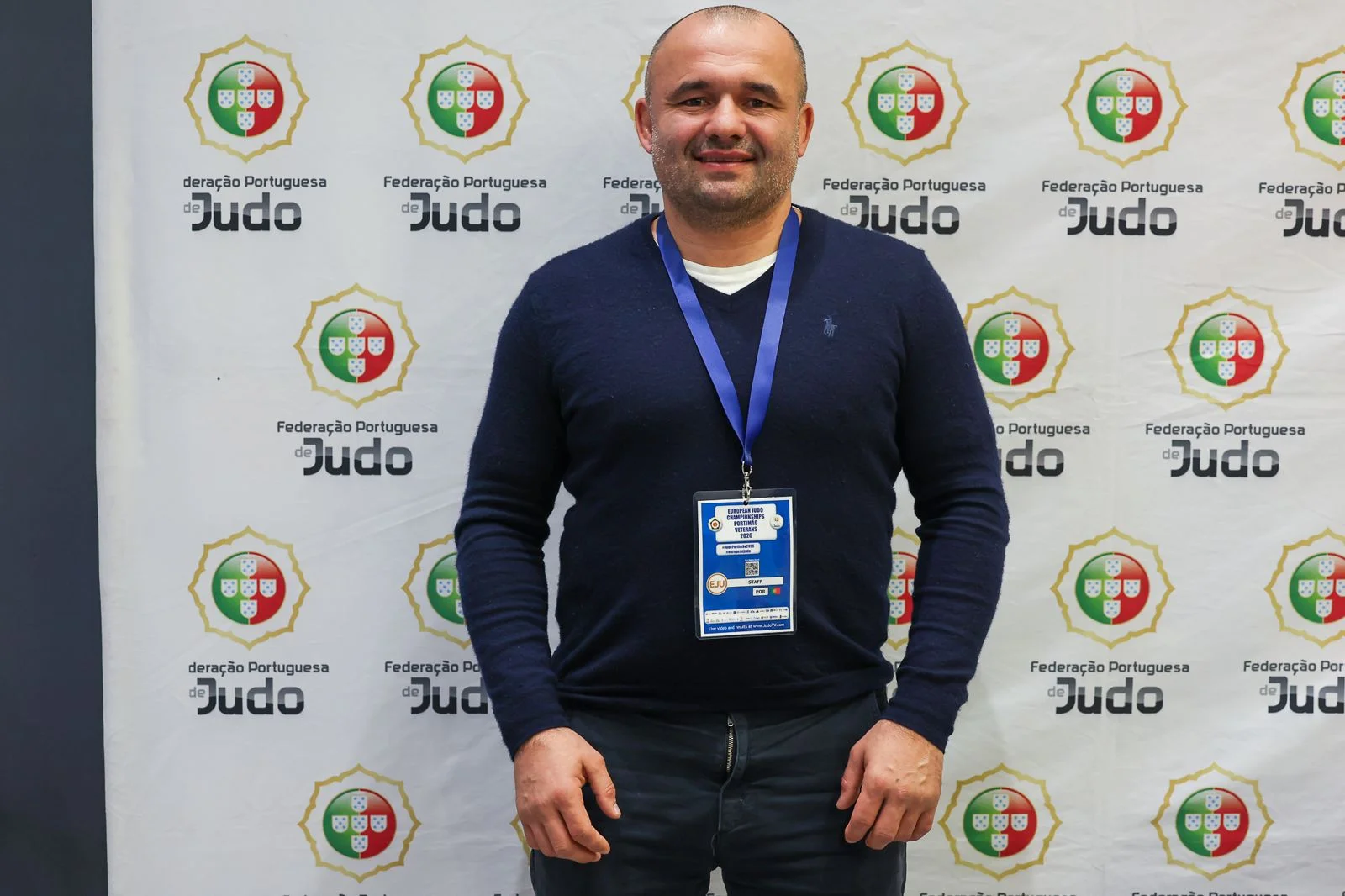
PORTIMÃO, PORTUGAL – As the echoes of competition fade from the tatami in Portimão, the resounding success of the European Veterans Judo Championships has highlighted a vital, often overlooked aspect of the sport: the immense logistical operation behind the scenes. For Sergiu Oleinic, a Rio 2016 Olympian turned event organizer, this year’s tournament represented a milestone in both scale and complexity.
The event, which saw an unprecedented number of entries, required months of meticulous planning. Unlike elite cadet or junior circuits, where logistics are handled centrally by national federations, veterans’ judo demands a unique, individualized approach.
“In veterans’ judo, communication is practically one-to-one,” explained Oleinic, who served as a primary point of contact for the athletes. “Over the last three weeks, I spent my nights working until the early hours of the morning to ensure no one was left without a reply. Balancing these demands with my professional and family life was a challenge, but necessary to ensure a smooth experience for the competitors.”
The logistical hurdles were significant, particularly as the European Judo Union faced a turnout that surpassed all previous records. The organizing team prioritized efficiency, focusing on accreditation and documentation months in advance. By the time the first athletes arrived in Portimão, 95% of payments and paperwork had already been processed—a feat that proved instrumental in preventing the bottlenecks often associated with large-scale international gatherings.
The choice of Portimão as a host city also played a pivotal role in the event’s triumph. Beyond the technical requirements of the venue, the location offered a welcoming environment for the unique demographic of veteran athletes. Interestingly, initial fears that the tournament’s rescheduled dates might dampen attendance proved unfounded. Instead, the timing aligned perfectly with school holidays across Europe, transforming the championship into a family-oriented event.
“We saw many athletes accompanied by their children, parents, and other family members,” Oleinic noted. “What initially seemed like a less-than-ideal date actually worked out very well.”
Despite the small size of the Portuguese organizing team, their collective experience—honed through hosting previous international events—allowed them to punch above their weight. Participant feedback has been overwhelmingly positive, with athletes highlighting the clarity of communication and the high standard of organization.
For Oleinic, who once stood on the mat representing Portugal at the highest level of Olympic competition, this event provided a different, yet equally rewarding perspective on the sport. While his days of chasing medals on the tatami remain a point of pride, he finds a new sense of accomplishment in the seamless delivery of the championships.
“We were only able to meet these challenges because we have highly experienced people in different areas,” he added. “The team worked tirelessly. Not every achievement in judo takes place on the tatami.”
Disclaimer: This content is auto-generated for informational purposes only.
Source: Read Original News