







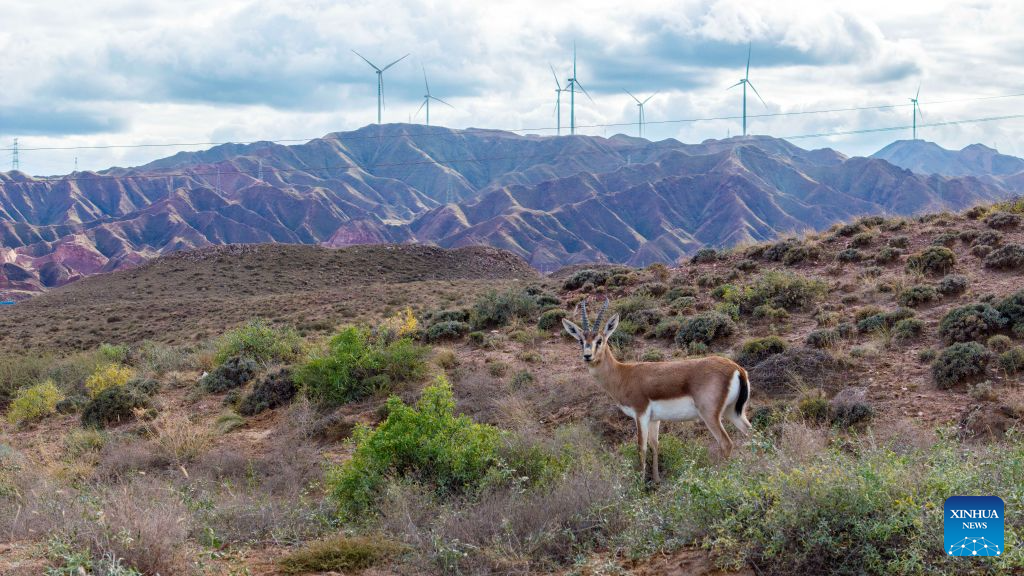
At the southeastern edge of the Tengger Desert, a quiet ecological transformation is unfolding. In the Zhongwei Shapotou National Nature Reserve in northwest China’s Ningxia Hui Autonomous Region, long-term sand control initiatives have successfully turned once-shifting dunes into resilient landscapes, fostering a thriving environment for the goitered gazelle.
Recent drone imagery, captured on October 17, 2026, highlights the success of these conservation efforts. The high-resolution aerial shots reveal the stark contrast between the desert’s arid edges and the patches of greenery now supporting local wildlife. Experts monitoring the reserve report that the vegetation coverage has seen a significant, measurable increase, providing the essential resources needed to sustain both endemic flora and the animals that rely on them.
The most notable success story is the recovery of the goitered gazelle (Gazella subgutturosa), a species under second-class national protection in China. Once vulnerable to the rapid expansion of desertification, the gazelle has benefited directly from the restoration of the local ecosystem. Monitoring data indicates that the population is not only stable but is currently on a steady upward trajectory.
Beyond merely surviving in the area, the gazelles have begun to thrive. Researchers have confirmed that the species has successfully established multiple colonies within the Shapotou region. The formation of these colonies suggests that the reserve is effectively functioning as a sustainable habitat, capable of supporting breeding populations and providing enough forage and shelter to support long-term growth.
The restoration of the Tengger Desert’s southeastern periphery has been a multi-year project involving systematic sand fixation and the careful cultivation of hardy, desert-adapted vegetation. By stabilizing the soil, conservationists have prevented the encroachment of dunes, allowing native grasses and shrubs to gain a foothold. This increase in biodiversity creates a ripple effect, improving the overall health of the desert biome and mitigating the impacts of extreme environmental conditions.
The improvement in wildlife habitats at Shapotou is part of a broader commitment in China to rehabilitate arid regions and enhance biodiversity in vulnerable landscapes. The steady return of the goitered gazelle serves as a key indicator of environmental success; as a grazing ungulate, their presence confirms that the vegetation in the reserve has reached a level of quality and abundance sufficient to support larger mammals.
As the reserve continues its monitoring program, the focus will remain on protecting these newly established gazelle colonies from human encroachment and environmental instability. The sustained increase in the local population offers a promising outlook for the biodiversity of the Ningxia Hui Autonomous Region and provides a successful blueprint for future desert restoration projects in similar arid climates. Through the combination of rigorous sand control technology and continuous ecological monitoring, the Shapotou National Nature Reserve remains a focal point for conservation progress in China’s western desert reaches.
Disclaimer: This content is auto-generated for informational purposes only.
Source: Read Original News