









The Shift in Global AI Infrastructure Strategy
The global landscape for artificial intelligence development is undergoing a structural transformation. While the initial wave of the AI revolution was defined by localized computing clusters situated near major technology hubs in North America and Western Europe, the current reality of rapid scaling has introduced significant physical constraints. Power shortages, land scarcity, and lengthy lead times for grid connectivity in developed economies have forced global AI enterprises to look toward emerging markets to sustain their operational growth. India, once viewed primarily as a secondary market for disaster recovery or peripheral IT services, has emerged as a primary node in the global AI infrastructure map.
Large-scale AI operations require immense electrical power density and highly specialized thermal management systems. In many Western markets, the permitting process for new high-capacity data centers can span several years due to grid congestion. Conversely, Indian data center operators have demonstrated a unique capacity for rapid execution. By diversifying their compute footprint to include Indian facilities, global AI firms are effectively bypassing regional bottlenecks. This is not merely an outsourcing exercise; it is a fundamental shift in how hyperscalers and AI laboratories manage their global load balancing. Infrastructure is no longer tethered exclusively to the geography of the end user. Instead, data is being processed in Indian facilities to serve global end markets, proving that the technical latency involved is a small price to pay for the availability of high-density compute capacity.
Leveraging Indian Capacity for Global Workloads
The integration of Indian data centers into the global AI supply chain is evidenced by the scale of current contracts. Operators like Yotta Data Services and CtrlS Datacenters are reporting a departure from traditional, incremental capacity growth. The demands from AI-driven enterprises have escalated from modest requirements to massive tranches of capacity reaching 100 megawatts or more. This shift signifies that India is being integrated into the core backbone of global AI training and inference pipelines.
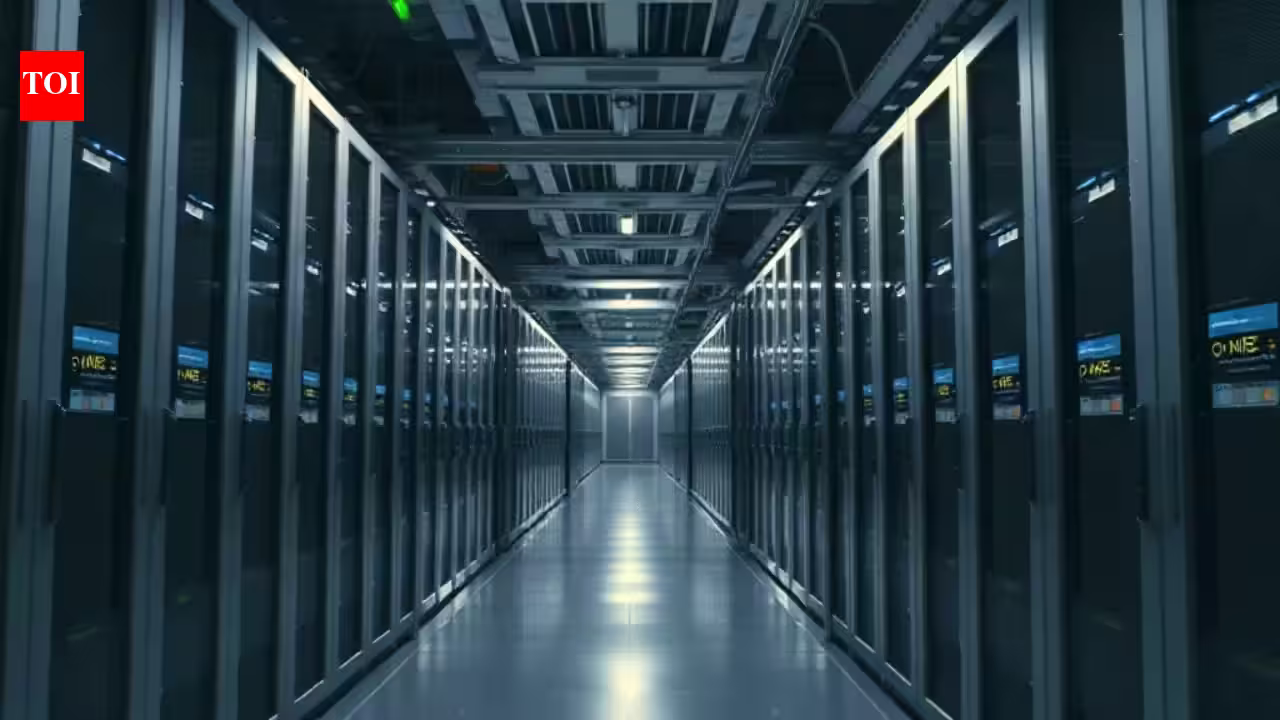
Indian operators have invested heavily in high-density rack configurations and advanced cooling technologies—such as liquid cooling and rear-door heat exchangers—which are essential for the next generation of AI-focused hardware, including specialized GPU clusters. These technical capabilities allow Indian data centers to meet the rigorous benchmarks demanded by global AI companies. By standardizing their infrastructure to match global specifications, Indian providers have transitioned from local service suppliers to critical partners in the international AI ecosystem. The ability to deploy this infrastructure at a speed that exceeds many Western counterparts has become a significant competitive advantage for the Indian market.
Operational Challenges and High-Density Scaling
Scaling data center operations for AI is not simply about building larger sheds; it requires an intricate orchestration of power transmission, cooling, and hardware density. The requirements for AI servers are fundamentally different from those of traditional cloud computing. A single AI-ready cabinet can consume ten times the power of a standard cloud rack, creating localized “hot spots” that necessitate sophisticated engineering.
Indian operators are currently navigating the complexities of high-density scaling while managing the logistical realities of the local business environment. Securing dedicated power substations and ensuring a stable, uninterrupted transmission flow remains a challenge that requires close coordination with government bodies and state-owned power utilities. However, the maturation of the Indian data center industry has led to the development of robust internal power management systems. Many operators are now implementing private micro-grids and investing in renewable energy integration to ensure that the carbon footprint and reliability of their AI centers meet the ESG mandates of global clients. This proactive stance on power and efficiency is one reason global firms feel confident moving mission-critical AI workloads to Indian soil.
The Economic Implications of India’s Data Center Rise
The movement of global AI workloads to India provides a significant stimulus to the national economy and fosters the growth of a specialized technical workforce. Beyond the direct revenue generated by hosting services, this shift promotes the development of an ecosystem centered around high-performance computing (HPC). When global AI companies deploy massive capacity in India, they create a demand for local expertise in AI infrastructure management, cooling systems, and specialized network engineering.
This trend also positions India as an indispensable cog in the global technology value chain. By hosting workloads that serve customers across Asia, Europe, and the Americas, Indian infrastructure providers are effectively exporting computing services. This adds a new dimension to India’s digital economy, moving the focus from IT services (software development and maintenance) toward the actual hardware foundation upon which future intelligence is built. The capital expenditure required for these facilities is substantial, and the long-term commitments from global tech giants serve as a vote of confidence in India’s regulatory landscape and industrial resilience. As global firms continue to invest in Indian capacity, the resulting economies of scale are likely to further reduce the cost of computing, making AI development more accessible for domestic startups as well.
Future Outlook for Infrastructure Resilience
Looking ahead, the strategy of spreading computing infrastructure across multiple jurisdictions will likely become a permanent feature of global AI management. Geopolitical considerations, combined with physical constraints on power and land, dictate that no single region can effectively host the entirety of global AI needs. India is positioned to capture a significant share of this distributed infrastructure.
The long-term success of this model will depend on the continued harmonization of international security standards and the further streamlining of infrastructure permitting processes. As the Indian government continues to prioritize digital public infrastructure and industrial corridors, the path for further data center expansion appears favorable. The transition from being a service-oriented economy to becoming a fundamental hardware provider for the global AI era represents a significant leap forward. By effectively managing the transition to high-density environments and maintaining a high standard of operational excellence, Indian providers are set to play a foundational role in the next decade of artificial intelligence. The growth observed today is merely the beginning of a larger integration where India functions as a global hub for the intensive computational needs of the modern world.
Disclaimer: This content is auto-generated for informational purposes only.
Source: Read Original News