







The battle for the soul of cinema has moved from the hallowed halls of Hollywood’s soundstages to the digital frontier of X, and it is proving to be as contentious as the Trojan War itself. Elon Musk, the billionaire provocateur and CEO of xAI, has finally pulled the curtain back on his long-promised answer to the “woke” establishment. This week, the first seven-minute episode of The Odyssey, generated entirely through Grok Imagine, was released to the platform. It marks a defiant, albeit polarizing, milestone in the intersection of generative AI and narrative storytelling.
But this isn’t just about Homer’s ancient text; it is a full-scale cultural offensive. Musk’s pivot to historical epic filmmaking arrives directly on the heels of the conclusion of Christopher Nolan’s blockbuster The Odyssey, which finished its theatrical run with an eye-watering $1.8 billion in global earnings. For Musk, this is not merely a creative endeavor—it is a ideological skirmish.
The Collision of Silicon Valley and Cinema
When Elon Musk first declared in July that Grok Imagine would produce a “historically accurate” version of Homer’s epic, he wasn’t being subtle about his target. He explicitly framed his project as a counter-narrative to Nolan’s big-budget spectacle, which has been widely lauded by critics but sharply criticized by Musk for its casting choices. Musk took particular aim at the inclusion of Elliot Page as Sinon and Lupita Nyong’o as Helen of Troy, publicly accusing Nolan of prioritizing the Academy’s diversity, equity, and inclusion (DEI) standards over historical fidelity to secure award recognition.
Musk’s promise was clear: “Before this year ends, Grok Imagine will make a full-length movie of The Odyssey that is historically accurate and true to the art of Homer.” By enlisting the help of Wonder Studios and director Dev Walker for this debut episode, Musk is attempting to prove that the algorithmic rendering of classical literature can—and should—supersede the “prestige” model of modern studio filmmaking.
The Backlash from the Old Guard
The industry’s reaction to Musk’s foray into content creation was swift and venomous. Among the loudest voices in the opposition is Doctor Strange director Scott Derrickson. Addressing Musk directly on X, Derrickson did not mince words, firing off a critique that resonated across the Hollywood guild system: “Clearly @elonmusk doesn’t know s**t about cinema & he stopped reading in his 20s. His opinions on art are worthless.”
Derrickson’s outburst captures the anxiety currently gripping Tinseltown. It is not just about the quality of the AI-generated imagery or the stiffness of the dialogue; it is about the existential threat that Musk represents. If a billionaire with a megaphone can bypass the traditional machinery of casting directors, cinematographers, and unionized crews to create a “historically accurate” product that appeals to his own curated audience, where does that leave the artistic authority of the director?
The 2027 Oscar Race Heats Up
While Musk plays with prompts and machine learning in the digital sandbox, the traditional industry is marching toward the 2027 Academy Awards with Nolan’s The Odyssey positioned as the undisputed leviathan. The film, which has already cemented its status as a financial powerhouse, is being touted as the frontrunner for Best Picture.
Whispers from the Academy suggest that the performances of Matt Damon and Anne Hathaway are not just being noted, but are effectively locking in nominations for Best Actor and Best Supporting Actress, respectively. Nolan, ever the technician, has managed to turn an ancient saga into a modern sensation, leveraging traditional narrative craft in a way that continues to resonate with global audiences. As the awards season draws closer, the contrast between the “Nolan standard” and the “Grok standard” will likely serve as the primary narrative of this year’s Oscar race. The Academy, known for its preference for grand, human-centric storytelling, seems poised to celebrate Nolan, creating a perfect storm of tension between the digital disruptors and the traditionalists.
Can AI Capture the ‘Art of Homer’?
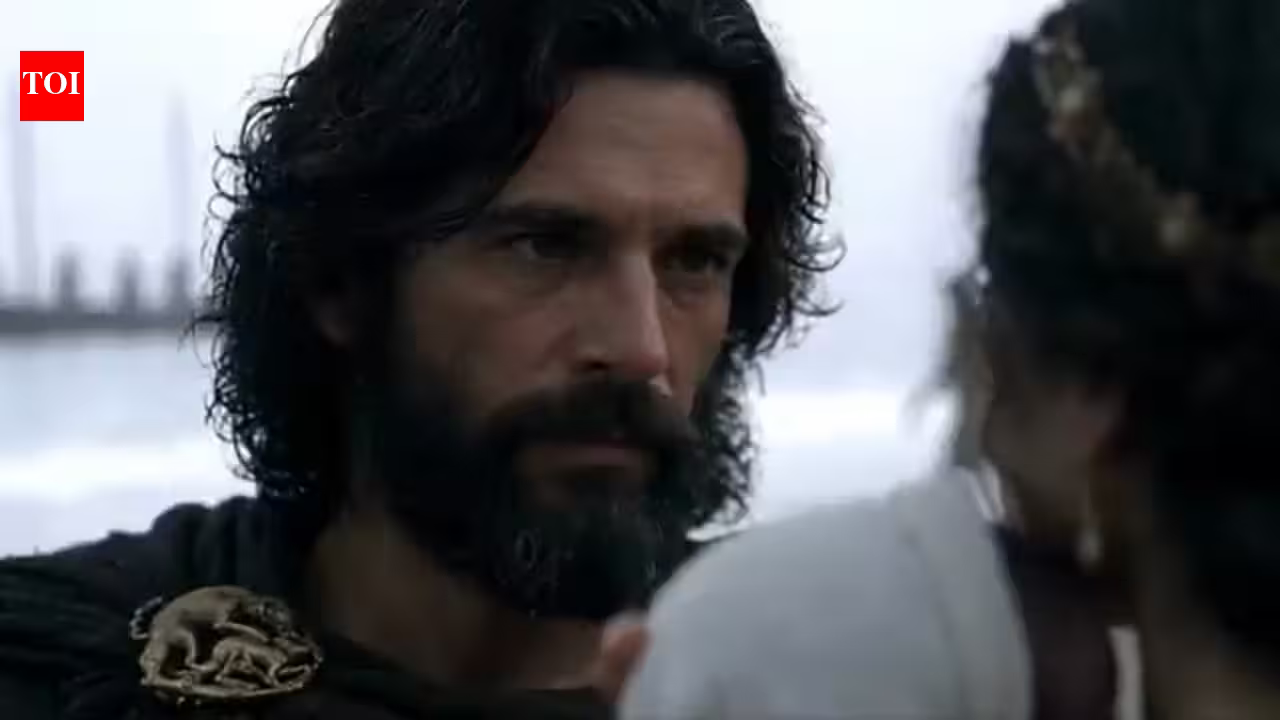
The core question remains: is Grok’s The Odyssey actually art, or is it merely an expensive exercise in confirmation bias? The seven-minute clip released on X showcases the visual capabilities of Wonder Studios, offering a polished, sweeping aesthetic that mimics the epic scale of traditional swords-and-sandals films. However, critics of the technology point to the “uncanny valley” effect and the lack of human nuance that inevitably accompanies synthetic creation.
Homer’s work is layered, messy, and deeply rooted in the complexities of the human condition. To reduce an epic poem to a set of parameters for an AI model—especially one focused on a specific, narrow definition of “historical accuracy”—is to potentially lose the very soul of the poetry. Musk argues that the industry has lost its way, straying into performative politics at the expense of accuracy. His critics argue that in his pursuit of that accuracy, he is stripping art of its fundamental purpose: to reflect the evolving, diverse world we live in today.
The Future of Storytelling: A Divided Stage
We are witnessing a divergence in how media is produced and consumed. On one side, we have the established studio system, which—despite its flaws—invests in human talent, messy auditions, and collaborative artistic vision. On the other, we have the Musk-driven model: bottom-up, AI-augmented, and aggressively reactive to current cultural debates.
As the industry watches this seven-minute experiment, the broader implication is clear: the divide isn’t just about the technology. It’s about who gets to tell the stories that define our history. Christopher Nolan’s $1.8 billion success suggests that the audience still craves the scale and human touch of big-budget cinema. Yet, the viral nature of Musk’s project proves that there is a massive, vocal audience eager for a different kind of product—one that rejects the current zeitgeist in favor of a rigid, algorithmically-enforced vision of the past.
Whether Musk’s project is a flash in the pan or the opening salvo of a new, automated era of filmmaking remains to be seen. But one thing is certain: the war for the silver screen is no longer being fought just with cameras and lighting rigs. It is being fought with lines of code, social media influence, and a fundamental disagreement over what it means to tell a story in the 21st century. As the 2027 Oscars approach, the winner of this war won’t just be determined by the statues on the shelf, but by which version of the past the public chooses to believe in.
Disclaimer: This content is auto-generated for informational purposes only.
Source: Read Original News