








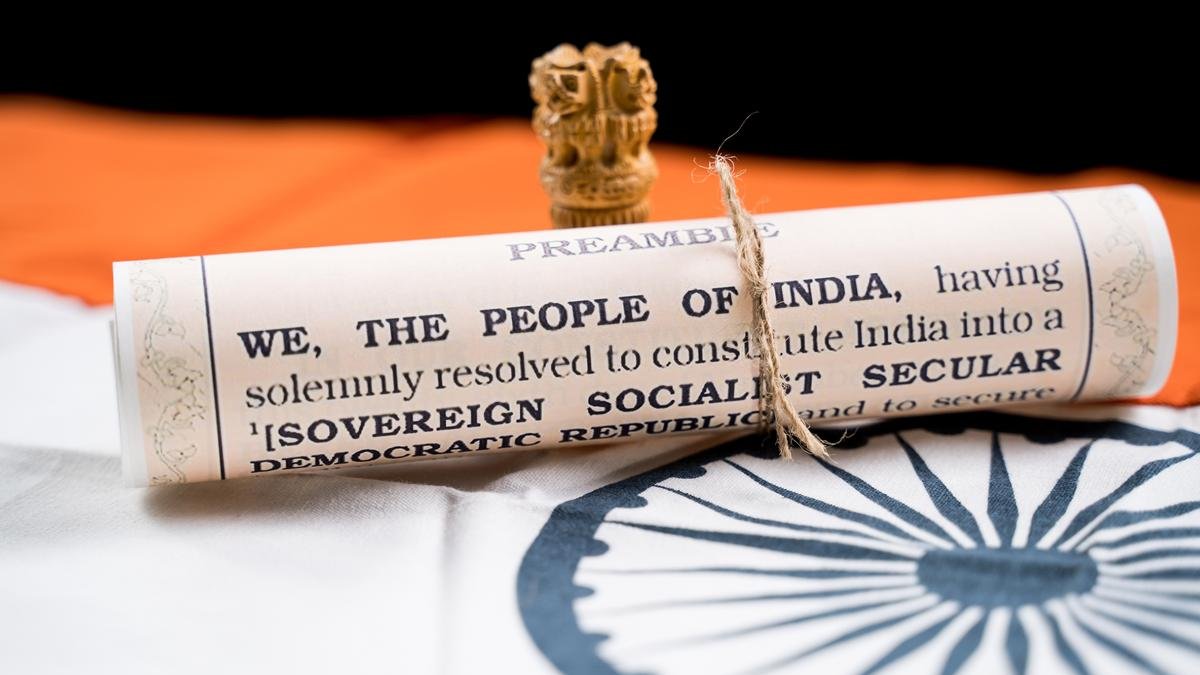
The Constitutional Literacy Gap: A Call for Educational Reform
In the landscape of modern Indian education, a troubling paradox exists: while the Constitution of India serves as the bedrock of our democratic governance, its actual presence in the academic life of students and educators remains remarkably thin. Recent observations suggest that if a random sample of 100 college students were tested on the Fundamental Rights and Duties enshrined in our national charter, fewer than 10% would likely provide accurate answers. Perhaps more alarming is that this knowledge gap extends to academia, with experts suggesting that even among university educators, comprehensive constitutional literacy may be limited to roughly one-quarter of the population.
This state of affairs forces a critical question: is our education system failing to translate the “We the People” preamble into a lived, intellectual reality?
Beyond Rituals and Symbolic Commemoration
Since 2015, the observance of Constitution Day on November 26 has served as an annual milestone to honor the adoption of our governing document in 1949. However, as educational critics have noted, there is a profound risk of these commemorative events devolving into mere rituals. When the Constitution is relegated to a single day of celebration, it is stripped of its functional power. To transform the Constitution from a historical artifact into a living guide for democratic participation, institutions must shift away from ceremonial displays toward a robust, sustained pedagogical framework.
True constitutional education is not about rote memorization of specific Articles or legal clauses. Instead, it involves an appreciation of the values that underpin our democracy—liberty, equality, fraternity, and justice. By observing the practices of nations like Finland, Denmark, and Germany—where civic and constitutional education is woven into the very fabric of school curricula—India can draw a blueprint for a more informed citizenry. In these countries, civic knowledge is not treated as an occasional elective, but as a core competency.
Leveraging the National Education Policy (NEP) 2020
The National Education Policy (NEP) 2020 provides a timely and strategic framework to bridge this literacy gap. With its overarching emphasis on critical thinking and interdisciplinary learning, the policy offers a mechanism to integrate constitutional values into the classroom. The goal is to move beyond the examination-hall habit of memorizing facts toward a system of critical analysis.
Educators are encouraged to transition from traditional lectures to dynamic, inquiry-based learning. By applying constitutional principles to contemporary real-life scenarios, students can analyze how the law impacts modern social issues. Classroom debates on individual rights, the role of public institutions, and the nuances of social justice allow students to connect abstract constitutional ideals with their everyday experiences. This pedagogical shift not only strengthens civic knowledge but also cultivates the ability to reason critically and form well-informed opinions.
Empowering the Informed Citizen
The primary objective of any academic system should be the creation of responsible, empowered citizens. Constitutional literacy is the ultimate tool for this empowerment. When students understand their rights, they become better equipped to recognize and resist discrimination. When they understand the checks and balances inherent in our democracy, they are more capable of demanding accountability from those in power.
An educated citizenry that understands the roles of elected representatives and public institutions acts as a natural safeguard for the nation’s values. Knowledge of the Constitution allows citizens to scrutinize government policies and insist that governance remains consistent with the principles of justice and human dignity.
Ultimately, constitutional education is not an optional “extra” or a secondary academic pursuit; it is a vital investment in the stability and future of the Indian democracy. To flourish, a democratic society requires citizens who do not merely exist under a Constitution, but who actively understand, respect, and uphold its foundations. By integrating this literacy into our schools and universities, we ensure that the ideals of 1949 continue to resonate for generations to come.
Disclaimer: This content is auto-generated for informational purposes only.
Source: Read Original News