









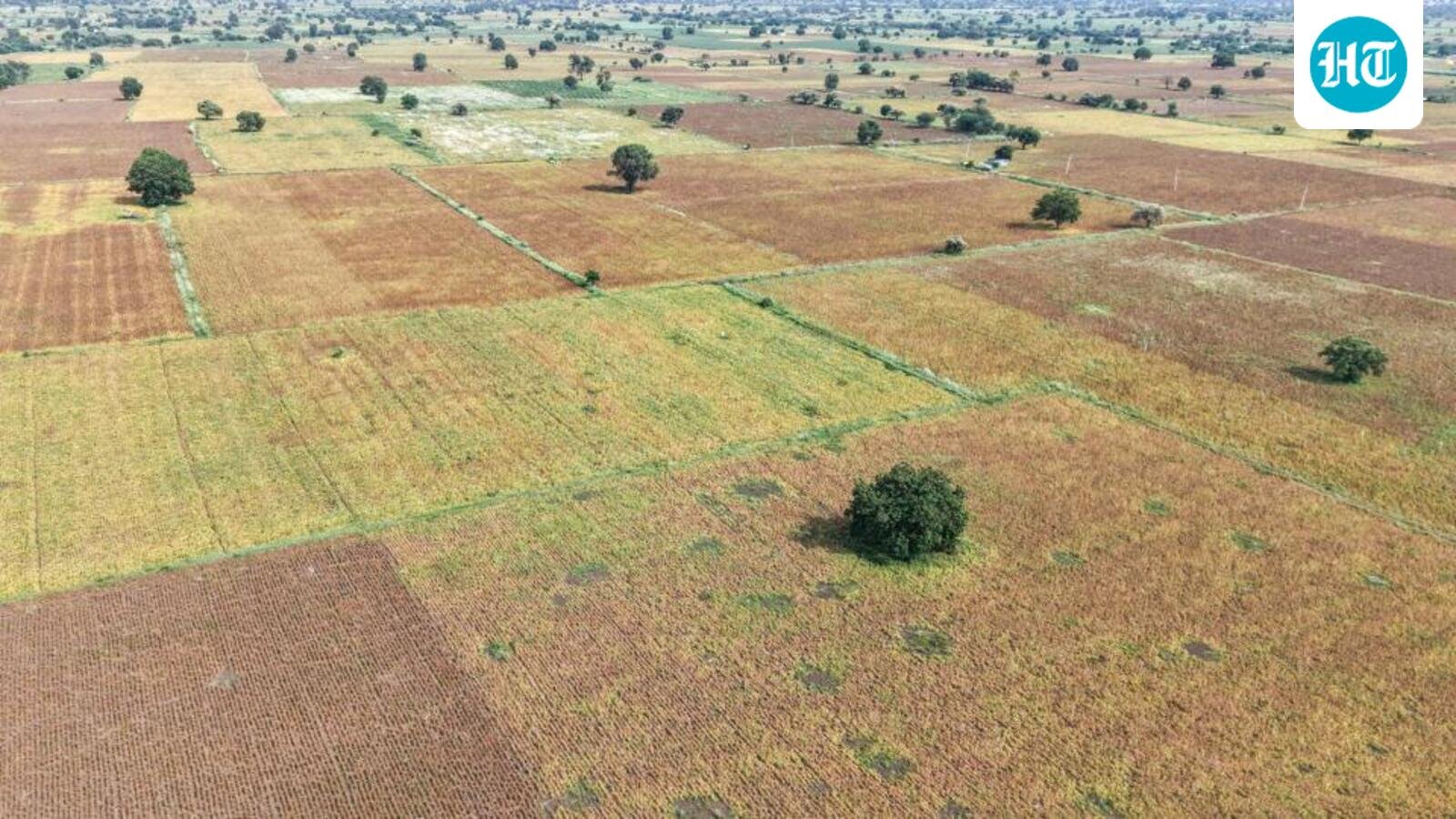
Dreams Deferred: Weak Monsoon Leaves Farmers in Crisis
For 34-year-old Ramesh Valvi, a farmer in Maharashtra’s Mandvi village, the promise of the harvest season was supposed to be a gateway to progress. Valvi had meticulously saved ₹60,000, eyeing a ₹4.5 lakh tractor to boost productivity on his three-hectare plot. With plans to secure a loan and borrow the remaining balance from his brother, the purchase felt within reach. Today, those plans have been relegated to a distant future as the reality of a historic monsoon failure sets in.
The lack of rainfall withered his maize and tur crops, erasing the ₹40,000 he had poured into his land. With no harvest to sell, Valvi is struggling even to secure basic drinking water, let alone the resources to plant winter rabi crops. His hard-earned savings, once earmarked for machinery, are now being diverted to keep his family fed.
A Season of Historic Deficits
Valvi’s struggle is a localized snapshot of a broader national crisis. India recently endured its weakest monsoon in over a decade, with June marking the fifth-driest month since records began in 1901—a 39.8% deficit from the long-period average. While July provided a brief respite, August returned to a scorching trend, recording the highest temperatures in over a century and a 16.3% rainfall deficit as El Niño conditions intensified.
By the end of the season, the country faced a 12.6% shortfall, with severe regional disparities. From the parched fields of Punjab to the arid landscapes of Marathwada and Bihar, 17 meteorological subdivisions covering 42% of the nation reported deficient rainfall. The consequences have rippled through the country’s infrastructure; as of mid-October, reservoir levels had plummeted to 68.6% of their capacity, significantly lower than the decade-long average of 82.1%.
The Domino Effect: Fertilizer and Machinery
The agricultural distress is clearly visible in the supply chain. Soil moisture deficits, affecting over 37% of India’s districts, have made it nearly impossible for farmers to maintain standard input cycles. Valvi, who typically fertilizes his crops four times per season, was forced to halve that amount due to the lack of irrigation. His experience mirrors a national trend, with industry data indicating that complex fertilizer sales dropped by more than 20% between April and September.
This climate-induced austerity is weighing heavily on the rural economy. Tractor sales, a key indicator of agrarian health, have seen significant volatility. While some markets have shown resilience, year-on-year retail figures have dipped by 18%, signaling that farmers are retreating from major capital investments. Financial analysts warn that the true extent of the damage to the farm-machinery sector will likely crystallize in early 2027 as reduced earnings force a widespread delay in discretionary spending.
For now, the focus in Mandvi and beyond has shifted from expansion to survival. With the rabi season looking increasingly bleak and crop insurance payouts pending, farmers like Valvi are caught in a cycle of uncertainty. For millions of households dependent on the land, the monsoon’s failure hasn’t just compromised this year’s output—it has stolen the capital necessary for the next one.
Disclaimer: This content is auto-generated for informational purposes only.
Source: Read Original News