







A Brotherhood Forged in Devotion: Mika Singh Defends Daler Mehndi Amidst Public Backlash
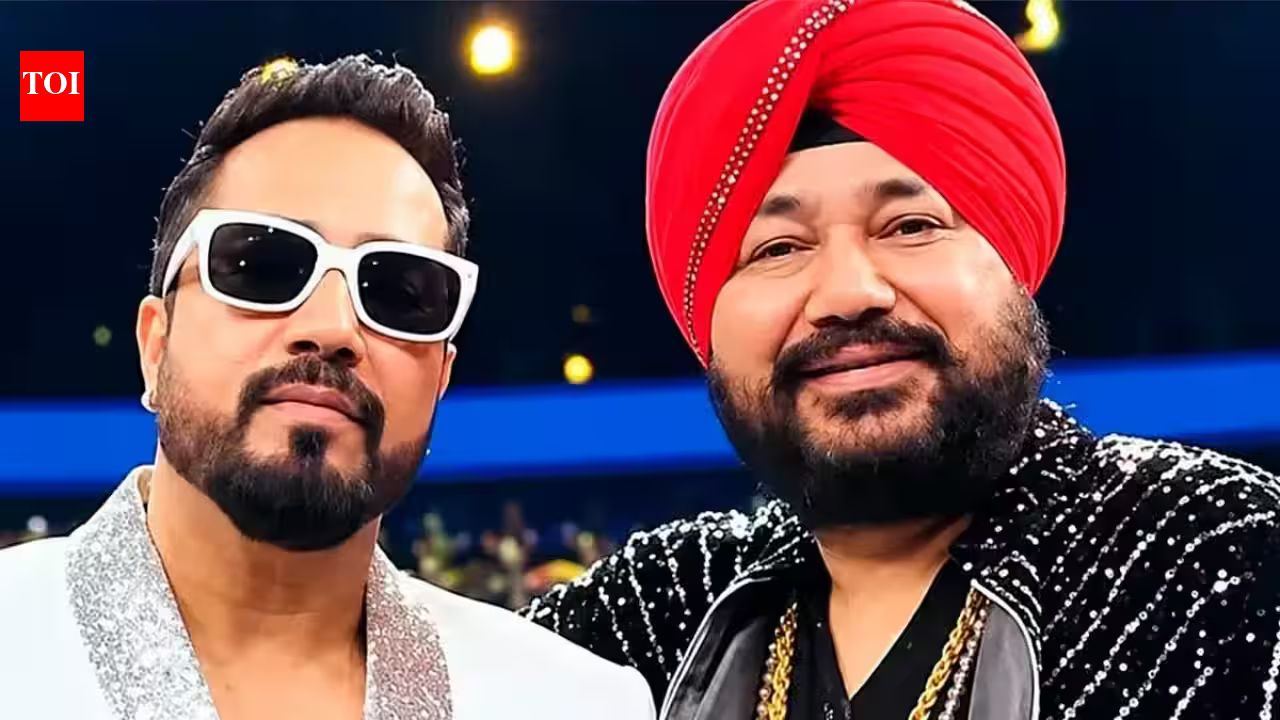
In the high-stakes, neon-lit world of the Indian music industry, few bonds are as storied or as resilient as that of the Mehndi brothers. Recently, when the legendary Daler Mehndi found himself at the center of a vitriolic social media storm following an unfortunate incident at a public event in Uttarakhand, it wasn’t his PR team that struck the most resonant chord in his defense—it was his younger brother, Mika Singh.
The incident, which saw the veteran singer struggle during a live performance only to be met with perceived humiliation by Cabinet Minister Subodh Uniyal, sparked a wave of indignation across the industry. Yet, for those who know the history of the Mehndi family, this wasn’t just a moment of celebrity fallout; it was a test of a bond that predates the charts, the records, and the fame.
From Kirtans to Chart-Toppers: The Spiritual Roots
To understand the tenacity of the Mehndi brothers, one must look far beyond the gilded stages they occupy today. During a candid conversation with filmmaker and close friend Farah Khan, who recently toured his sprawling 100-acre Delhi farmhouse, Mika pulled back the curtain on the family’s modest, spiritual beginnings.
“My father, Ajmer Singh Chandan, was a music enthusiast who sang kirtans at the Gurudwara,” Mika shared, offering a glimpse into the humble roots that anchored their ascent. “Most of the Punjabi singers you see today took their first music lessons in the quiet sanctity of a Gurudwara, and my family was no different.”
Mika was quick to emphasize that before the global recognition and the “Tunak Tunak Tun” phenomenon, there was the discipline of the prayer house. “It was my father first, then Daler Paaji. Daler Paaji did a massive amount of kirtan before he ever made it big in the industry. I followed that same path.” It is this shared spiritual architecture that arguably defines their approach to success. Mika, now the owner of an estate that features its own helipad, stables, and even a private Gurudwara that remains open 24/7, insists that their wealth is a blessing meant to be channeled back into their faith. “We have earned this through God’s grace, and I make sure to have 24/7 paath in our facility,” he added, framing his success not as an end, but as a continuation of his father’s legacy.
Breaking the ‘Wannabe’ Narrative
The path to independence for Mika was never a given. Farah Khan, reflecting on the late 90s and early 2000s, shared an observation that resonated with many long-time industry insiders. “When Daler Paaji had his massive breakout moment, we all just assumed you were a ‘wannabe Daler’ when you first arrived,” she admitted.
Mika didn’t shy away from the admission. The shadow of a trailblazing older brother is a long one, and navigating that pressure was part of his formative years. He recounted the origin story of the ‘Maharaja Band,’ a chapter that saw the brothers reuniting after Daler’s disillusioning stint in the United States. “Daler Paaji had moved to the US, had a falling out with our brothers, and essentially quit his job to return to India,” Mika recalled. “When he got back, he saw I was playing guitar, and he just wanted to sing. We formed the band right then. He was the voice, and I managed the equipment and the technical side.” It was that collaborative, boots-on-the-ground experience that eventually allowed Mika to carve out his own raucous, high-energy niche, shedding the labels that followed him in his early years.
The Uttarakhand Incident and a Call for Respect
The recent controversy in Uttarakhand, however, threatened to overshadow these legacies. After a video surfaced showing Daler Mehndi struggling on stage, the reaction from onlookers—specifically, the public conduct of Minister Subodh Uniyal—was widely condemned as insensitive. The industry response was swift. Heavyweights like Anupam Kher, Rajpal Yadav, and Puneet Issar rallied around Daler, signaling that the veteran singer’s contributions to the cultural landscape would not be erased by a single unfortunate event.
Mika was, predictably, the vanguard of this defense. Fiercely protective, he clarified that his brother does not consume alcohol, dispelling the malicious rumors that often circulate when a veteran performer faces a technical or health-related setback on stage. The pressure mounted, and eventually, the weight of the collective industry outrage forced a pivot. Subodh Uniyal reached out to Daler Mehndi via telephone to offer an apology. Mika’s team issued a measured, professional statement following the call, noting, “We appreciate that Subodh Uniyal ji has apologized… regarding the unfortunate incident.”
A Legacy Beyond the Stage
While the headlines are currently fixated on apologies and viral clips, the real story remains the enduring structure of the Mehndi family’s life. Between the, at times, polarizing nature of fame and the quiet, constant presence of the Gurudwara at his estate, Mika seems to have found a balance that many in his position struggle to maintain.
Daler Mehndi’s contribution to globalizing Punjabi pop is indisputable, and Mika’s evolution into a powerhouse performer in his own right is a testament to the musical DNA inherited from their father. As the dust settles on the Uttarakhand controversy, the episode serves as a reminder that these men are not just brands or entertainers—they are part of a lineage that views music as an act of devotion, and brotherhood as an absolute, non-negotiable constant.
For the Mehndi family, the kirtans that echoed in their childhood Gurudwaras are still being sung, whether in a humble hall or via the 24/7 paath at a massive Delhi farmhouse. It is this unwavering connection to their origins that ensures that when the lights go down and the cameras stop rolling, the foundation remains, as it has always been: rock solid.
Disclaimer: This content is auto-generated for informational purposes only.
Source: Read Original News