








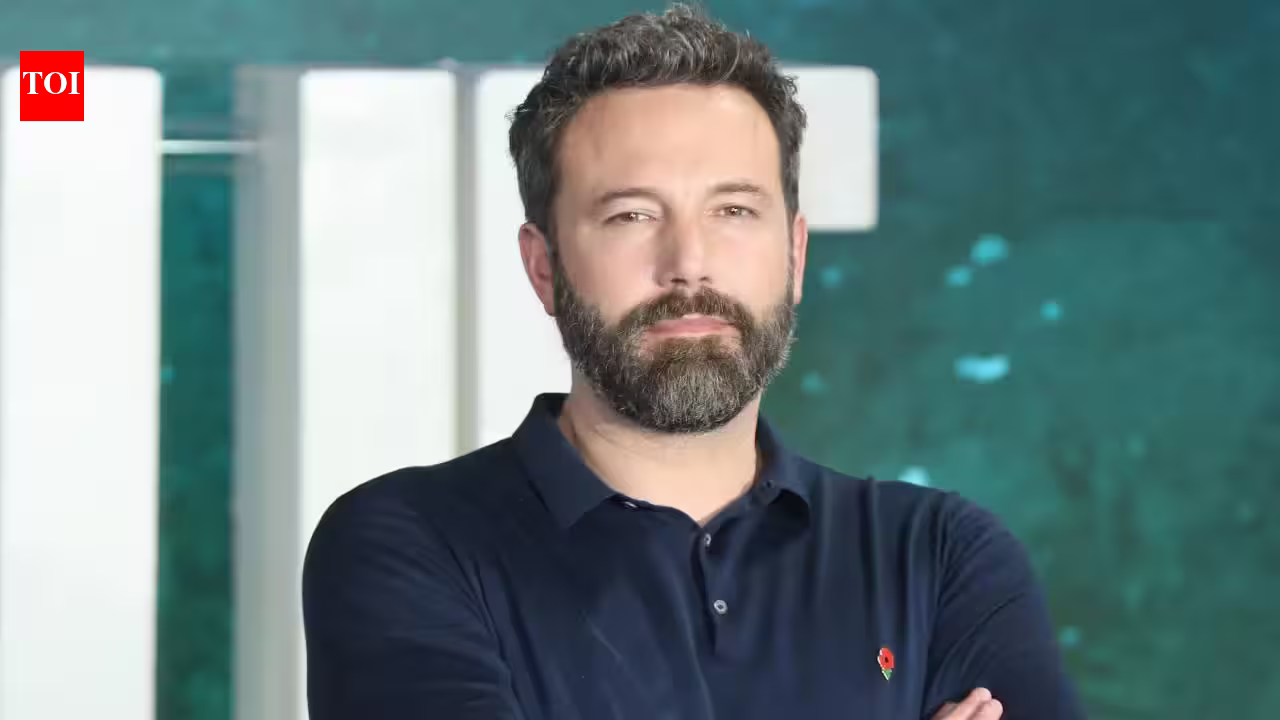
Ben Affleck has never been one to shy away from the intersection of art and commerce, but his latest venture suggests he is looking toward a future where the two are inextricably linked by silicon rather than just celluloid. In a move that has sent shockwaves through the industry, Affleck has sold his AI-focused filmmaking startup, InterPositive, to Netflix in a deal reportedly valued at $587 million. Yet, as he steps into this new chapter, the Oscar-winning filmmaker isn’t interested in the apocalyptic narrative that currently dominates the cultural conversation surrounding artificial intelligence. Instead, he’s playing the role of the pragmatic technologist, arguing that the industry’s panic is misplaced and that the human touch remains the non-negotiable core of cinema.
The “Oh No” Moment: Facing the Silicon Threat
The path to this massive acquisition wasn’t paved with blind optimism. In a candid conversation with GQ, Affleck recalled the exact moment the rapid evolution of generative AI hit home. Sitting in a room with his longtime creative partner, Matt Damon, Affleck looked at the early results of text-to-video prompts and felt a cold chill.
“Dude, we’re fucked,” he recalls telling Damon. For a brief moment, the reality of the situation felt like a ticking clock. The temptation was to rush back to the set, to hammer out as many projects as possible before the proverbial robots took over the craft he had spent decades mastering. But as he dug deeper into the engineering—transitioning from passive observer to active developer—that panic gave way to clarity. He realized that while AI could generate a high-quality aesthetic, it lacked the foundational “grammar” of filmmaking. It could give you a picture, but it couldn’t give you a movie.
Building InterPositive: A Tool, Not a Replacement
Affleck’s development of InterPositive was born from a specific frustration: current AI tools were being built by tech companies with little regard for the nuances of production. He worried that if the technology evolved in a vacuum—or worse, in the hands of corporations interested only in efficiency—filmmakers would be rendered obsolete.
InterPositive took a different approach. By leveraging LiDAR, location-specific data, and specialized virtual production rigs, Affleck’s team aimed to create a system that respected intellectual property and, crucially, kept the director in the driver’s seat. The goal wasn’t to build a “generate movie” button—a feature Affleck vehemently dismisses as “bullshit”—but to provide a sophisticated toolset that handles the technical heavy lifting while leaving creative autonomy firmly in human hands. Netflix’s acquisition of the company suggests they see this controlled, filmmaker-centric approach as the viable future for their own massive production pipeline.
The “Prompt-to-Screen” Fallacy
If there is one thing Affleck wants to debunk, it is the persistent myth that AI will soon allow anyone to type a few sentences and receive a feature-length film. He views this as a fundamental misunderstanding of what makes a movie. Filmmaking is a series of infinite, granular choices—the specific lens choice, the blocking of actors, the micro-adjustments in lighting—that an algorithm simply cannot anticipate.
“You’re never just going to type your movie out,” Affleck asserts. He points to the staggering cost of compute power required for high-end video generation as a practical barrier, but his primary argument is aesthetic. AI, as it stands, is a tool for iteration, not creation. By framing AI as a collaborator rather than a replacement, Affleck is attempting to shift the narrative from a zero-sum game of “human vs. machine” to a professional evolution where the artist is augmented rather than erased.
Addressing the Elephant in the Room: Job Loss
Despite his own success in the space, Affleck is remarkably empathetic toward the anxiety rippling through Hollywood. He recognizes that telling writers, editors, and visual effects artists that “this tech will change everything” is essentially telling them their livelihood is under siege. He finds the tech industry’s tone-deafness on this issue staggering.
“Anybody who’s told, ‘Hey, this is going to replace you in your livelihood,’ is fucking concerned,” he notes. He criticizes the tech sector’s tendency to market products by highlighting their ability to “wipe out” white-collar work. For Affleck, the industry’s fear isn’t a sign of Luddism; it’s a rational reaction to being told they are unnecessary. He suggests that if tech leaders want to foster adoption, they need to stop focusing on the “replacement” narrative and start demonstrating how these tools can empower creators to tell stories that were previously too expensive or technically impossible to realize.
Beyond Skynet: Real-World Risks
When the conversation shifts to the more hyperbolic fears—the “Skynet” scenarios of AI taking over the world—Affleck is quick to pull the plug on the science fiction tropes. However, he stops short of saying we should be complacent. While he isn’t losing sleep over a Terminator-style uprising, he is deeply wary of the lack of accountability inherent in “stochastic” technology.
He draws a clear line at life-and-death stakes. His concern is with the implementation of AI in high-stakes fields like military targeting or security, where “probabilistic” outputs—which work perfectly fine when you’re generating a film scene—could have catastrophic real-world consequences. Because AI operates on patterns and probabilities rather than the rigid, predictable logic of classical computing, Affleck argues that it is inherently ill-suited for critical infrastructure without significant human oversight and legal accountability.
Ultimately, Ben Affleck’s $587 million bet is a vote of confidence in the future of human storytelling. By embedding his vision within Netflix’s infrastructure, he’s aiming to build a moat around the creative process, ensuring that the tech serves the art—and the artists—rather than the other way around. Whether or not the rest of the industry follows his measured lead, one thing is clear: Affleck has no intention of being the last actor to pick up a camera, and he’s certainly not planning on letting a lines-of-code algorithm take the director’s chair.
Disclaimer: This content is auto-generated for informational purposes only.
Source: Read Original News