






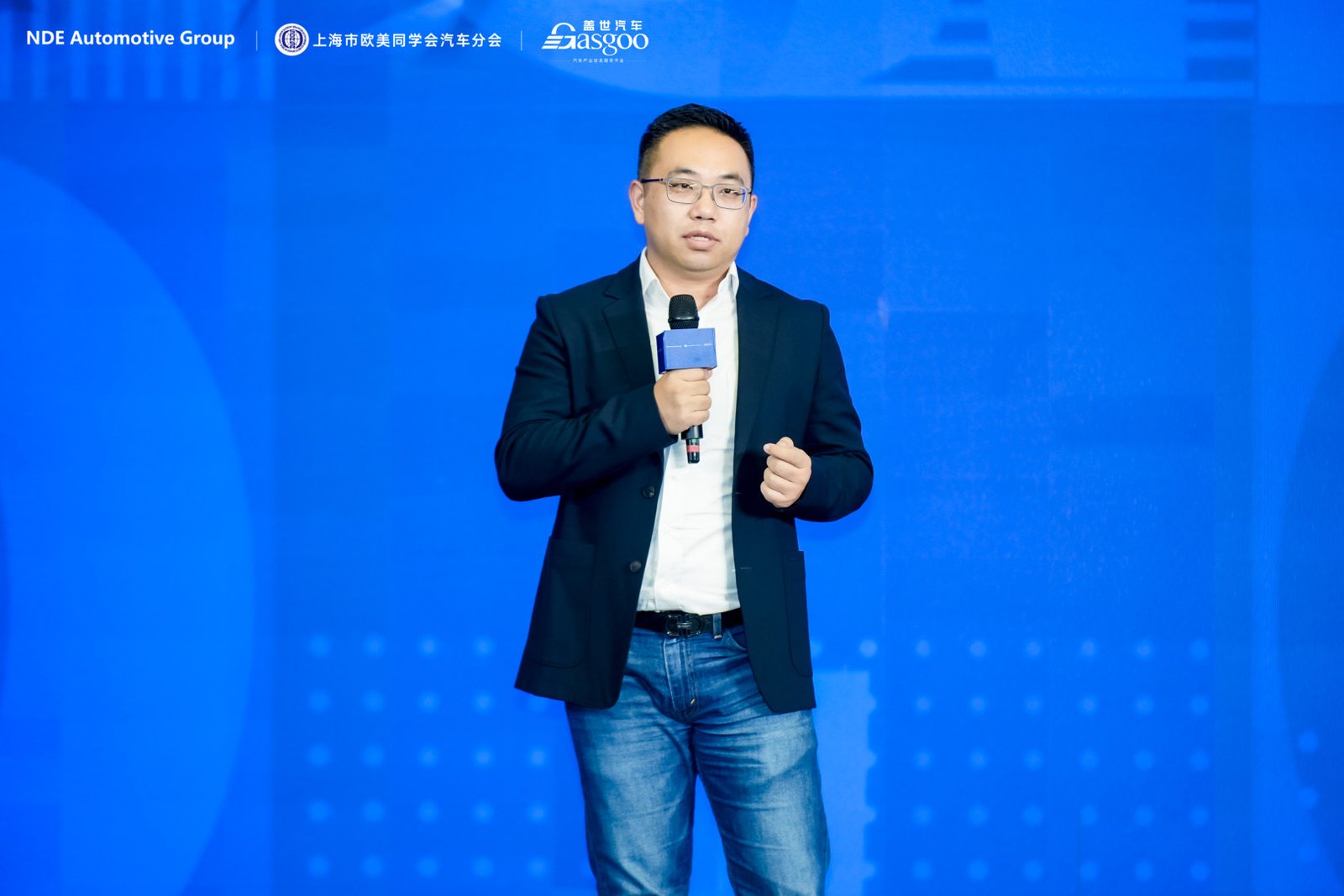
At the 14th Automotive and Environment Innovation Forum and the 8th Gasgoo Awards “China Solutions, Global Value” ceremony held in Munich, Xing Bin, Vice President of Autonomous Driving and Intelligent ADAS at Jaguar Land Rover China, delivered a keynote emphasizing the non-negotiable role of rigorous testing in the modern automotive landscape. As the industry pivots toward complex software-defined vehicles, Xing Bin underscored that testing remains the ultimate sentinel of safety and consumer trust.
For an original equipment manufacturer (OEM), quality is more than a corporate mandate; it is a fundamental lifeline. Xing Bin argued that testing acts as the final, most critical line of defense. When this checkpoint fails, defective products inevitably reach the end user, potentially resulting in everything from minor customer dissatisfaction to catastrophic safety failures. Consequently, Xing Bin urged the automotive community to approach testing with a sense of “reverence,” noting that an organization’s success in safety-critical sectors is dictated by its underlying attitude toward validation.
To translate this philosophy into practice, Xing Bin outlined two foundational pillars: the maintenance of uncompromising global quality standards and the establishment of robust, local end-to-end verification infrastructure.
Regarding global quality standards, Xing Bin emphasized that while innovation is essential for competitive advancement, core safety and quality requirements must remain non-negotiable. Jaguar Land Rover employs a unified process for both local and global development, ensuring that no geographic variation compromises the integrity of the vehicle. A hallmark of this approach is the rigorous traceability link established between every engineering requirement and its corresponding verification step. By auditing every software or product release to quantify exactly how many requirements have been validated, the company can flag and address any untested or insufficiently validated components before they move to the next stage of production.
This methodology is currently undergoing a strategic evolution, particularly in the realm of intelligent driving. As development shifts toward urban and highway scenarios, Xing Bin noted a significant transition toward a test-driven approach. In this model, specific challenges identified during real-world testing are fed directly back into the development loop for iterative resolution. Xing Bin observed that China has emerged as a leader in adopting these agile, data-driven methodologies. As these processes mature, they are expected to be integrated back into Jaguar Land Rover’s global operations, marking a shift where China contributes its local innovation to the company’s worldwide technical footprint.
On the subject of infrastructure, Xing Bin provided a detailed breakdown of what “end-to-end” verification entails. He cautioned against the misconception that testing is defined by road trials alone, describing road testing as merely the “tip of the iceberg” visible to the public. Beneath that surface lies a massive, multi-layered verification system that includes hardware verification, firmware validation, middleware testing, and application-layer analysis. This architecture relies heavily on simulation and advanced bench testing, which provide the breadth and depth required to validate systems that are too complex to rely solely on physical road mileage.
Finally, Xing Bin addressed the escalating importance of compliance in a globalized market. For an international OEM, adherence to data regulations—including data desensitization, encryption, and comprehensive data management—is a prerequisite for operation. As vehicles become increasingly connected, these compliance layers require significant, continuous investment to keep pace with evolving international standards and local requirements.
Xing Bin concluded his address by distilling the future of automotive verification into three core themes: the maintenance of global quality standards, a commitment to deep localization, and the implementation of a comprehensive, end-to-end verification system. Through this disciplined framework, he argued, OEMs can bridge the gap between rapid technological innovation and the unwavering necessity of vehicle safety.
Disclaimer: This content is auto-generated for informational purposes only.
Source: Read Original News