







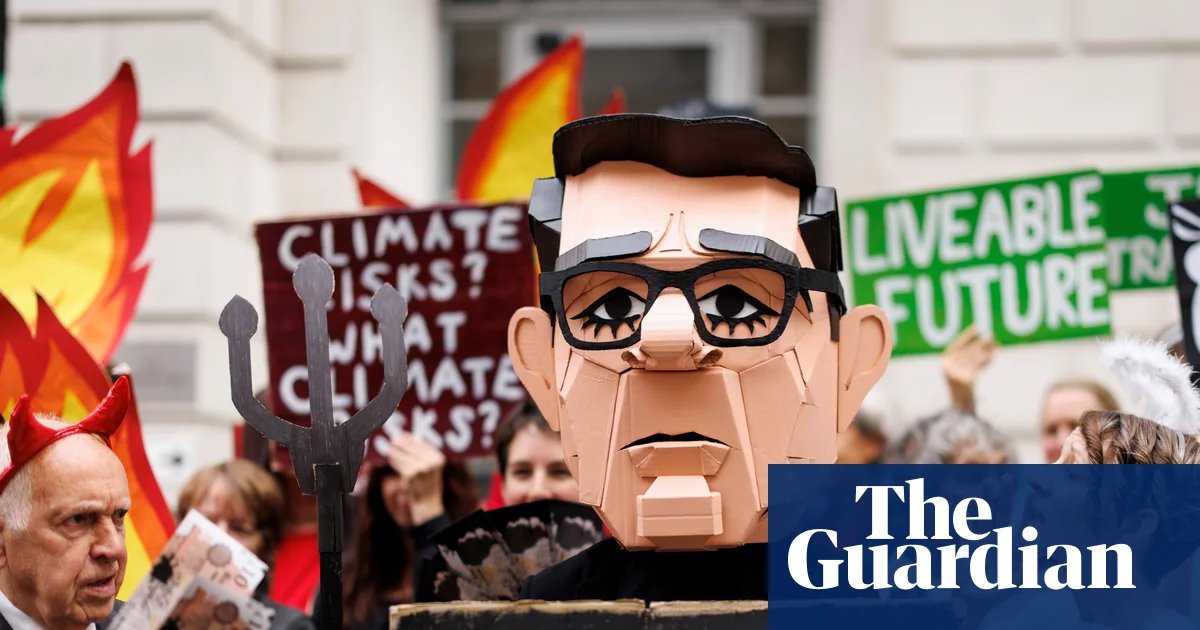
Prime Minister Andy Burnham is facing an urgent warning that his administration is set to “sleepwalk” into a climate disaster. Environmental campaigners from Greenpeace and Friends of the Earth (FoE) have formally written to the Prime Minister, cautioning that a series of pending policy decisions, if taken in isolation, will cumulatively scupper the UK’s legal commitments to reach net zero.
At the heart of the concerns are four critical areas currently awaiting ministerial sign-off: the approval of the controversial Rosebank oilfield, the potential expansion of Heathrow airport, the watering down of electric vehicle (EV) sales mandates, and proposed cuts to heat pump grants.
According to the joint analysis presented to the government, the combined carbon emissions resulting from these policies would amount to 402 million tonnes of CO2 over the next 25 years. This figure, campaigners note, exceeds the annual emissions of 106 coal-fired power plants. They argue that this output is more than sufficient to derail the UK’s established carbon budgets and render the net zero goal unattainable.
Doug Parr, chief scientist at Greenpeace, warned that while the current administration appears to acknowledge the dangers posed by rising temperatures, it remains at risk of reversing the climate progress achieved to date. “The Burnham government is facing a series of big decisions over the next few months that could define its legacy on climate,” Parr stated. “Ministers need to be far-sighted and keep track of their cumulative impact on our climate. The carbon bill may take a while to turn up, but there’s hell to pay when it does.”
The warning comes on the heels of the government’s decision to approve the Jackdaw gasfield, a move that drew sharp criticism from environmental groups who pointed out that the project would yield minimal economic benefit in terms of jobs or tax revenue while running counter to long-term climate goals. The North Sea fossil fuel industry is now lobbying for a similar green light for the Rosebank oilfield, which promises significantly higher emissions.
Simultaneously, internal government friction has emerged regarding consumer transport. Under pressure from automotive manufacturers, there is mounting speculation that the government may soften its mandate to phase out petrol and diesel car sales by 2035. Analysis by the Energy and Climate Intelligence Unit (ECIU) suggests that allowing a higher percentage of combustion-engine vehicle sales in 2030 could create long-term emissions equivalent to 60% of those generated by the Rosebank oilfield.
In the economic sphere, Chancellor John Healey has signaled support for a third runway at Heathrow, arguing it is a necessary lever for growth. However, campaigners contest the necessity of this expansion, citing concurrent airport growth at Gatwick as proof that the aviation sector is already saturating capacity. Furthermore, there is significant concern that the upcoming budget may see a reduction in the “boiler upgrade scheme,” which incentivizes households to transition from gas boilers to heat pumps—a policy seen as essential for both carbon reduction and lowering energy bills.
In response to these critiques, a government spokesperson maintained that the push for reindustrialisation does not equate to abandoning climate targets. “Reindustrialisation will never mean reneging on our climate obligations and net zero,” the spokesperson said, citing £110bn in announced investment in clean power as evidence of the government’s commitment.
Imogen Dow, climate lead at Friends of the Earth, argued that the government is presented with a false choice between economic growth and environmental protection. “Delivering on our climate goals is not solely a win for the planet—it will also strengthen the economy, lower household bills, improve public health and protect the places we call home,” Dow said. With the green economy reportedly growing faster than the rest of the UK sector, campaigners are urging the Prime Minister to prioritize long-term stability over short-term political and corporate pressure.
Disclaimer: This content is auto-generated for informational purposes only.
Source: Read Original News