







TOKYO — The Japanese government is facing growing scrutiny over its border control policies after it was revealed that a senior official from a pro-North Korea organization was allowed to re-enter the country despite existing sanctions.
The official, who serves as the director of the education bureau for the General Association of Korean Residents in Japan (Chongryon), reportedly traveled to Pyongyang between late August and mid-September. Under current Japanese sanctions, senior members of Chongryon’s central standing committee—a group that includes bureau directors—are, in principle, prohibited from returning to Japan after visiting North Korea.
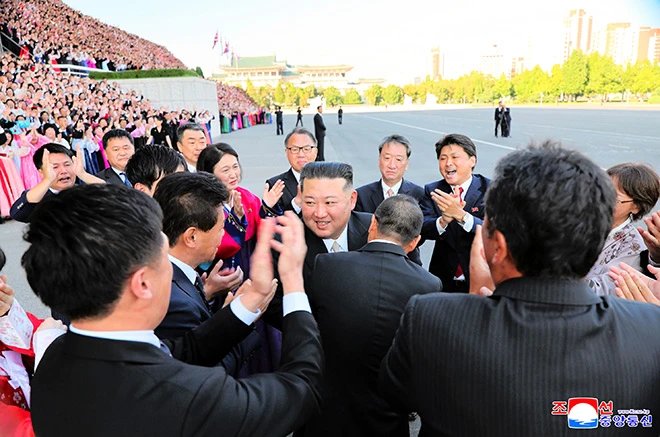
According to government sources, the official traveled as part of an education delegation to attend the 15th National Conference of Teachers in Pyongyang. Reports from North Korea’s state-run Korean Central News Agency (KCNA) indicate that during the visit, leader Kim Jong Un personally met with the delegation on September 4, posing for commemorative photographs and urging the members to “nurture more talented individuals.”
This incident follows a similar controversy in April, when the government permitted the re-entry of the chairman of North Korea’s chamber of commerce and industry in Japan, who also holds a seat in the Supreme People’s Assembly, North Korea’s parliament.
The recurring nature of these cases has prompted questions regarding the consistency and enforcement of Japan’s sanctions regime. When pressed on how the re-entry permit was granted, sources close to the Japanese government suggested that there may have been “errors in procedures or communication” between the various ministries and agencies tasked with overseeing border security.
However, the oversight has fueled speculation within the North Korean community in Japan. Some observers suggest that the government may be adopting a more flexible approach, potentially in an attempt to signal a willingness to reopen long-stalled diplomatic dialogue with Pyongyang. In recent years, Kim Jong Un has shifted his focus toward fostering generational change within the Korean diaspora and prioritizing educational alignment, a move that some believe has caught the attention of Tokyo.
Despite such theories, the path to renewed diplomacy remains fraught with obstacles. Pyongyang has been aggressively strengthening its strategic alignment with Moscow and Beijing while simultaneously launching regular verbal attacks against Tokyo. Currently, there are no tangible signs of progress or any immediate prospect for a thawing of relations between Japan and North Korea.
Critics argue that the failure to enforce travel bans undermines the integrity of Japan’s broader sanctions policy. As the government continues to withhold its official list of sanctioned persons from public view, the inconsistencies in re-entry permits have left policymakers and the public alike questioning whether Tokyo’s stance on North Korea is shifting, or if the border security apparatus is simply suffering from a systemic breakdown.
Disclaimer: This content is auto-generated for informational purposes only.
Source: Read Original News