



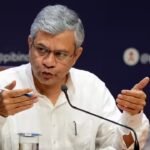




In a significant move to bolster regional environmental governance and climate action, China’s Minister of Ecology and Environment, Mr. Huang Runqiu, visited the University of Hong Kong (HKU) this week to launch a strategic, long-term partnership with the university’s Institute for Climate and Carbon Neutrality (ICCN). The collaboration aims to bridge the gap between academic research and national policy by focusing on capacity building, talent exchange, and joint research in sustainable development.
During the visit, HKU President and Vice-Chancellor Professor Xiang Zhang emphasized that addressing the climate crisis is a central pillar of the university’s mission. He highlighted the ICCN’s role as an interdisciplinary platform designed to pursue high-impact research, a sentiment echoed by Minister Huang, who delivered a keynote address titled “Winning the Battle Against Air Pollution.” Reflecting on China’s recent progress in environmental protection, the Minister detailed the systemic approach taken to curb air pollution and outlined the practical lessons learned from the nation’s successful control strategies.
The visit served as a catalyst for deeper dialogue on the environmental challenges facing the Greater Bay Area (GBA). Minister Huang specifically addressed the complexities of controlling fine particulate matter (PM2.5) and ozone, advocating for a synergetic approach that links pollution reduction with carbon mitigation. He urged researchers at HKU to leverage their strengths in data analysis, monitoring technologies, and pollutant modeling to provide a robust scientific foundation for air quality improvements across the region. By better understanding the formation mechanisms and transport patterns of pollutants, the Minister noted that Hong Kong’s scientific community could play a pivotal role in refining pollution control measures.
Beyond regional governance, the partnership seeks to capitalize on Hong Kong’s unique position as an international financial hub. Minister Huang highlighted that, as China works toward its 2035 Nationally Determined Contribution (NDC) targets, the nation requires more than just technological innovation; it requires a bridge between research outcomes and capital. He identified Hong Kong’s expertise in green finance, carbon accounting, and disclosure standards as critical assets that can help mobilize global capital for low-carbon infrastructure and industrial upgrading.
A core component of the newly launched collaboration is the development of a new generation of “green talent.” Addressing students and faculty, Minister Huang emphasized that the next generation of environmental leaders must look beyond traditional disciplinary boundaries. He encouraged students to explore the intersections between climate science and fields such as economics, law, finance, and data science. “Developing interdisciplinary skills is essential for solving the complex, practical problems of the modern era,” the Minister remarked, noting that students should align their career paths with national goals regarding product carbon footprint management and digital environmental monitoring.
The ceremony concluded with the official signing of a cooperation agreement between the ICCN and the Ministry’s Department of International Cooperation. This partnership is set to utilize flagship platforms, such as Hong Kong Climate Week, to facilitate international dialogue. By acting as a nexus between the mainland and the global community, the collaboration aims to synthesize talent, knowledge, and innovation to advance green development. As the ICCN begins its long-term work with the Ministry, the initiative signals a move toward a more integrated, data-driven, and internationally connected approach to the climate challenges of the coming decade.
Disclaimer: This content is auto-generated for informational purposes only.
Source: Read Original News