





Chinese authorities and corporate entities have moved swiftly to penalize soccer icon Kylian Mbappé following remarks perceived as disparaging toward Mao Zedong, the founder of the People’s Republic of China. The backlash has resulted in a series of severed commercial partnerships and a blackout of the star’s matches across the country, marking yet another instance of how international sports figures must navigate the sensitive geopolitical landscape of the Chinese market.
The controversy stems from an online interview in which Mbappé, while discussing popular internet memes depicting him as an autocratic leader, referred to the image—which featured his face superimposed onto an image of Mao Zedong—as a representation of a “Chinese dictator.” While the comment was intended as a lighthearted remark about his reputation on the pitch, it triggered an immediate and severe reaction from China’s highly regulated corporate and state media spheres.
Corporate Fallout and State Media Pressure
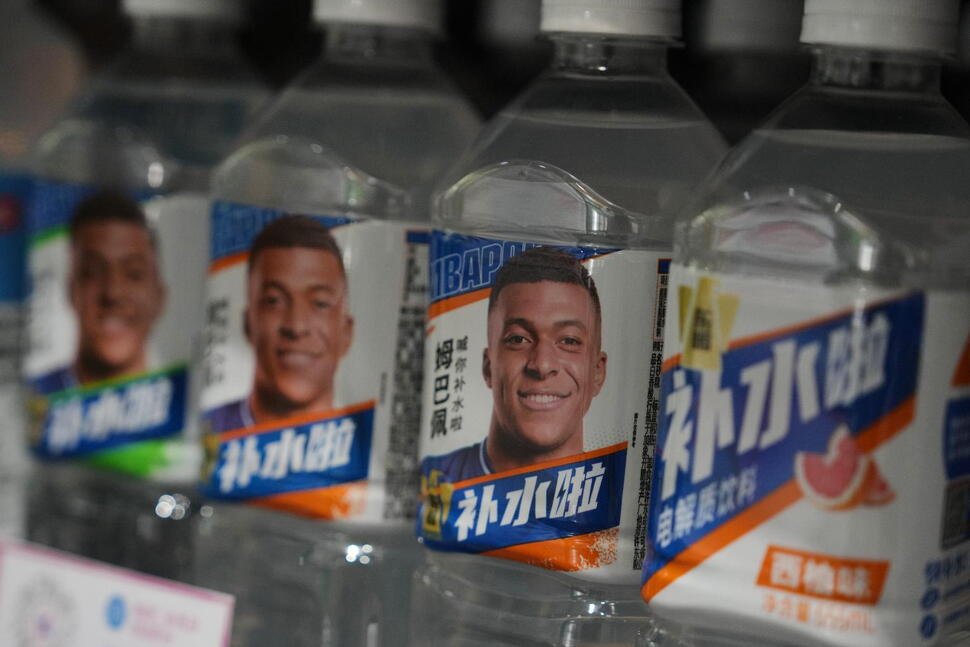
By Tuesday, the repercussions were immediate. Major Chinese brands, including dairy giant Mengniu, beverage company Dongpeng, and cheese manufacturer Milkground, announced they were terminating their endorsement deals with the French striker. In synchronized statements, the companies cited a commitment to protecting “national sentiment,” a common refrain used by Chinese firms when distancing themselves from individuals who fall out of favor with official state narratives.
The Communist Party’s mouthpiece, People’s Daily, amplified the pressure on Wednesday, labeling the athlete a “negative asset” for brands. The publication argued that when public figures cross certain “red lines,” commercial entities have a logical and principled obligation to sever ties. China Media Group (CMG), which controls sports broadcasting rights, has also suspended coverage of Real Madrid matches and other fixtures featuring the player, demanding formal apologies from both the club and the Spanish league, La Liga.
The Digital Landscape and Censure
The incident highlights the complex intersection of global sports, digital media, and strict domestic censorship. Despite the high-profile nature of the controversy, much of the Chinese public remained unaware of the specifics of Mbappé’s comments. Due to internal content moderation, the exact nature of the remarks was rarely translated or explicitly detailed in domestic reporting, leaving many citizens to rely on vague government-approved messaging.
For companies operating in China, managing their public image in the digital age has become increasingly tied to AI-driven monitoring and rapid response protocols. Brands are under immense pressure to utilize automated sentiment-analysis tools that flag potentially controversial associations before they gain traction. Failure to act decisively often leads to a social media firestorm, forcing companies to prove their patriotism to both regulators and consumers.
Reflecting on a Pattern of Geopolitical Tensions
Mbappé’s situation echoes the 2019 incident involving the NBA, when then-Houston Rockets general manager Daryl Morey sparked a nationwide boycott by expressing support for Hong Kong protesters. That event resulted in a multi-year freeze on NBA broadcasts in China, demonstrating the immense economic leverage Beijing can wield over global sports properties.
While the French star issued a formal apology on Tuesday, stating that his comments were “ill-judged” and that he possesses “deep respect” for Chinese history, it remains unclear if these conciliatory efforts will restore his standing. Real Madrid joined the effort on Wednesday, releasing its own apology to mend relationships with Chinese partners. Nevertheless, as the digital reach of Chinese platforms continues to expand, global stars and their management teams are finding that their off-the-cuff remarks are increasingly scrutinized by a state apparatus that views the defense of historical figures like Mao Zedong as a matter of fundamental national security.
Disclaimer: This content is auto-generated for informational purposes only.
Source: Read Original News