







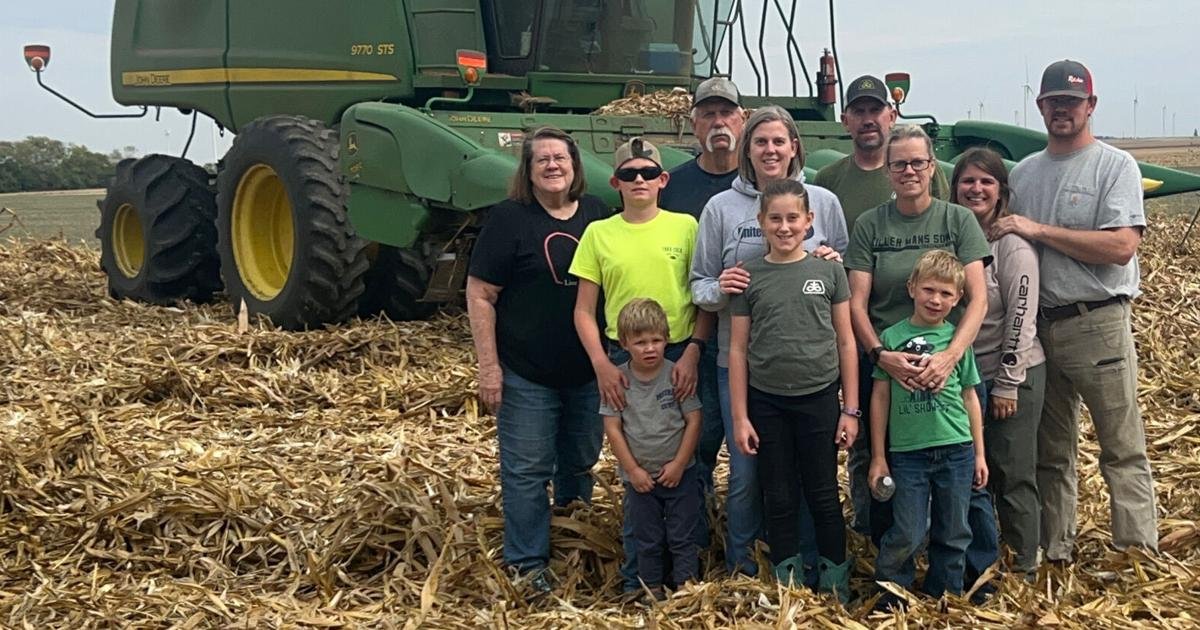
For the Crider family of central and eastern Illinois, farming is not just a profession; it is a 160-year legacy that bridges the gap between historical immigrant roots and the cutting-edge requirements of modern agricultural technology. Spanning operations from Gibson City to St. Joseph, the Crider family’s story reflects the broader evolution of the American farm, where traditional land stewardship now intersects with high-stakes digital data and sustainable energy integration.
## Balancing Tradition with Technological Evolution
For Dan and Anne Crider, the landscape of farming has undergone a seismic shift over the last seven decades. Dan Crider points to a transformation in power and efficiency that would have been unimaginable to his ancestors who first settled the region as German and Irish immigrants. He recalls the progression from 30-horsepower machinery to the modern 335-horsepower titans that roam the fields today.
However, the most significant change, according to Crider, is the “mind-boggling” integration of computing and software. Modern farmers are now essentially data scientists, relying on precise technology to manage grain markets, optimize yield, and track equipment health. This digital shift mirrors the broader trends seen in the tech industry, where companies like Google are increasingly focused on the “AgTech” sector. Initiatives such as Google’s “Mineral” project—which uses artificial intelligence and robotics to help farmers better understand plant health—align with the Criders’ commitment to minimum tillage, cover crops, and soil conservation. By leveraging technology, the Crider operation aims to maintain the “bountiful” yields of Illinois soil while ensuring it remains productive for the generations to follow.
## Modern Diversification: From Solar Farms to Direct-to-Consumer Sales
The Crider operation has moved far beyond the traditional monoculture model. Today, their farm is a multifaceted enterprise that blends grain production—including food-grade corn and soybeans—with a robust livestock program. Perhaps the most innovative aspect of their business is the dual use of land; the family grazes Dorper and crossbred sheep on solar farm sites. This practice exemplifies the “agrivoltaics” movement, a growing trend where solar energy generation and agriculture coexist to maximize land efficiency.
This diversification extends into the digital marketplace. Much like small businesses that use Google Business Profiles and localized SEO to reach regional customers, the Criders have leaned into the farm-to-consumer movement. By selling beef and lamb directly to local buyers, they bypass traditional supply chain hurdles. This entrepreneurial spirit is supported by a family whose professional backgrounds are as diverse as their acreage, including pharmacists, bankers, and hunting guides. This multidisciplinary expertise allows them to approach farm management with the analytical rigor of a modern small business.
## The Human Element in an AI-Driven Future
Despite the reliance on high-tech equipment and constant monitoring of grain market prices via digital platforms, the Criders maintain that the essence of farming remains unchanged: it is a humbling endeavor defined by forces outside of human control. While AI models and predictive weather algorithms have become essential tools for forecasting, Dan Crider maintains a grounded perspective on the role of technology.
“I’m not totally in control. God’s in charge of the weather,” he notes.
This philosophy underscores the friction between the digital world—which prizes total predictability—and the agricultural world, which is inherently volatile. As agriculture continues to adopt more AI, machine learning, and IoT (Internet of Things) devices to monitor livestock and crop sensors, the human element becomes even more critical. For the Crider family, the ultimate success of their operation isn’t measured solely by yields or the efficiency of their tractors, but by their ability to work alongside three generations of family members while watching the sun rise and set over the Illinois plains. It is this blend of cutting-edge innovation and time-honored family values that keeps the Crider farm thriving in a rapidly changing world.
Disclaimer: This content is auto-generated for informational purposes only.
Source: Read Original News