








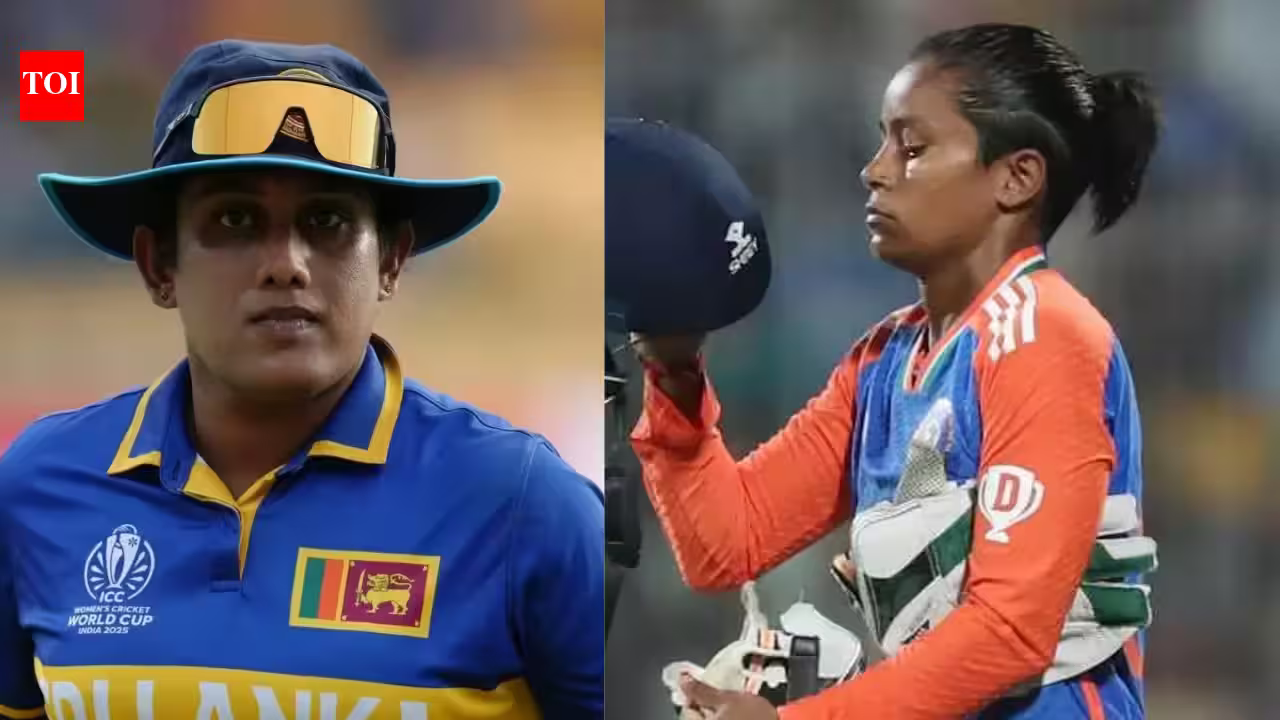
KOCHI – The WPL 2027 mini-auction has once again proven that in the high-stakes world of franchise cricket, reputation alone is not enough to guarantee a contract. As the dust settles in Kochi, a series of surprising omissions has left several established international stars and rising domestic talents on the sidelines, highlighting the ruthless efficiency with which franchises are refining their squads for the upcoming season.
With limited slots available across the five teams, scouts and management panels were forced to make clinical, budget-conscious decisions. The result was a day defined by intense competition and the cold reality of strategic gaps, as some of the most recognizable names in the women’s game failed to spark a paddle-raising frenzy.
The Perplexing Case of Chamari Athapaththu
Perhaps the most shocking name to remain on the unsold list was Sri Lanka’s captain, Chamari Athapaththu. An explosive top-order presence and a canny off-spin option, Athapaththu entered the room with a modest base price of Rs 30 lakh, a figure that arguably undervalued her immense international pedigree.
Despite her recent efforts with the UP Warriorz in 2024—where she contributed 28 runs and claimed four wickets—the Sri Lankan talisman found no takers. Having also gone unsold in the 2026 mega-auction, Athapaththu’s exclusion suggests a shift in franchise strategy, perhaps moving toward younger, more specialized roles or a reallocation of the limited overseas slots that define the WPL’s structural makeup. For a player who remains a cornerstone of the global game, this second consecutive setback is a sobering reminder of the volatility of the auction block.
High-Profile Omissions: Dunkley and Beyond
The overseas market saw further tremors when England’s Sophia Dunkley failed to attract a bid. Listed at a base price of Rs 50 lakh, Dunkley commanded one of the auction’s premium price brackets, signaling her stature as a high-impact, aggressive batter. However, despite her international experience and her ability to anchor or accelerate an innings, the franchises remained unmoved.
Dunkley’s exclusion serves as a case study in the modern WPL auction room: teams are no longer simply looking for “big names.” They are looking for precise tactical fits. As franchises fine-tune their balance between power-hitters and spin-heavy rosters, players who occupy middle-ground roles—even those with extensive resumes—are increasingly finding themselves displaced by cheaper, more specific alternatives.
The Domestic Disconnect: Ishaque and Sadhu
The most palpable tension of the day, however, centered on the domestic Indian contingent. The omission of Saika Ishaque was arguably the most discussed topic in the hallways of the Kochi venue. The left-arm spinner was a revelation during the Mumbai Indians’ inaugural title-winning season in 2023, where she picked up 15 wickets and effectively forced her way into the national setup.
To see a player of her proven pedigree go unsold at a base price of Rs 30 lakh speaks volumes about the shifting tides of form and the hyper-competitive nature of the Indian domestic talent pool. Behind her, the rise of newer, high-potential prospects appears to have created a logjam that even established performers are struggling to navigate.
Joining her on the sidelines is Bengal pacer Titas Sadhu. As a key member of India’s 2023 ICC Under-19 Women’s T20 World Cup-winning squad, Sadhu had been earmarked as the future of Indian pace bowling, lauded specifically for her ability to generate swing in the powerplay. Her failure to secure a contract is a stark indicator that the margins for error for young domestic bowlers are vanishingly thin.
A World Cup Winner Left Behind
Perhaps the most poignant story of the day involves Uma Chetry. As the only member of India’s 2025 Women’s World Cup-winning squad to go without a franchise, Chetry’s exclusion highlights the harsh transition from international accolades to league requirements. While she brings the invaluable experience of having stood on the world’s biggest podium, the franchises seemingly prioritized specific T20 skill sets—namely, power-hitting—over the traditional wicketkeeper-batter archetype that Chetry currently represents. At just 24, Chetry has time to evolve, but her absence from the WPL roster is a clear signal that the league is demanding a more specialized brand of cricket.
Strategic Realignment
Why such high-profile names were left out is a question of supply, demand, and economic necessity. With the purse restrictions becoming tighter as teams build toward balanced, long-term cycles, every slot must serve a distinct purpose. The 2027 auction was less about “star power” and more about “slot-filling.”
Teams came into this auction with clear mandates: identify specific deficiencies and plug them with the most cost-effective solution. Consequently, players who were once automatic choices are now forced to compete with a rapidly growing generation of uncapped domestic players who offer fresh energy at a fraction of the cost.
As the franchises head into the new season, the focus shifts to the court of play. For Athapaththu, Ishaque, and the others, the WPL might be a closed door for now, but in the fast-moving landscape of women’s cricket, form is temporary and the next auction cycle is always looming. The lessons of Kochi, however, are clear: in the WPL, you are only as valuable as the specific problem you can solve for your team on a given day.
Disclaimer: This content is auto-generated for informational purposes only.
Source: Read Original News