








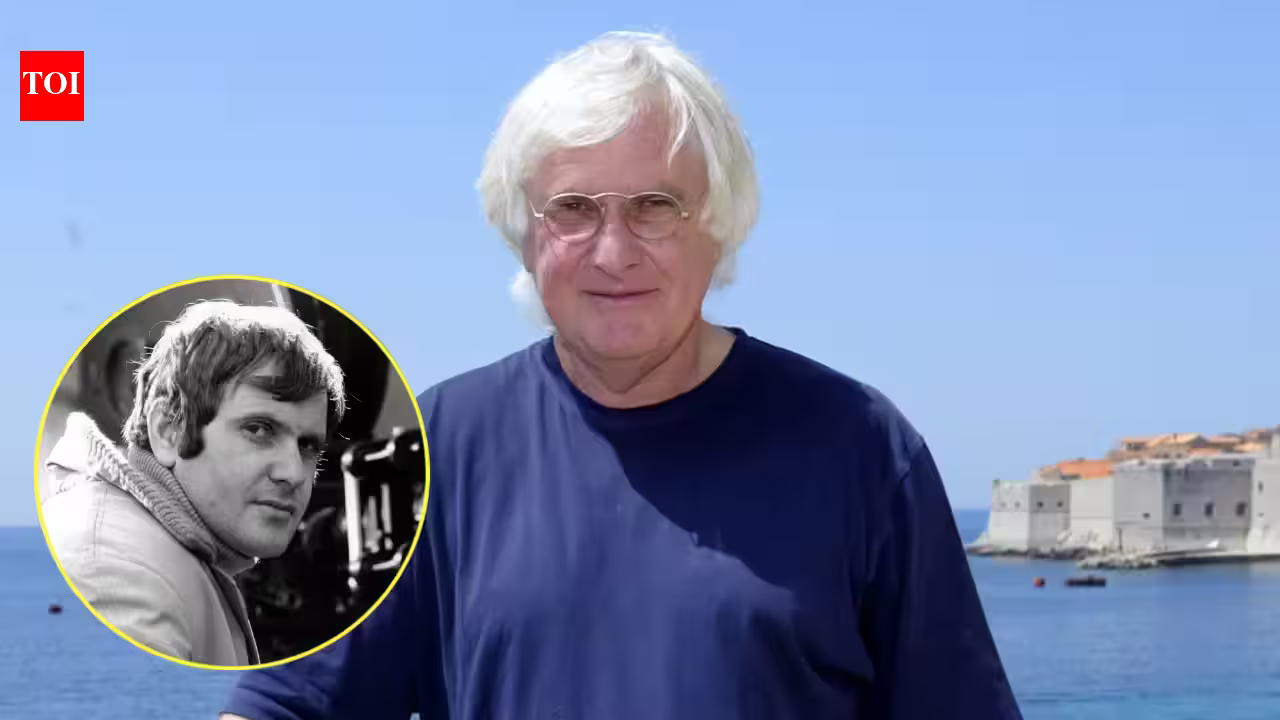
The flickering lights of cinema lost one of its most versatile architects this week. Peter Medak, the Hungarian-born filmmaker whose career spanned the grit of London’s underworld, the chilling silence of haunted Victorian mansions, and the sharp-tongued absurdity of the British aristocracy, has passed away in Los Angeles at the age of 88. His death marks the closing of a chapter for a director who refused to be boxed into a single genre, instead choosing to leave an indelible thumbprint on everything from psychological thrillers to prestige television.
To look back at Medak’s filmography is to witness a masterclass in tonal shifting. He was a filmmaker who understood that a camera could be a weapon, a microscope, or a ghost-hunter’s best friend. Whether he was guiding Peter O’Toole through a razor-sharp satire or exploring the blood-soaked legends of the Kray twins, Medak possessed a rare ability to unearth the human heartbeat beneath the most eccentric of stories.
A Career Defined by Defiance and Range
Born in Budapest in 1937, Medak’s journey to the director’s chair was anything but linear. He arrived in the United Kingdom as a refugee following the 1956 Hungarian Revolution, a formative experience that surely informed his outsider’s eye for the quirks of British society. After cutting his teeth in the industry, he made his feature debut in 1968 with Negatives, a dark, twisted psychological drama starring Glenda Jackson. It was an audacious start that signaled he had little interest in the safe or the pedestrian.
Over the next sixty years, Medak would direct 27 feature films, navigating the turbulent waters of the film industry with a quiet, persistent tenacity. He wasn’t the type of auteur who demanded his name be branded on every frame; rather, he was a craftsman who knew how to elevate a screenplay into something far more visceral. His capacity to toggle between the macabre and the mundane is what kept him in high demand across six decades, a feat few of his contemporaries managed with such consistency.
The Haunting Legacy of ‘The Changeling’
If there is one film that cemented Medak’s status as a master of atmosphere, it is undoubtedly the 1980 supernatural thriller The Changeling. In an era dominated by the gory slashers of the late 70s and early 80s, Medak’s work stood apart. Starring George C. Scott as a composer grieving the loss of his family, the film eschewed cheap jump scares in favor of a creeping, existential dread.
The film’s success—it swept eight Genie Awards, including Best Motion Picture—was largely due to Medak’s patient, deliberate direction. He understood that a bouncing red ball in a hallway could be far more terrifying than any creature in a costume. The Changeling remains a blueprint for how to build tension, and it stands as a testament to Medak’s ability to turn a house into a character and a tragedy into a terrifyingly poignant ghost story.
From Aristocratic Satire to Gangster Grit
Medak’s range was nowhere more evident than in the contrast between The Ruling Class (1972) and The Krays (1990). The former, a blistering satire of the British nobility, featured Peter O’Toole in a performance that garnered him an Oscar nomination. Medak’s direction here was theatrical, unhinged, and deeply intellectual—a high-wire act of comedy and madness that competed for the Palme d’Or at Cannes.
Jump forward nearly two decades, and Medak traded the drawing rooms of the elite for the mean streets of East London. The Krays is widely regarded as one of the definitive British gangster films, stripping away the glamour often associated with the era to expose the codependent, volatile nature of the infamous twins. By capturing the suffocating influence of their mother and the claustrophobic loyalty of their gang, Medak proved that he was just as comfortable with the raw, brutal reality of crime as he was with the high-concept world of satire.
A Second Act in the Golden Age of Television
While many directors of his generation struggled to adapt to the changing tides of the medium, Medak embraced the transition to long-form television with the vigor of a man half his age. In the late 90s and 2000s, he became a “go-to” director for some of the most complex shows on television. His work on Homicide: Life on the Street, The Wire, Breaking Bad, and House showcased his ability to adapt his cinematic sensibilities to the episodic format.
He didn’t just fill time between commercials; he brought the same level of visual scrutiny and character-driven focus to The Wire as he did to his feature films. He understood the rhythm of television—how to maintain a consistent tone across a sprawling narrative—and served as an essential mentor and collaborator for the shows that defined the “Golden Age” of the small screen.
Reflecting on the “Ghost” of the Industry
Perhaps the most poignant moment of his later years was his 2018 documentary, The Ghost of Peter Sellers. It was a raw, deeply personal look at the disastrous, stalled production of his 1970s comedy Ghost in the Noonday Sun, which had been plagued by the erratic behavior of its lead, Peter Sellers. By revisiting his own past failures, Medak showed the kind of humility rarely seen in Hollywood.
Peter Medak leaves behind a vast, sprawling legacy—not just in the films he directed, but in the lessons he taught about narrative flexibility and the importance of resilience. He is survived by his four children, Christopher, Joshua, Karen, and Cornela, and his five grandchildren. As the industry mourns, it also celebrates a life lived behind the lens, capturing the ghosts, the gangsters, and the madmen that make our own reality so endlessly fascinating. He may have finally stepped away from the director’s chair, but the shadows he cast—and the light he shed on the human condition—will linger for generations to come.
Disclaimer: This content is auto-generated for informational purposes only.
Source: Read Original News