








Expanding the Limits of Unified Memory Architecture
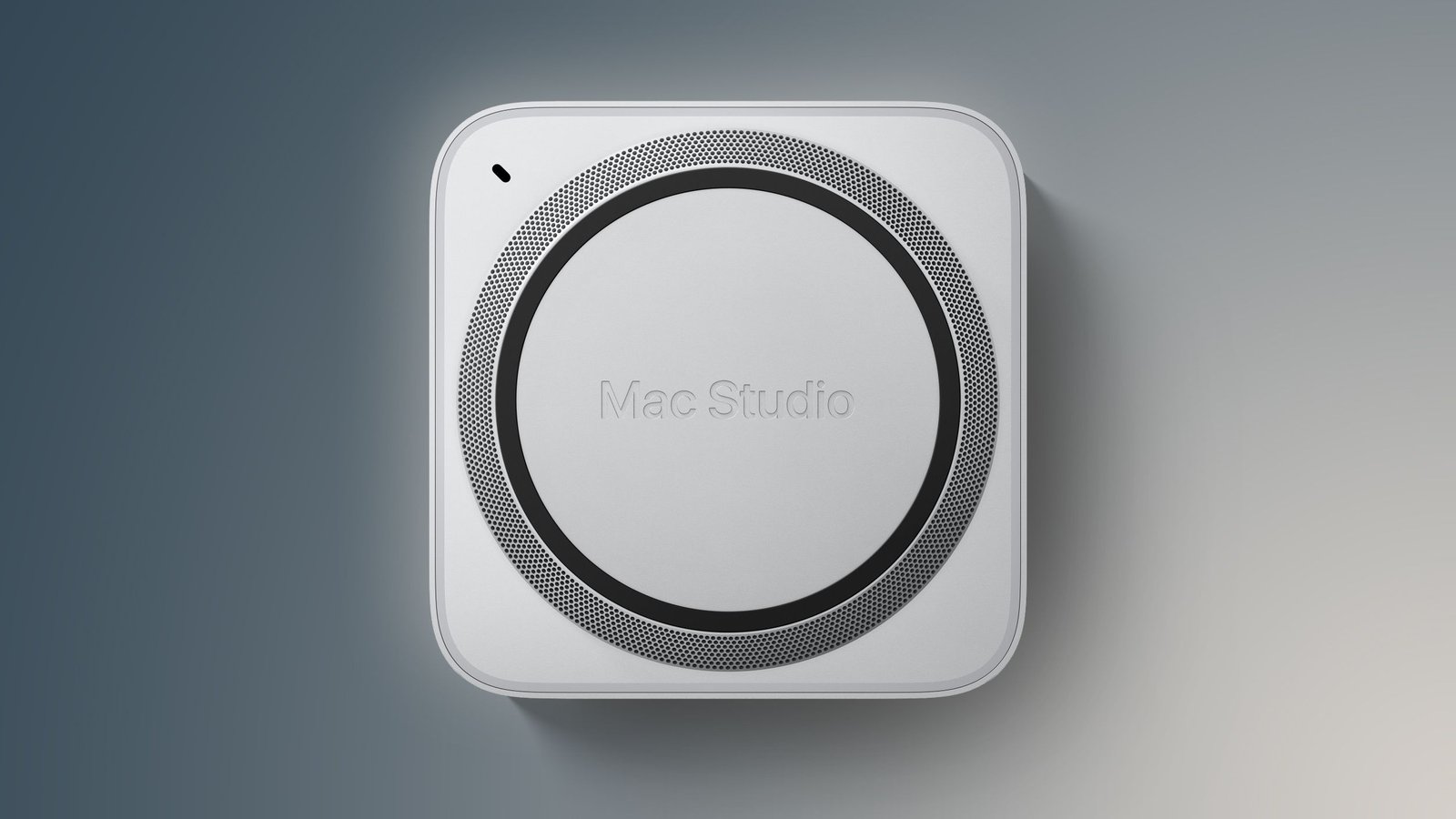
Apple has officially opened orders for the Mac Studio powered by the M5 Ultra chip, featuring an industry-leading configuration of 512GB of unified memory. This update, which arrives on the company’s previously promised late-October schedule, positions the Mac Studio as a formidable competitor in the workstation market. By offering such a massive capacity of unified memory, Apple is addressing a specific segment of the computing industry: developers, researchers, and creative professionals who handle massive datasets that were previously tethered to specialized server clusters or high-end workstation PCs.
The transition to 512GB of memory is a significant milestone for the M-series architecture. Unlike traditional computer designs that separate system memory (RAM) from video memory (VRAM), Apple’s unified memory architecture allows the M5 Ultra chip’s CPU, GPU, and Neural Engine to access the entire memory pool simultaneously. This removal of data copying overhead between disparate hardware components results in lower latency and higher efficiency, particularly when processing complex computational tasks.
Technical Implications for Professional Workloads
For the professional user, the jump to 512GB of unified memory is not merely a quantitative increase; it is a qualitative change in how software can interact with hardware. In current high-end professional workflows, such as 8K video production, architectural rendering, or large-scale software compilation, memory bottlenecks are a primary cause of system slowdown.
With 512GB available, applications can load significantly larger assets into the high-speed memory environment. This is especially relevant for machine learning developers who are working with open-weight models, such as the recently announced Muse Spark Open. Previously, running sophisticated large language models (LLMs) locally required multi-device setups or substantial cloud computing investment. With the new Mac Studio, a single machine can now hold massive neural network parameters entirely within its unified memory, drastically increasing inference speeds and enabling local experimentation that was previously impossible.
Distinguishing the M5 Ultra from the M5 Max
While the M5 Ultra supports the new 512GB ceiling, it is important to note the hardware segmentation maintained by Apple. The entry-level M5 Max chip remains capped at 128GB of RAM. This differentiation ensures that the M5 Ultra remains the flagship solution for compute-intensive tasks, reserving the extreme memory bandwidth and capacity for users who explicitly require it for heavy-duty professional applications.
The M5 Ultra chip effectively combines two M5 Max dies into a single package, doubling the performance specs across the board—including the memory interface. This doubling is what enables the system to address such a high volume of memory while maintaining the high-bandwidth interconnect speeds necessary to prevent the CPU from idling while waiting for data retrieval. Users who opt for the M5 Max should view it as a high-performance workstation for general creative tasks, whereas the M5 Ultra is purpose-built for scientific, engineering, and enterprise-level AI deployment.
The Economic Reality of High-End Hardware
The entry price of $22,299 for the 512GB M5 Ultra Mac Studio reflects the specialized nature of the hardware. For the average consumer or light creative user, this price point is clearly prohibitive. However, in the context of professional workstation equipment—such as rack-mounted server hardware or specialized GPU-accelerated workstations—the Mac Studio becomes a viable alternative.
By integrating this level of power into the compact Mac Studio chassis, Apple is providing a localized, power-efficient alternative to noise-heavy, energy-intensive server towers. The total cost of ownership is further bolstered by the machine’s ability to replace multiple specialized machines with a single unified platform. For firms that need to deploy dozens of units for localized model training or rendering farms, the Mac Studio reduces the necessity for massive cooling infrastructure and complex power management systems typically found in traditional data center setups.
Integration with the Modern ML Ecosystem
The availability of this machine coincides with broader industry trends toward bringing sophisticated AI models closer to the end user. As demonstrated by the collaborative efforts between Apple and organizations like Meta, the hardware is only as effective as the software stack that drives it. The MLX framework, which serves as a cornerstone for Apple silicon performance, is designed to extract the maximum possible throughput from the M5 Ultra’s unified memory.
This synergy between hardware and software is the primary driver behind the Mac Studio’s newfound capability. When developers utilize frameworks optimized for the M5 architecture, they can achieve performance metrics that rival traditional discrete GPU systems, but with a smaller physical footprint and significantly lower power consumption. As businesses continue to prioritize local AI capabilities for data privacy and latency reasons, the 512GB Mac Studio is poised to become a staple in environments where high-performance computation is non-negotiable. Whether for massive data analysis or intricate production pipelines, the machine provides a substantial upgrade to the ceiling of what is possible on a desktop-class device.
Disclaimer: This content is auto-generated for informational purposes only.
Source: Read Original News