








EU-India Free Trade Deal Expected by End of 2026: Top Official
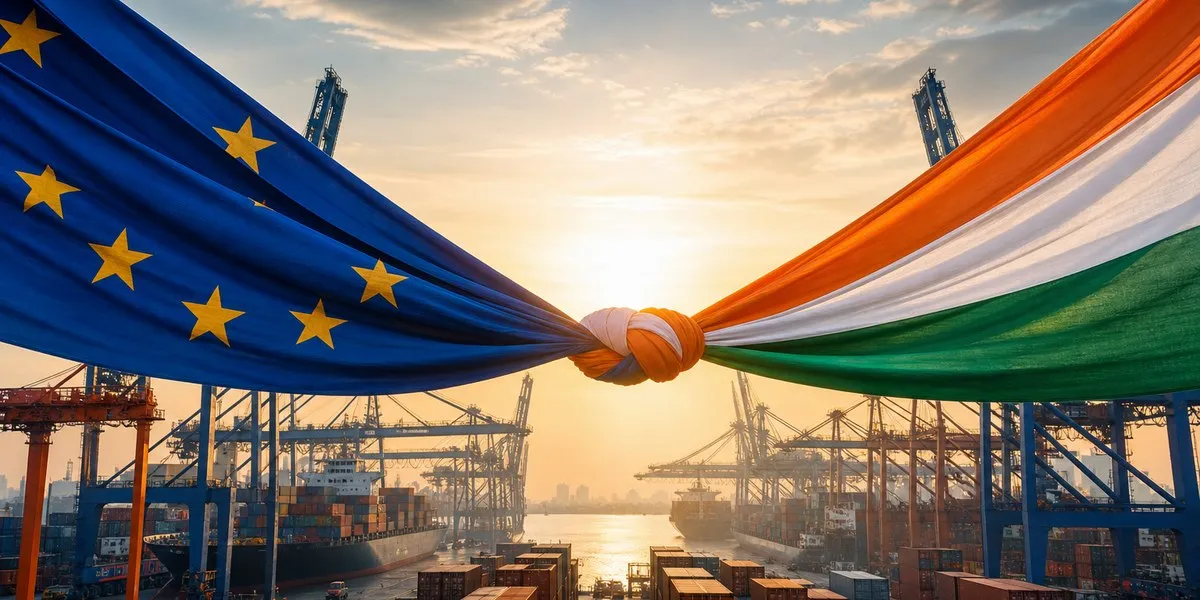
New Delhi — Hopes for a historic economic partnership between India and the European Union have been bolstered by recent comments from David McAllister, the Chair of the European Parliament’s Committee on Foreign Affairs. During his recent visit to New Delhi as part of a high-level delegation, McAllister indicated that the two sides are aiming to finalize a comprehensive Free Trade Agreement (FTA) by the conclusion of 2026.
A “Mother of All Deals”
In an interview following his discussions in the national capital, McAllister characterized the potential pact as the “mother of all deals,” marking a significant milestone in the evolving strategic relationship between the two global powers. He revealed that the current roadmap envisions the agreement being signed in December 2026, coinciding with a proposed visit by the Indian Prime Minister to Brussels.
“This is the next logical step in developing our strategic partnership,” McAllister stated. He further outlined the procedural path forward, explaining that once the document is inked, it will require formal ratification from the European Parliament. The chair expressed optimism that the parliamentary review process could be wrapped up by the spring of 2027, potentially allowing the trade agreement to take full effect by the following summer.
Overcoming Nearly Two Decades of Negotiations
The pursuit of this trade deal has been a marathon effort, with official negotiations having initially commenced back in 2007. After nineteen years of intermittent discussions, the momentum significantly accelerated in January 2026, when European Commission President Ursula von der Leyen and European Council President António Costa visited India. That high-level meeting resulted in a pivotal political consensus, providing the necessary political will to break long-standing deadlocks.
Beyond the core trade components, the relationship has expanded into critical areas of regional security. Both the EU and India have already successfully forged a partnership agreement concerning defence and security, underpinned by a unified strategic agenda. McAllister emphasized that in a volatile geopolitical climate, the deal is essential for diversifying global supply chains and securing vital maritime trade routes that serve as the lifeblood of both economies.
Ending Tariff Uncertainty
One of the key drivers for the agreement, according to the European lawmaker, is the need for stability. McAllister voiced concerns regarding the unpredictability of international tariff changes, noting that sudden shifts often create chaos in global markets and inflict unnecessary damage on businesses.
“Unpredictable tariff changes disrupt markets and hinder growth,” McAllister noted. He remains confident that a structured, long-term free trade agreement will offer companies on both sides of the partnership the necessary predictability and regulatory framework required to scale their operations and invest with confidence.
As the delegations move toward the final phases of negotiation, the focus will now shift to addressing the specific sectoral nuances that will define the trade landscape between New Delhi and Brussels for years to come. If successful, the agreement promises to reshape the trade dynamics between the world’s largest democracy and the EU’s unified market.
Disclaimer: This content is auto-generated for informational purposes only.
Source: Read Original News