




The Ambition Behind the Apple iPhone Duo Hinge
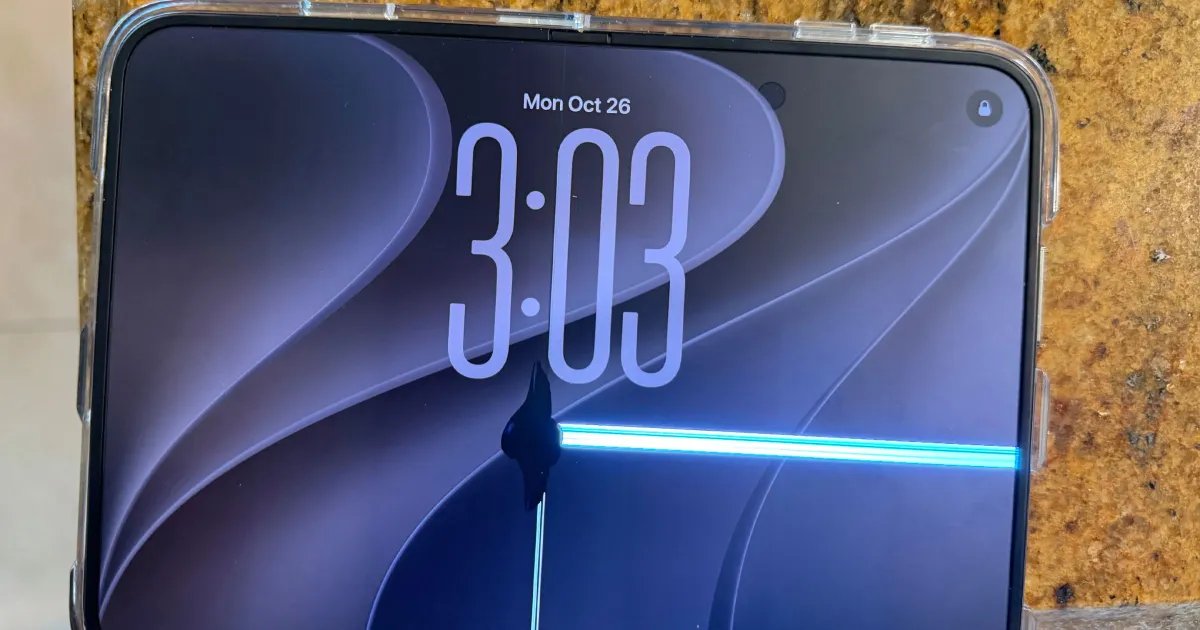
The release of the Apple iPhone Duo was intended to be a definitive moment in the evolution of mobile computing, signaling Apple’s long-awaited entry into the foldable device market. With a price point exceeding $2,000, the device was positioned as a pinnacle of engineering precision. However, the early consumer experience has been defined by a significant hardware failure: the inner flexible screens are cracking along the center axis shortly after unboxing.
At the heart of the controversy is the device’s complex mechanical hinge. During the product’s unveiling, Apple’s chief hardware officer, Johny Srouji, highlighted the sophisticated manufacturing processes employed to create this component. According to Srouji, the company utilized machine learning algorithms to achieve a level of fit and finish previously unseen in consumer electronics. The process involved matching individual hinges to their specific housings to ensure perfect structural alignment. Furthermore, Apple utilized confocal laser scanning to map the topography of each unit, followed by the additive manufacturing of up to 25 micro-layers of custom photopolymer. This additional layer was intended to eliminate microscopic waviness, theoretically creating a seamless transition for the foldable display.
Defining AI in Hardware Manufacturing
The reliance on what Apple describes as “AI algorithms” in this manufacturing process raises important questions about the terminology currently permeating the technology industry. In the context of the iPhone Duo, these algorithms function as advanced statistical optimization tools rather than the generative models, such as large language models, that currently dominate the public conversation surrounding artificial intelligence.
In industrial engineering, machine learning has been used for decades to perform quality control, predict mechanical failure, and optimize assembly line tolerances. Apple’s application appears to be a sophisticated extension of these traditional methods. By scanning components and adjusting the assembly based on real-time data, the company aimed to compensate for the natural variance found in mass-produced metal and polymer parts. However, while the branding of these tools as “AI” serves to emphasize innovation, the current widespread hardware failures suggest that algorithmic precision cannot fully replace the physical requirements of a high-stress mechanical pivot.
The Anatomy of a Design Failure
Technical teardowns conducted by industry experts, including the team at iFixit, provide a clearer picture of why the manufacturing process failed to prevent screen damage. The primary issue appears to be a mechanical clearance problem involving a center support bar. This component is designed to provide a flat surface for the flexible display when the phone is fully open, effectively hiding the crease.
Engineers have observed that this support bar, which must retract when the phone is closed, often fails to descend completely. Consequently, the stiff, sensitive layers of the flexible display are forced to wrap around a rigid obstruction during the folding process. This creates a point of intense localized pressure, leading to stress fractures along the center of the panel. While the algorithmic matching of the hinge components was intended to ensure smooth operation, it did not account for the potential for this support mechanism to jam under certain tolerances. This disconnect between the digital simulation of the assembly process and the physical reality of repeated mechanical use is the core cause of the “crackgate” phenomenon.
The Limits of Algorithmic Quality Control
The situation with the iPhone Duo serves as a critical case study regarding the limitations of automated manufacturing. Relying on machine learning to “perfect” hardware components assumes that the input data and the design logic are comprehensive. If the physical model of the hinge does not account for thermal expansion, particulate debris, or the degradation of materials over hundreds of fold cycles, the algorithms will simply optimize for an flawed design.
This failure highlights that even the most advanced, laser-calibrated assembly lines cannot mask underlying structural flaws. When a mechanism is physically incapable of supporting the material stretched over it, the precision of the manufacturing process becomes secondary to the validity of the mechanical design. Apple’s decision to replace the damaged units is a necessary step for reputation management, but it also underscores that the complexity of foldables may be pushing the boundaries of current material science and mechanical engineering beyond what automated refinement can reliably stabilize.
The Future of Foldable Innovation
Despite the current setbacks, the industry remains committed to the foldable form factor. The integration of advanced scanning, photopolymer 3D printing, and machine learning-driven quality control is the correct trajectory for the industry, even if the execution in this instance was insufficient. Future iterations will likely require more resilient display substrates and perhaps more robust mechanical architectures that do not rely on moving center support bars.
As companies continue to integrate “AI” into their design and production workflows, the lesson from the iPhone Duo is clear: technology remains beholden to the laws of physics. Advanced algorithms are powerful assistants in the quest for precision, but they are not substitutes for rigorous stress testing and fundamental mechanical reliability. For consumers, this event is a reminder that early adoption of complex, first-generation hardware carries risks that no amount of marketing-adjacent terminology can entirely mitigate. As Apple works to rectify these hardware shortcomings, the tech community will be watching to see how the company adjusts its reliance on automated design to ensure that future versions of its foldable devices are as reliable as they are ambitious.
Disclaimer: This content is auto-generated for informational purposes only.
Source: Read Original News