







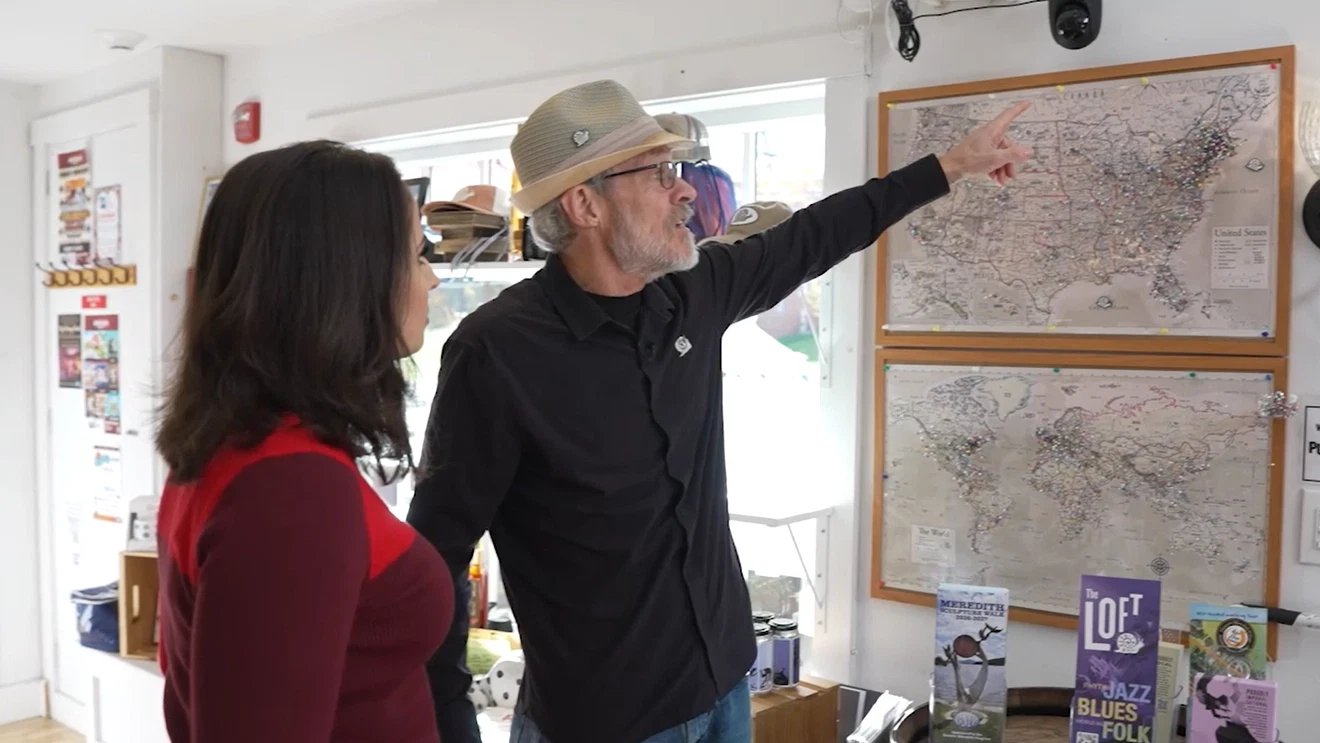
MEREDITH, N.H. — In the heart of New Hampshire’s Lakes Region, the simple map hanging at the entrance of Hermit Woods Winery and Eatery has transformed into something far more significant than a quirky tourist amenity. For co-owner Bob Manley, the map—peppered with pins from across the globe—serves as a blunt, real-time economic barometer. While tourists from as far as Australia have left their mark, the section reserved for Canada remains hauntingly empty.
With the border just a short drive away, the lack of Canadian representation is a stark indicator of shifting international relations. “Twelve. It’s just mind-blowing,” Manley remarked, noting that Canadian tourism in the state has plummeted by 30% over the last year. For small business owners in New Hampshire, this decline is symptomatic of a broader, more volatile economic climate defined by trade tensions, inflation, and a growing sense of instability that many say rivals the uncertainty of the pandemic.
## The Cost of Uncertainty in the Modern Marketplace
While retail and hospitality sectors struggle with the cooling impact of geopolitical friction, the operational challenges extend deep into the supply chain. Amber Morgan, who owns Fortin Gage Flowers and Gifts in Nashua, describes a landscape where economic pressures have become permanently “baked into” the cost of doing business.
Even after legal challenges successfully rolled back a majority of trade tariffs, the expected relief never materialized for small businesses. Supply chain costs remain inflated, and the unpredictability of global logistics forces business owners to pivot constantly rather than invest in growth.
“We do need the predictability to be able to plan,” Morgan said, noting that she spends more time strategizing against market volatility than focusing on core service improvements. According to the National Federation of Independent Business, this sentiment is widespread: only 7% of small business owners currently view this as an opportune time to expand, reflecting a profound lack of confidence in near-term economic stability.
## Tech and the Digital Economic Shift
As small businesses navigate these physical economic headwinds, the broader retail ecosystem is increasingly influenced by digital tools and AI-driven predictive modeling. Google, for instance, has continued to roll out advanced data analytics and AI-enhanced features through Google Merchant Center and Google Ads. These tools are designed to help merchants navigate fluctuating prices and demand in real-time.
However, technology acts as a double-edged sword. While AI-driven forecasting can help a local shop owner identify that a specific flower variety is rising in cost due to fuel prices or trade issues, the underlying macroeconomic volatility—such as the 3.4% inflation reading flagged by Federal Reserve officials—remains a barrier that software cannot solve. The tension remains between the high-speed, data-driven world of modern e-commerce and the slow, grinding reality of local businesses trying to manage rising operational overhead.
## Looking Toward Legislative Relief
As the midterm elections approach, the consensus among local entrepreneurs is clear: they are looking for stability. While the Federal Reserve continues its delicate dance of managing interest rates to temper inflation, small business owners argue that policy, not just monetary tightening, is the key to recovery.
For Manley, the frustration is deeply personal. He reflects on the pandemic as a time when government intervention felt like a safety net, whereas current trade and fiscal policies feel like a source of active distress. As these business owners head to the polls, their message is directed at lawmakers: economic support should be defined by policy consistency, not rhetoric. Whether through tax reform, trade clarity, or support for localized supply chains, the hope for the coming cycle is a return to a landscape where planning for the future is once again possible.
Disclaimer: This content is auto-generated for informational purposes only.
Source: Read Original News