






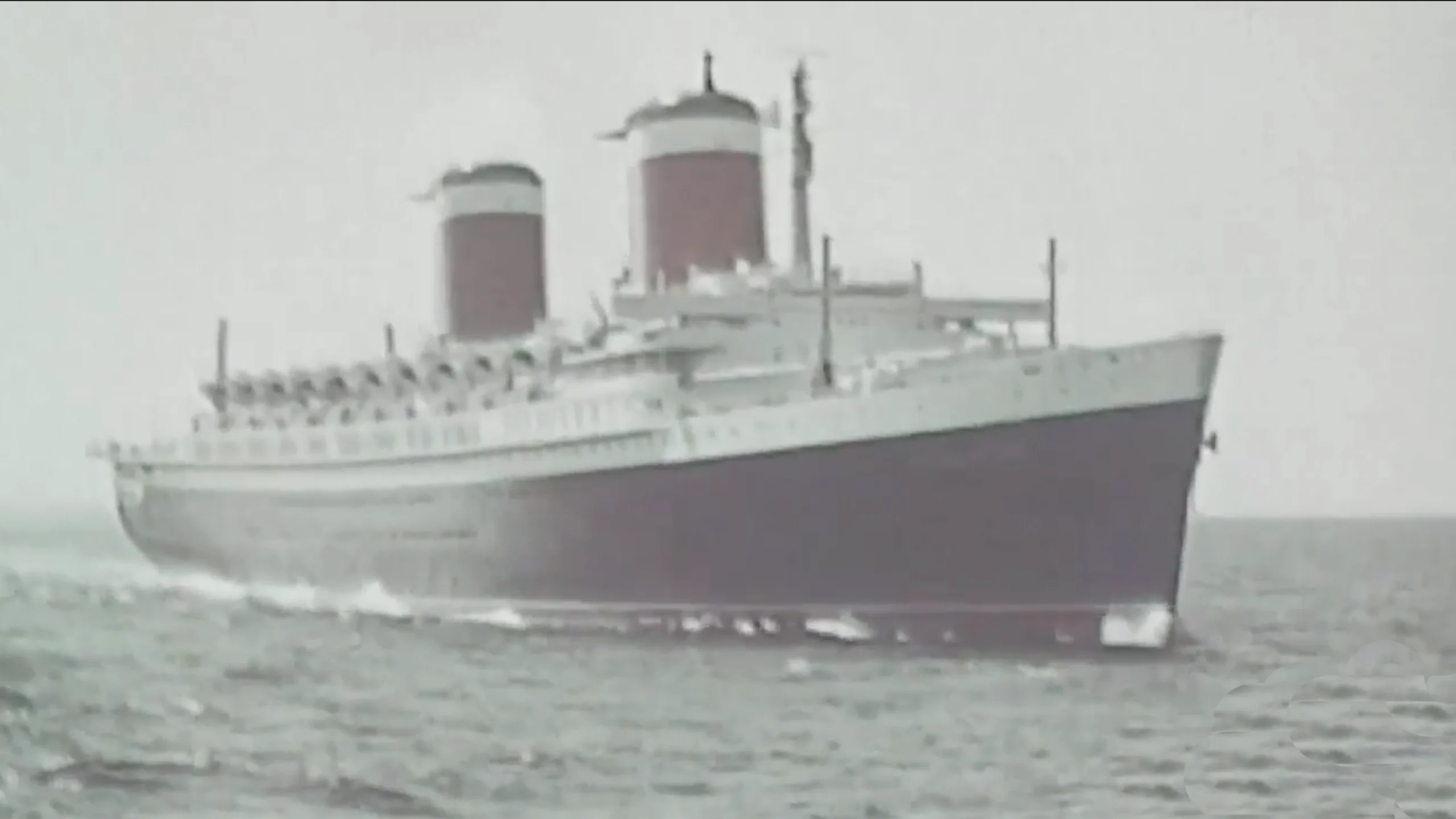
After decades of service and years of uncertainty, the SS United States—once the pride of the American maritime fleet—is preparing for its final voyage. Measuring 990 feet in length, the ocean liner that transported luminaries from Marilyn Monroe to four U.S. presidents is set to be scuttled on November 12. However, this is not a decommissioning into obscurity; the vessel is slated to become the world’s largest artificial reef, marking a transition from a celebrated passenger ship to a vital sanctuary for marine biodiversity in the Gulf of Mexico.
Constructed between 1950 and 1952, the SS United States earned the moniker “America’s greatest ocean liner.” Designed not only for luxury travel but also for strategic military utility, the ship was capable of being rapidly converted into a troop transport vessel if the need arose. Its engineering was a marvel of the era; during its 1952 maiden voyage, the ship set a speed record that remains unsurpassed, completing the crossing from New York Harbor to Bishop Rock off the coast of Cornwall in less than four days.
Despite its storied history, time and the relentless wear of the Atlantic have left the vessel in a state of decay. Rather than allowing the ship to be sold for scrap metal—a process that would strip away its historical legacy—officials in Destin-Fort Walton Beach have championed a plan to give the ship a second life as an underwater ecosystem.
The creation of artificial reefs is a proven environmental strategy, though the scale of this particular project is unprecedented. By deliberately sinking the ship, conservationists aim to provide a solid substrate for corals, sponges, and anemones to colonize. These organisms, in turn, provide shelter and foraging grounds for diverse fish populations, helping to revitalize local marine habitats. This initiative draws on the history of reef creation, which has previously utilized everything from discarded ships to retired military hardware. However, environmental experts are quick to note that the success of such projects depends heavily on rigorous preparation, referencing past failures like the disastrous Osborne Reef in Florida, where millions of discarded tires were dumped into the ocean only to cause significant damage to existing natural reefs.
To prevent such ecological repercussions, the scuttling of the SS United States is being managed under strict environmental protocols. Before the ship is submerged, a specialized team is undertaking an exhaustive decontamination process. This involves the removal of all hazardous materials, including fuels, oils, lead-based paints, and polychlorinated biphenyls (PCBs). Only after the ship has been stripped down to its metal frame will it be prepared for its final descent.
Engineers are currently calculating the precise placement of structural holes in the hull to ensure that the ship settles upright on the seafloor. This stability is critical for the long-term health of the reef and for the structural integrity of the site as it begins to attract marine life.
The transformation of the SS United States represents a complex balancing act between historical preservation and environmental stewardship. While the liner’s days of carrying passengers across the Atlantic are long over, its future as an underwater bastion of life offers a fitting final chapter. By the time it reaches the bottom of the Gulf of Mexico, the vessel will have been transformed from an icon of mid-century industrial speed into a permanent foundation for the future of the marine environment. If the project proceeds as planned, the ship will successfully trade its history of global transit for a new, permanent role as a cornerstone of ocean conservation.
Disclaimer: This content is auto-generated for informational purposes only.
Source: Read Original News