







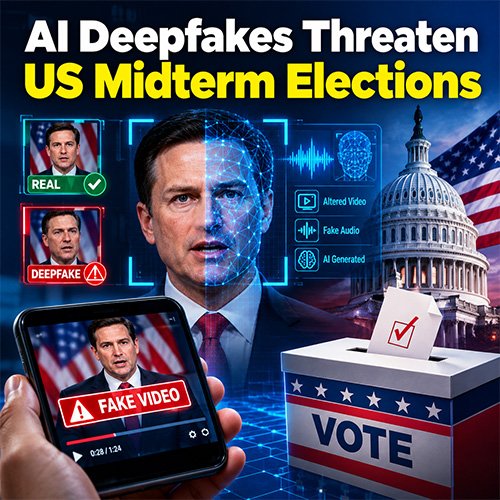
As the November 3 U.S. midterm elections approach, the sanctity of the ballot box is facing an unprecedented digital threat. A surge in sophisticated, AI-generated deepfake videos targeting high-profile Senate candidates has sparked a national alarm, fueling fears of foreign interference and a permanent erosion of voter trust.
Democratic candidates Sherrod Brown in Ohio and James Talarico in Texas have emerged as the primary targets of these coordinated disinformation campaigns. The videos, which utilize synthetic media to fabricate scandalous accusations, are being deployed as tactical weapons designed to sway public opinion in the final, volatile days of the election cycle.
The attack on Senator Sherrod Brown masquerades as a legitimate news broadcast, cynically exploiting photographs of his former intern, Haya Akbik, and other staff members to lend an air of authenticity to false claims. Akbik has since publicly denounced the video, highlighting a disturbing trend: the weaponization of ordinary citizens’ identities to serve political agendas. Simultaneously, a fabricated video targeting James Talarico features an actor posing as a former student to levy false charges against the candidate.
Digital forensic investigations have linked the content to Storm-1516, a Russia-linked disinformation network previously identified for its efforts to meddle in the 2024 presidential race by targeting Kamala Harris and Tim Walz. Cybersecurity analysts noted that the same digital architecture—overlapping accounts and distribution channels—was used to amplify these latest attacks.
Hany Farid, a leading digital forensics expert, confirmed that the videos were almost certainly AI-generated. While some experts characterize the deepfakes as “crude,” their effectiveness remains undeniable. The Talarico video alone surpassed 500,000 views before it could be debunked. This underscores a structural failure in social media moderation: even when platforms like X remove the original posts and suspend accounts, the damage is already done. The misinformation, once downloaded and re-uploaded, remains embedded in the public discourse, proving that in the digital age, a lie can travel halfway around the world before the truth has a chance to catch up.
The implications of this trend extend far beyond the ballot box. This wave of synthetic impersonation represents a looming national security crisis that threatens the integrity of financial institutions, corporate leadership, and the fundamental concept of truth. As deepfakes grow increasingly convincing, the adage “seeing is believing” has become a liability.
Researchers warn that the prevalence of these tools creates a secondary danger: the “liar’s dividend,” where public figures can dismiss genuine, incriminating evidence as AI-generated fabrications. Addressing this crisis will require a monumental, coordinated effort between tech giants, federal regulators, and the public. In an era where digital provenance is as vital as the vote itself, the race is now on to develop the accountability mechanisms necessary to safeguard the future of democratic governance.
Disclaimer: This content is auto-generated for informational purposes only.
Source: Read Original News