







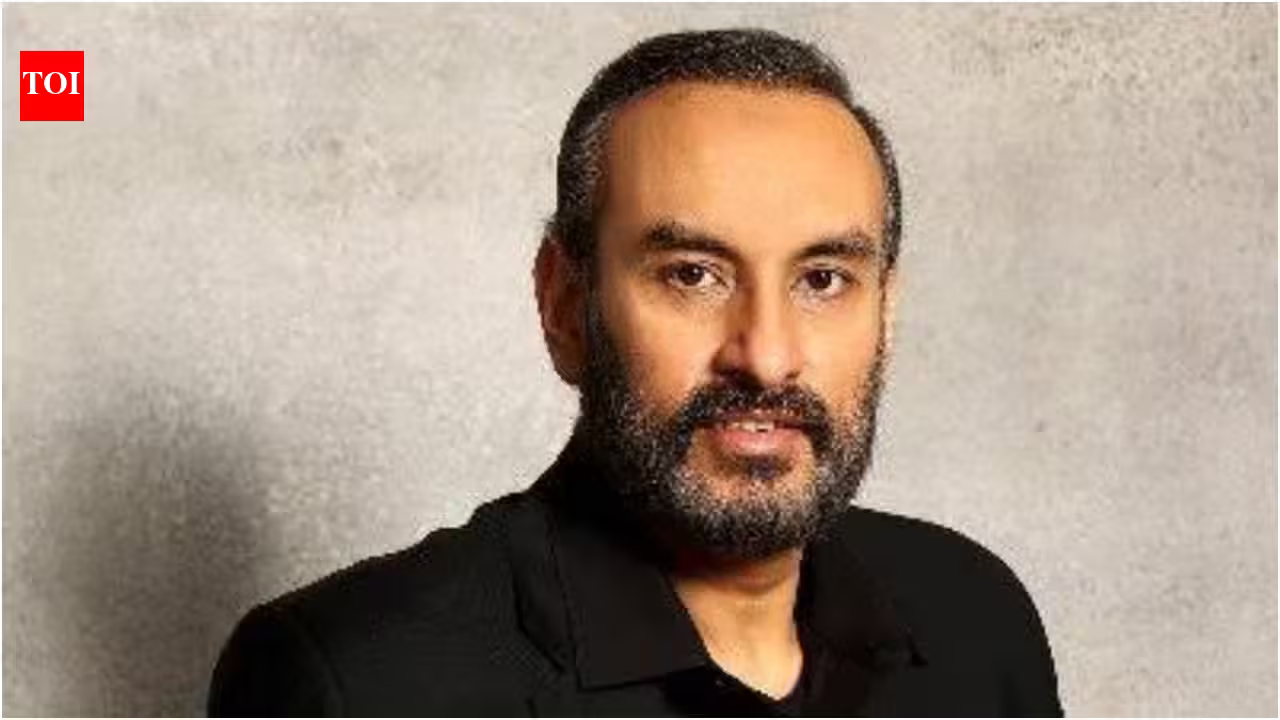
The flicker of a projector light in a darkened room has always been the ultimate symbol of Hollywood magic, but for Namit Malhotra, the hum of the Academy Theater in Los Angeles carries a much heavier, more personal weight. As he stood before a curated audience of industry peers and media, the producer behind the gargantuan, two-part Ramayana adaptation didn’t just see a venue; he saw a twenty-year homecoming. For a man who now oversees a VFX empire with eight Academy Awards to its name, this wasn’t just a screening—it was a vindication of a dream that was almost extinguished before it truly began.
From a Garage Startup to a Global Powerhouse
To understand the audacity of a Rs 4,000 crore production like Ramayana, one has to look past the glitz of the current project and back to the dusty constraints of a garage in 1990s Mumbai. Malhotra’s journey reads like the ultimate Silicon Valley underdog story, albeit scripted with the dramatic flair of a Bollywood blockbuster. He started as a nineteen-year-old visionary with little more than an Apple computer and a trio of collaborators—all peers, all barely twenty-one.
While many his age were still navigating the uncertainty of early adulthood, Malhotra was already obsessed with the marriage of storytelling and technology. He wasn’t interested in being just another small-time service provider; he wanted to bridge the chasm between Eastern narrative tradition and Western technical precision. Yet, as history has proven, ambition is a fragile currency. In 2007, Malhotra made the leap to Los Angeles, the beating heart of the global film industry, hoping to institutionalize his vision. Within twelve months, the world shifted beneath his feet.
The 2008 Reckoning: Losing Everything but Vision
The 2008 financial crisis was more than just a footnote in economic history; for Malhotra, it was a near-fatal blow to his professional existence. As the global recession rippled through the entertainment industry, the young immigrant found himself staring down the barrel of financial ruin. He estimates that he lost 90% of his wealth during that tumultuous period.
Many would have packed their bags and returned to the relative safety of the Indian market. Instead, Malhotra doubled down. He clung to the conviction that the visual effects (VFX) industry was not merely an ancillary service but the future of cinema. It is a testament to his tenacity that the man who lost nearly everything in 2008 is now identified by the Hurun India Rich List 2026 as holding a family net worth of Rs 16,000 crore. This resilience, forged in the fires of an economic collapse, is precisely the grit he has brought to the mammoth undertaking of Ramayana.
An ‘Oscar Moment’ Twenty Years in the Making
At the recent Los Angeles showcase, Malhotra’s tone was one of profound reflection. He spoke of the Academy Theater as his “Oscar moment”—a chance to breathe in the significance of his trajectory. It is easy to see why he feels that way. His company, DNEG, has become a juggernaut of post-production, securing seven Academy Awards in the last eleven years alone. He has sat in the trenches with the modern titans of cinema, collaborating with visionaries like Christopher Nolan and Denis Villeneuve.
“For a third-generation film family background, and a garage startup kid at 19… this is what dreams are made of,” Malhotra remarked to the crowd. He wasn’t just boasting about accolades; he was defining the bridge he had spent two decades building. By bringing Ramayana to a global stage, he is finally closing the loop: taking a cornerstone of Indian culture and utilizing the world’s most sophisticated Western visual effects talent to tell it.
The Burden of a 4,000 Crore Epic
The scale of Ramayana is difficult to overstate. Directed by Nitesh Tiwari and co-produced by superstar Yash, the film is a monumental swing that aims to reshape the landscape of Indian epic cinema. With a budget pegged at Rs 4,000 crore, it is one of the most expensive and ambitious independent productions ever conceived.
The casting—featuring Ranbir Kapoor, Sai Pallavi, and Ravi Dubey—suggests that Malhotra is aiming for a synthesis of massive star power and technical spectacle. When a film carries this much financial weight, it often risks losing its soul to the mechanics of CGI. However, Malhotra’s background in post-production suggests a different approach. He isn’t interested in just layering effects; he is interested in the craft of visual storytelling he learned from his father, Naresh Malhotra. He cites his parents as the bedrock of his journey, acknowledging that while he mastered the digital tools of the modern age, it was his family’s legacy in traditional production that gave him the instinct for when, and how, to use them.
The Final Countdown to November 5
As the November 5 release date approaches, the industry is watching with bated breath. Can an Indian epic, told with global-standard visual effects, capture the imagination of a polarized, modern audience? For Malhotra, the result of the box office will be the final verdict on his two-decade-long career.
He stands today not just as a businessman, but as a cultural architect. He has moved from the isolation of an immigrant looking for a foothold to a global producer commanding a room in the heart of Los Angeles. Regardless of the charts, Malhotra has already achieved the most difficult part of the journey: he has turned a 2008 disaster into a 2024 triumph, proving that while money can be lost in a market crash, a vision—if sustained with enough stubbornness—is the only thing that actually survives the long haul. On November 5, the world will see if that vision was worth the two-decade wait.
Disclaimer: This content is auto-generated for informational purposes only.
Source: Read Original News