








A federal judge in Chicago has dealt a legal blow to McDonald’s, ruling that a class-action lawsuit alleging consumer fraud regarding the company’s iconic McRib sandwich can proceed. U.S. District Judge April Perry rejected the fast-food giant’s motion to dismiss the case, signaling that the court is not yet ready to dismiss the possibility that the McRib’s branding could be misleading to the average diner.
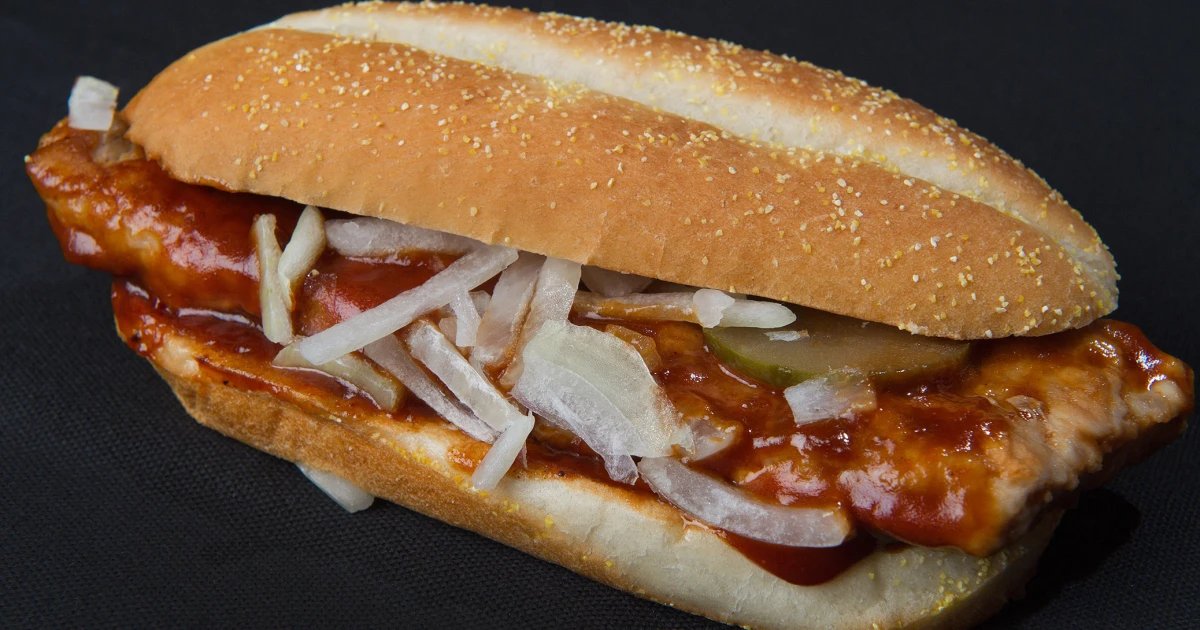
The plaintiffs argue that McDonald’s intentionally uses a molded, ridged patty design to mimic the appearance of a rack of pork ribs. By doing so, they claim the corporation leads consumers to believe the sandwich contains high-quality rib meat, rather than the lower-grade pork cuts—such as shoulder, heart, tripe, and stomach—that they allege are actually used. The lawsuit contends that this perception leads patrons to overpay for a product that does not live up to its namesake.
The “Reasonable Consumer” Standard
In her decision, Judge Perry underscored that it is premature to accept McDonald’s argument that no “reasonable consumer” could expect the McRib to contain actual rib meat. While McDonald’s maintains that its marketing is truthful and that its product names do not deceive the public, the court pushed back on the idea that customers should be required to conduct deep research into ingredient lists before purchasing a $7 sandwich.
The judge’s ruling noted that the plaintiffs’ interpretation of the name “McRib” is not “unreasonable or fanciful.” She further stated that the aggressive advertising campaigns highlighting the rib-like physical structure of the patty could potentially support a claim of intent to defraud. While this is not a final verdict, the decision allows the discovery process to move forward, where plaintiffs can seek further evidence to substantiate their claims.
The Evolving Digital Landscape of Fast-Food Marketing
This legal challenge arrives as the fast-food industry faces increasing scrutiny over how it presents products in the digital age. As consumers rely more heavily on mobile apps, augmented reality (AR) menu displays, and AI-driven personalized advertisements, the gap between digital representation and physical reality has become a focal point for regulators and class-action attorneys.
The digital storefront has fundamentally changed how companies promote their items. With high-definition imagery and algorithmic targeting, companies like McDonald’s, Burger King, and Wendy’s have faced similar litigation concerning the size and appearance of their burgers in digital ads versus the product served at the counter. As Google and other tech giants continue to integrate AI-generated imagery and advanced product modeling into search results and delivery platforms, the legal standard for “deceptive marketing” may soon require a massive overhaul to address how AI tools impact consumer expectations.
Corporate Transparency and the Tech-Driven Future
McDonald’s has remained steadfast in its defense, describing the lawsuit as a distortion of facts. The company stated that it does not, in fact, include hearts, tripe, or stomach in the McRib and insists that it has consistently maintained transparency regarding its ingredient sourcing.
The case underscores a growing tension between massive food corporations and a public that is increasingly demanding data-backed transparency. As technology platforms integrate more granular product information—such as ingredient sourcing, carbon footprints, and nutritional transparency via AI-powered assistants—the traditional “buyer beware” approach is facing stiff competition from digital accountability.
The McRib, a product that has been sold periodically since 1981, has always relied on the “scarcity marketing” model to drive sales. Whether that marketing strategy holds up under modern legal standards remains to be seen, but the outcome of this trial could set a significant precedent for how major food chains utilize visual aesthetics in their digital and physical marketing strategies. Thiago Coelho, the attorney representing the plaintiffs, has signaled that his clients are committed to seeing the litigation through to ensure accountability.
Disclaimer: This content is auto-generated for informational purposes only.
Source: Read Original News