







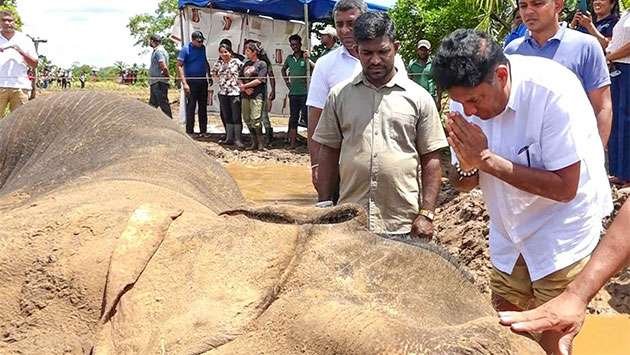
COLOMBO – In a move that has sparked widespread debate across the nation, Opposition Leader Sajith Premadasa has announced plans to commission and install a life-size statue of the legendary tusker, Kavantissa. The monument is intended to serve as a tribute to the iconic elephant, which held a significant place in the cultural and wildlife heritage of the country.
The announcement was made amidst ongoing discussions regarding heritage conservation and the celebration of Sri Lanka’s natural history. According to sources close to the Opposition Leader, the statue is envisioned as a permanent landmark designed to honor the majesty of the animal, often associated with the historical grandeur of the Ruhunu Kingdom.
The project, which is currently in the preliminary stages of design and site selection, seeks to immortalize Kavantissa as a symbol of the country’s deep-rooted connection to its wildlife. Supporters of the initiative argue that the statue will serve as both an educational tool for future generations and an attraction that acknowledges the role elephants have played in Sri Lankan folklore and history.
“Kavantissa is not merely an elephant; he represents a legacy,” a spokesperson for the Opposition Leader stated. “By commissioning a life-size statue, we aim to ensure that the memory of such a magnificent creature remains etched in the public consciousness, promoting awareness about the importance of protecting our nation’s biodiversity.”
However, the proposal has not been without its critics. On social media platforms and public forums, segments of the citizenry have questioned the timing of the project and the allocation of resources. Some commentators have raised concerns about whether public funds or private contributions should be prioritized for such commemorative structures during a period of economic uncertainty, suggesting that efforts might be better directed toward active wildlife conservation initiatives or humanitarian aid.
Environmentalists have also weighed in, noting that while commemorative monuments are grand gestures, the real-world challenges facing the elephant population—such as human-elephant conflict and habitat loss—require tangible policy changes and sustained financial commitment rather than symbolic tributes. They argue that if the statue is intended to pay homage to the species, it should be accompanied by a robust plan to protect living elephants in the wild.
Despite the controversy, the planning committee behind the project remains steadfast. They emphasize that the statue is intended to foster national pride and serve as a cultural anchor. Further details regarding the location of the monument, the materials to be used, and the expected timeline for completion are expected to be unveiled in the coming weeks.
As the project moves forward, it remains a focal point of public discourse, highlighting the evolving priorities of the nation and the ongoing conversation regarding how best to honor the intersection of history, culture, and nature.
Disclaimer: This content is auto-generated for informational purposes only.
Source: Read Original News