








The cinematic landscape of Indian cinema is currently teetering on the edge of a seismic shift. As the industry gears up for the global premiere of Nitesh Tiwari’s Ramayana: Part 1, the air in the trade circles is thick with a mixture of awe and hyper-critical speculation. With the release date of November 5 fast approaching, the advance booking data is finally providing a tangible look at what is arguably the most expensive gamble in the history of Indian film production.
Clocking in at a staggering Rs 36.65 crore across its first two days of pre-sales, Ramayana is undeniably a juggernaut in the making. Yet, in an era where fan rivalries and box-office comparisons define the conversation, the numbers tell a more complex story than a simple “hit” or “flop” narrative.
The Anatomy of the Advance Booking Wave
Numbers can be deceptive, but they rarely lie about audience intent. As of Sunday evening, *Ramayana* had secured Rs 23.87 crore for its opening day alone, bolstered by the sale of 5.42 lakh tickets across 13,165 shows. When we strip away the “blocked seats”—a standard industry practice that often pads early reports—the figure settles at a solid Rs 20.04 crore.
What’s truly fascinating is the geographic spread. Maharashtra is leading the charge, which is expected given the sheer density of cinema infrastructure there, but the strong performance in Karnataka—clocking in at Rs 4.36 crore—suggests that the star power of the cast is transcending regional barriers. Delhi follows closely, confirming that the film has a balanced pull across the north and the west.
Perhaps most telling is the performance of premium formats. IMAX, 4DX, and Dolby Cinema have generated Rs 4.74 crore. That accounts for roughly 23 percent of the total advance sales from a meager 360 shows. This isn’t just a movie; it’s being treated as an “event” experience. The audience isn’t just looking to watch the story of Rama; they are looking to immerse themselves in the scale of what producer Namit Malhotra has promised.
The Shadow of ‘Toxic’ and the Battle for Supremacy
Even as the industry celebrates these figures, there is an inescapable comparison being drawn to Yash’s *Toxic: A Fairy Tale for Grown-Ups*. In the high-stakes game of trade reports, perception is everything. Currently, *Ramayana* is trailing the massive opening-day advance gross of *Toxic*, which previously hit an eye-watering Rs 73.43 crore.
Is Ramayana failing because it hasn’t reached Toxic’s numbers yet? Hardly. The context matters. Toxic carries a distinct, gritty aesthetic that tapped into a hyper-loyal fan base that was ready to book out entire theaters months in advance. Ramayana, conversely, is a massive family-oriented epic that is historically slower to build in the initial phases of pre-booking, often relying on walk-ins and word-of-mouth as the release day approaches. To compare a mythological drama to a high-octane gangster flick is to compare apples to oranges, yet that is the nature of the industry “slugfest.” For the producers, the only number that will eventually matter is the final domestic and global haul—not who won the first week of pre-sales.
International Markets and the $20 Million Horizon
While the domestic chatter focuses on state-wise splits, the true test of a Rs 4,000-crore investment is its global footprint. The initial reports from North America are highly encouraging, with premiere pre-sales crossing the $1 million mark. With a total international advance booking figure now hovering around $3.5 million, the film is on track to hit, or potentially exceed, the $20 million mark during its opening weekend.
This level of interest from the overseas market underscores the universal appeal of the source material. However, it also adds a massive layer of pressure. With a production budget that is unprecedented, the film cannot simply be a “success.” It needs to be a global cultural phenomenon that sustains its run for weeks, not just an opening weekend blaze.
The Heavyweight Cast and the Maestro Touch
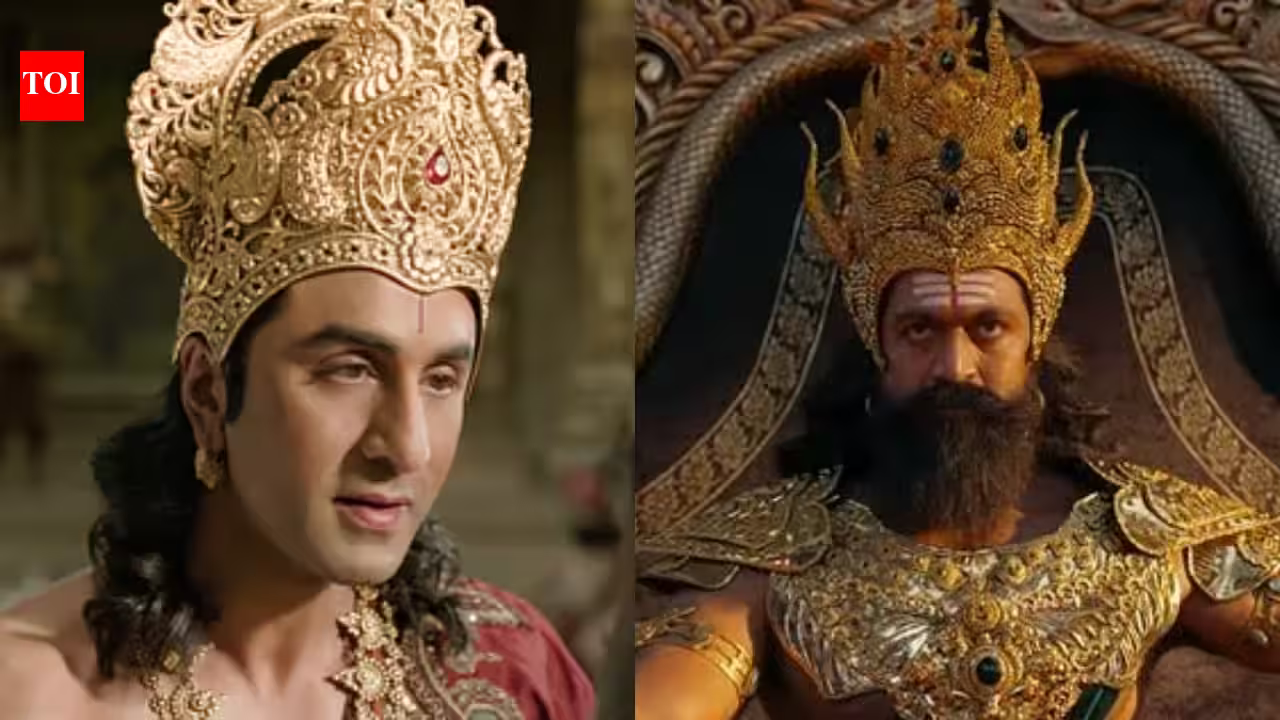
Beyond the spreadsheets and the ticket counters, we have to look at the craft. Nitesh Tiwari is not known for shallow spectacle; he is a director who understands the emotional weight of a narrative. With Ranbir Kapoor as Rama, Sai Pallavi as Sita, and the magnetic Yash stepping into the role of Ravana, the film has anchored itself in top-tier talent.
The inclusion of musical giants Hans Zimmer and AR Rahman is the final masterstroke. In a marketplace that has become increasingly saturated with loud, bombastic scores, the collaboration of these two composers promises a soundscape that will likely become a selling point in its own right. They are effectively signaling that this production aims to compete on the world stage, matching the grandeur of Hollywood’s mythological adaptations.
The Final Countdown: What to Expect
As November 5 arrives, the industry will hold its breath. We are looking at a two-part franchise that carries the weight of a legendary epic and a production budget that could fund a small nation. The current occupancy rate of 15-18 percent is healthy, but the “walk-in” audience will determine if this film achieves the long-term longevity required to recoup its gargantuan costs.
Whether or not it surpasses the pre-sale records of its contemporaries, Ramayana is already historic. It is the most expensive production in Indian cinema, a massive cultural gamble, and a litmus test for whether a classic story can still captivate a digital-first generation. Regardless of the opening numbers, the real story will be written in the second and third weeks. If the word of mouth holds, we aren’t just looking at a successful film; we are looking at the new gold standard for the Indian epic. The stage is set—now, the gods of the box office will decide the rest.
Disclaimer: This content is auto-generated for informational purposes only.
Source: Read Original News