









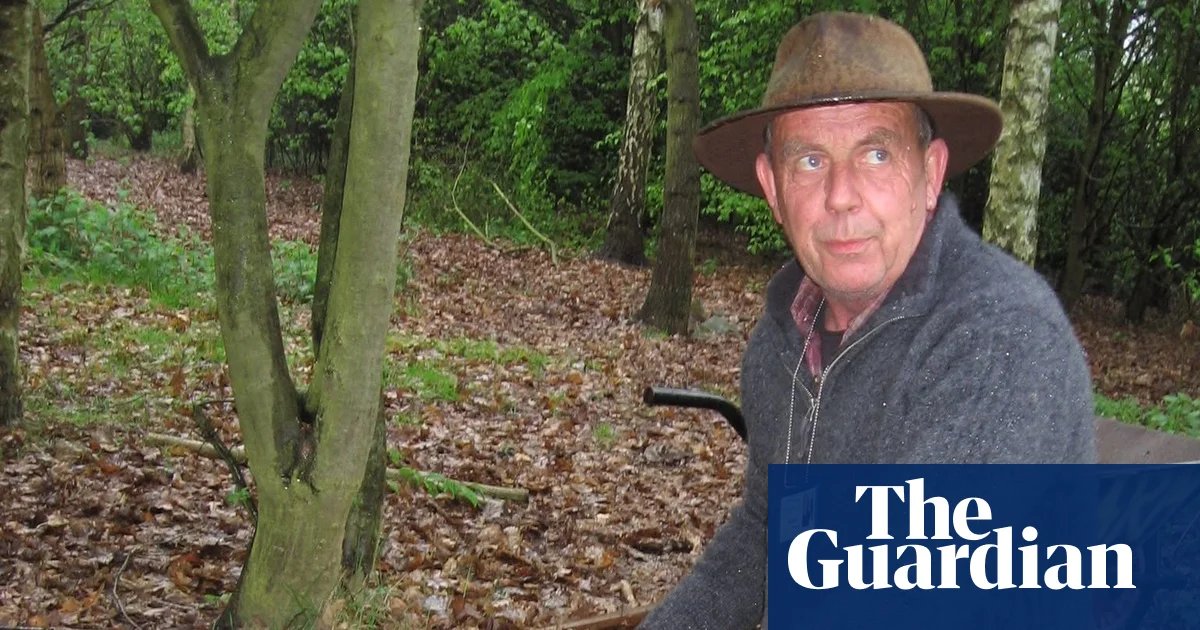
The recent passing of Tony Sharps at the age of 72 marks the end of a dedicated career that bridged the gap between urban development and environmental stewardship. A stalwart of the city farm movement in the United Kingdom, Sharps spent decades transforming neglected urban plots into vibrant centers of sustainability, education, and social cohesion.
Sharps’ foundational work began in the early 1980s at Bristol’s Windmill Hill City Farm. Joining the organization shortly after the 1980 launch of the Federation of City Farms—now known as Social Farms & Gardens—Sharps became an early advocate for a movement that sought to reconnect urban populations with the natural world. At the time, the city farm model was a radical experiment in land use, designed not only to provide green space in densely populated areas but also to fundamentally reshape how children engaged with food systems, agriculture, and environmental responsibility.
His career trajectory was defined by a belief that community-managed green spaces could act as a catalyst for personal development. Following his tenure in Bristol, Sharps applied his expertise internationally, including a period working in India with Voluntary Service Overseas (VSO). During his time abroad, he managed agricultural projects that underscored his commitment to sustainable development, proving his ability to adapt environmental education models to diverse cultural contexts.
In 2002, Sharps joined the Lambourne End Centre for Outdoor Learning in Essex as its farm coordinator. It was here that he solidified his reputation as an influential environmental educator. Under the center’s motto, “Inspired to Inspire,” he utilized the farm environment as a laboratory for social and ecological growth. By integrating practical farming tasks with pedagogical outreach, Sharps helped foster a generation of young people who viewed sustainability as an active, daily practice rather than an abstract concept.
His contributions were formally recognized in 2017 when he was awarded a fellowship by the London Environmental Educators’ Forum (LEEF). The award celebrated his excellence in environmental and sustainability education, highlighting his success in creating frameworks where young people could learn about biodiversity, food sovereignty, and climate resilience in a hands-on, accessible setting.
Colleagues remember Sharps as a man who viewed the land not merely as a resource for production, but as a classroom for character building. His approach was rooted in the philosophy that social and environmental crises are interconnected; by fostering community spirit through shared green space, he aimed to mitigate the isolation often found in urban centers while teaching the principles of stewardship.
Even after his retirement to Wells in 2022, the legacy of his work remains embedded in the institutions he helped cultivate. The expansion of the social farming network—which now encompasses a vast, nationwide array of community-managed gardens and farms—serves as a testament to the movement Sharps helped build. As urban planning increasingly prioritizes green infrastructure and the need for localized food systems grows, the model Sharps pioneered remains a vital blueprint for future environmental advocates.
Through his leadership at Lambourne End and his long-term involvement with the Federation of City Farms, Sharps demonstrated that the most effective environmental education occurs at the intersection of local community action and global sustainability goals. His life’s work serves as a reminder that the health of our natural environment is inextricably linked to the strength of the communities that manage it.
Disclaimer: This content is auto-generated for informational purposes only.
Source: Read Original News