








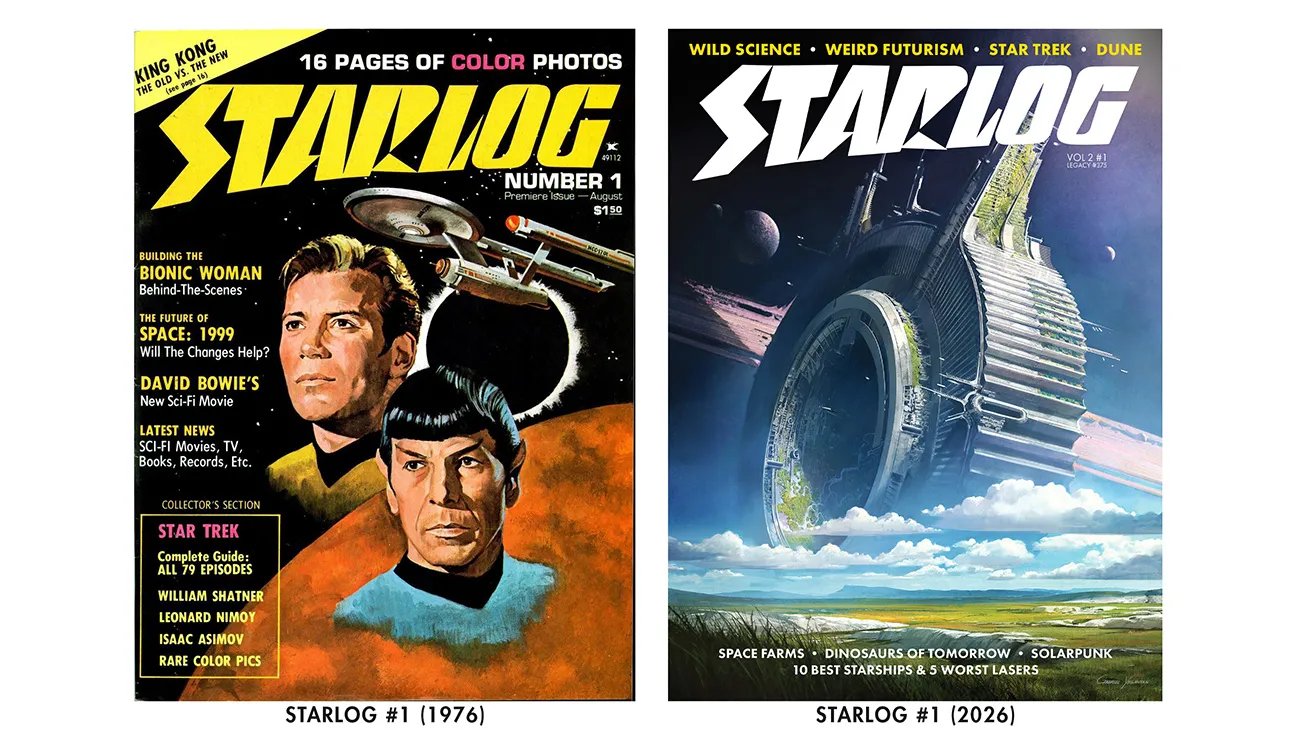
The legendary publication Starlog, which served as the definitive chronicle for science fiction fans for over three decades, is officially returning to the newsstand. After a 17-year hiatus, the magazine—which famously covered the early days of Star Wars and the rise of Star Trek—will release its first new edition on November 13.
The revival is being helmed by Fangoria Holdings, the parent company also responsible for Fangoria and Gorezone. This new iteration plans to maintain the spirit of the original 374-issue run while pivoting toward a more modern, forward-looking editorial mission.
Bridging Fandom and Futuristic Tech
While the original Starlog established its reputation by providing deep dives into geek culture and behind-the-scenes interviews, the new version is expanding its scope under the leadership of editor-in-chief Annalee Newitz, a founding editor of io9.
The updated editorial vision is heavily influenced by the blurring lines between science fiction and current technological reality. In a world where advancements in artificial intelligence, space commercialization, and biotechnology are moving at breakneck speed, the magazine intends to provide a “scientifically grounded” look at humanity’s trajectory. The inaugural issue features a cover by artist Gabriel Yeganyan and includes an in-depth analysis on the viability of extraterrestrial agriculture, exploring how humans might eventually sustain themselves on other planets.
“Science fiction and fantasy give us a sandbox to reimagine our world,” Newitz stated. The new Starlog aims to treat that sandbox as an intellectual space where readers can explore the potential outcomes of today’s rapid innovation.
A Multi-Platform Media Pivot
The return of the brand is not limited to print. Modernizing the legacy title, the new Starlog includes an integrated digital strategy that incorporates a weekly newsletter titled Lodestar and a podcast hosted by veteran journalist Jordan Hoffman. By diversifying into audio and digital formats, the publication is positioning itself to compete in an era where tech enthusiasts and pop-culture fans consume information across multiple platforms simultaneously.
The relaunch comes at a time when major tech giants and media conglomerates are increasingly obsessed with the intersection of entertainment and emerging tech. As AI-generated content and immersive digital environments become central to the “geek” ecosystem that Starlog helped build, the magazine hopes to serve as a critical guide for navigating these rapid developments.
Fifty Years of Cultural Evolution
The timing of the revival is intentional, arriving as the industry reflects on the half-century of growth since Starlog first launched in 1976. Co-owner Tara Ansley noted that while the original magazine spent 33 years documenting the evolution of sci-fi across film and television, the current technological landscape demands a new perspective.
“Fifty years after the magazine first launched, the line between science fiction and the real world has become increasingly difficult to separate,” Ansley said. “Technology may change, but the most compelling questions have always been about people: how we live, what we create, and what kind of future we want to build.”
The magazine plans to maintain a sustainable, high-quality production schedule by releasing one substantial issue per year. For long-time fans of the original publication, the return offers a nostalgic trip back to the golden age of sci-fi journalism, while for new readers, it promises a grounded look at the technologies currently shaping our reality. As the publication steps into this new chapter, it aims to act as a bridge between the classic fandom of the 20th century and the complex, tech-driven frontiers of the 21st.
Disclaimer: This content is auto-generated for informational purposes only.
Source: Read Original News